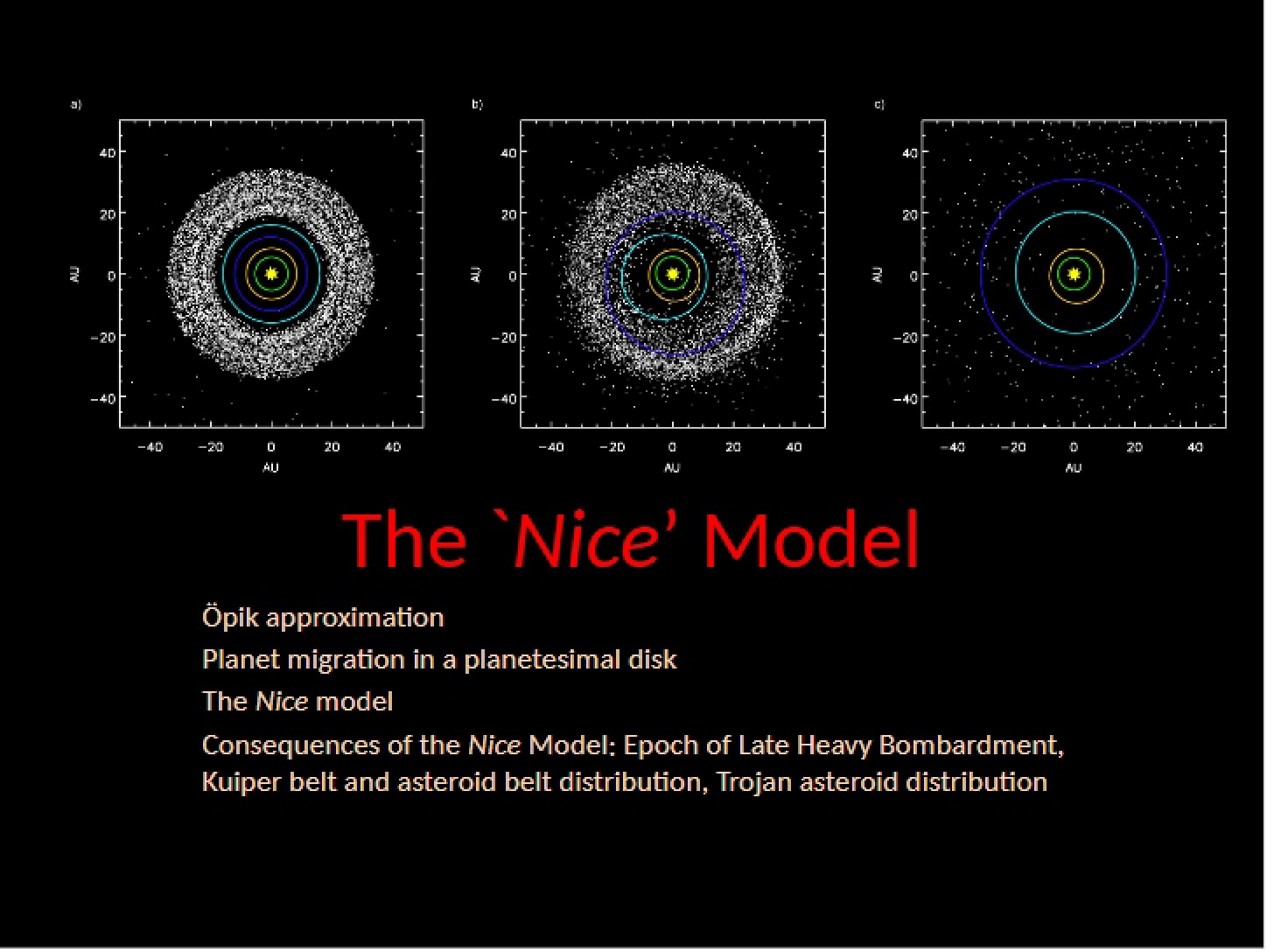
What This Document Is
These notes delve into the fascinating world of Spiral Density Waves, a core concept in understanding the structure and evolution of galaxies – and, by extension, planetary systems. Specifically, it focuses on the theoretical underpinnings of these waves within the context of Solar System Dynamics (AST 570) at the University of Rochester. The material explores the mathematical framework used to describe these waves, their origins, and their impact on the distribution of matter within galactic disks. It builds upon fundamental principles of fluid dynamics and gravitational interactions.
Why This Document Matters
This resource is invaluable for students grappling with the complexities of galactic structure and dynamics. It’s particularly useful for those seeking a deeper understanding of how patterns emerge in rotating systems, and how these patterns influence the movement of celestial bodies. Students preparing for advanced coursework in astrophysics, cosmology, or planetary science will find this a strong foundation. It’s best utilized while actively engaged in the AST 570 course, as a supplement to lectures and textbook readings, and as a study aid for complex problem-solving.
Common Limitations or Challenges
This material presents a theoretical treatment of spiral density waves. It does *not* offer a comprehensive overview of observational evidence supporting the theory, nor does it provide detailed simulations or computational exercises. The notes assume a solid foundation in calculus, physics, and basic astronomy. It focuses on the core mathematical and conceptual framework, and doesn’t delve into the specifics of applying these concepts to every possible astrophysical scenario. It also doesn’t cover the full breadth of galactic dynamics beyond spiral structures.
What This Document Provides
* A detailed exploration of the foundational equations governing wave behavior in rotating, stratified systems.
* An overview of key historical developments in the study of spiral arms, including the contributions of prominent researchers.
* Discussion of criteria for wave amplification and the conditions under which structures can persist.
* Analysis of the concept of planet migration within the context of spiral density wave theory.
* Examination of the Toomre Q parameter and its role in disk stability.
* Consideration of the interplay between gas, planetesimals, and turbulence in disk dynamics.