What This Document Is
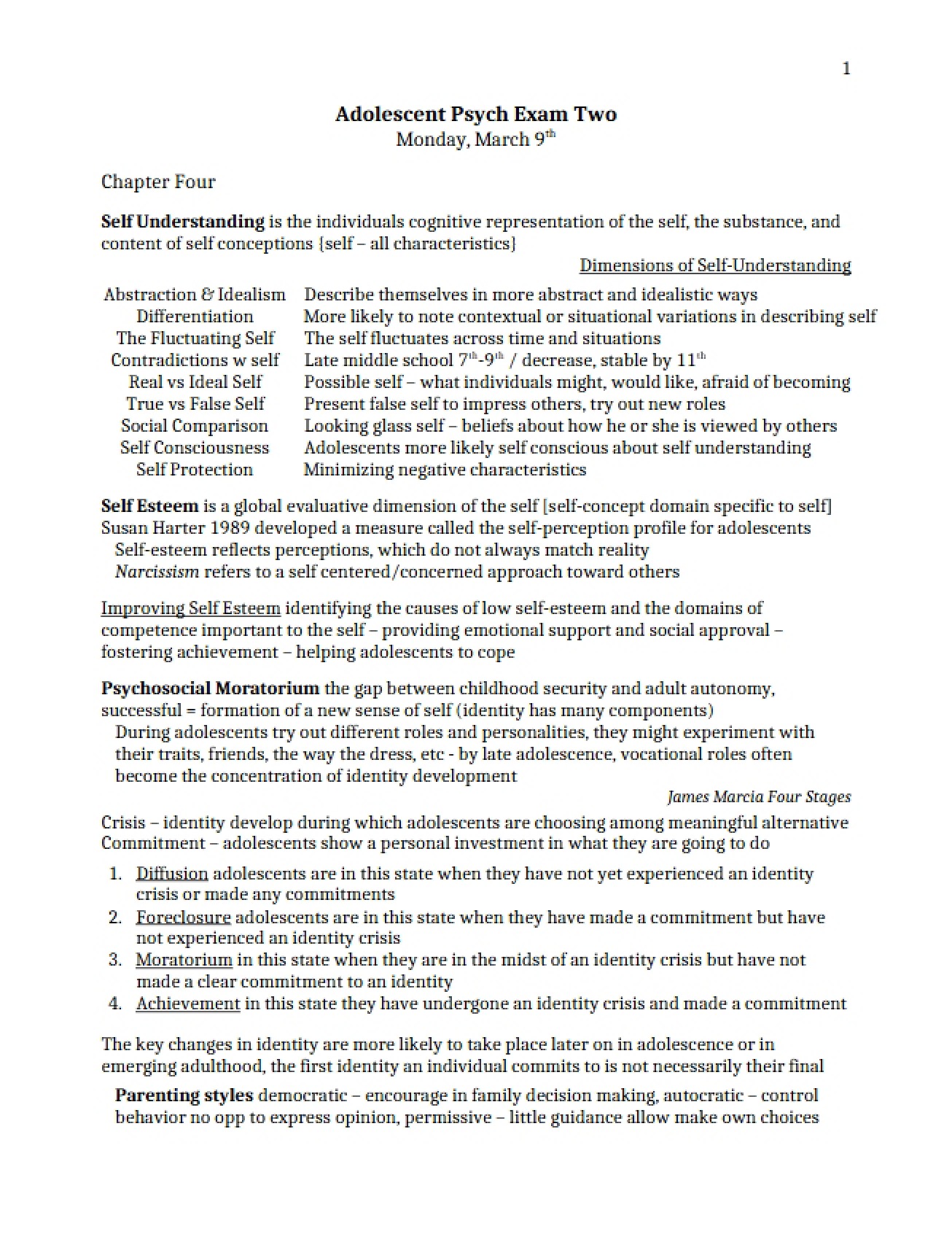
This is a study guide designed to help students prepare for Exam Two in PSYC 30651, Adolescent Psychology, at Kent State University during the Spring 2019 semester. It outlines the key topics covered in Chapters 4, 5, 6, and 7, and references associated Blackboard quizzes. The guide focuses on core concepts related to self-understanding and emotional development during adolescence.
Why This Document Matters
This study guide is essential for students enrolled in Adolescent Psychology who want to focus their studying and maximize their performance on Exam Two. It serves as a roadmap, highlighting the specific areas the instructor emphasizes. Utilizing this guide alongside course readings and lecture notes can improve comprehension and retention of material. It’s intended for use in the days leading up to the exam on March 12th, 2019.
Common Limitations or Challenges
This study guide is a *preview* of the exam content. It provides topic headings and brief explanations, but does not offer in-depth analysis, practice questions, or complete definitions. It is not a substitute for attending lectures, completing assigned readings, or engaging with the course material. Students will still need to actively study the chapters and complete the Blackboard quiz to be fully prepared.
What This Document Provides
This study guide specifically outlines the following topics:
* Self-understanding in adolescence, including the distinction between true and false selves, real and ideal selves, and possible selves.
* The difference between self-esteem (global self-evaluation) and self-concept (domain-specific evaluation).
* Developmental changes in self-esteem throughout adolescence and emerging adulthood.
* The meaning of emotional competence and its role in relationships.
* Normal emotional experiences in adolescence, including mood swings and emotional regulation challenges.
* Three basic temperament types identified by Chess and Thomas: easy child, difficult child, and slow-to-warm-up child.
This preview *does not* include detailed explanations of each concept, examples, or practice questions. The full document provides a more comprehensive overview of the material.