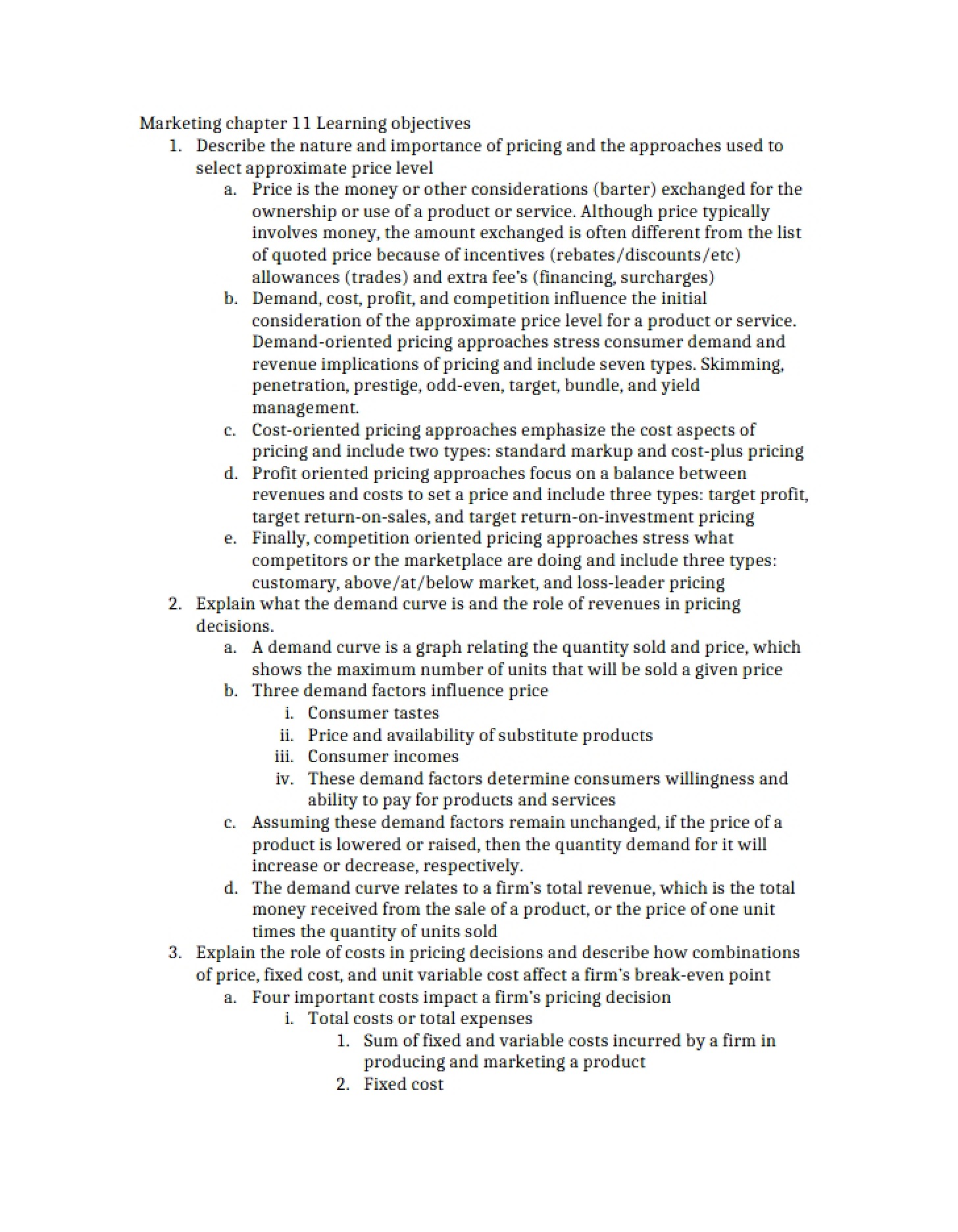
What This Document Is
This is a comprehensive study guide designed to accompany the MKTG 3001 Principles of Marketing course at the University of Minnesota Twin Cities. It’s structured as a series of learning review questions, organized by chapter, covering core marketing concepts and principles. The guide aims to help students solidify their understanding of the foundational material presented in the course. It’s a tool for active recall and self-assessment, designed to be used *in conjunction with* course lectures and readings.
Why This Document Matters
This study guide is invaluable for any student enrolled in Principles of Marketing seeking to improve their grasp of key concepts and prepare for assessments. It’s particularly useful for students who benefit from self-testing, identifying knowledge gaps, and reinforcing learning through active questioning. Use this guide during your study sessions, while completing assignments, or as a final review before quizzes and exams. It’s designed to help you move beyond memorization and towards a deeper, more practical understanding of marketing principles.
Common Limitations or Challenges
This study guide does *not* contain direct answers or detailed explanations. It presents questions intended to prompt you to recall and apply the information learned in the course. It also doesn’t replace the need to attend lectures, complete assigned readings, or engage with other course materials. The guide focuses on core concepts and may not cover every nuance discussed in class. It is a study *aid*, not a substitute for comprehensive learning.
What This Document Provides
* Chapter-by-chapter learning review questions, aligned with the course curriculum.
* Coverage of fundamental marketing topics including market analysis, consumer behavior, the marketing mix, and ethical considerations.
* Questions designed to assess understanding of strategic marketing processes and environmental influences.
* Focus on key distinctions between different organizational types and marketing approaches.
* Exploration of the impact of societal and technological factors on marketing strategies.
* Review points related to legal and ethical frameworks governing marketing practices.