What This Document Is
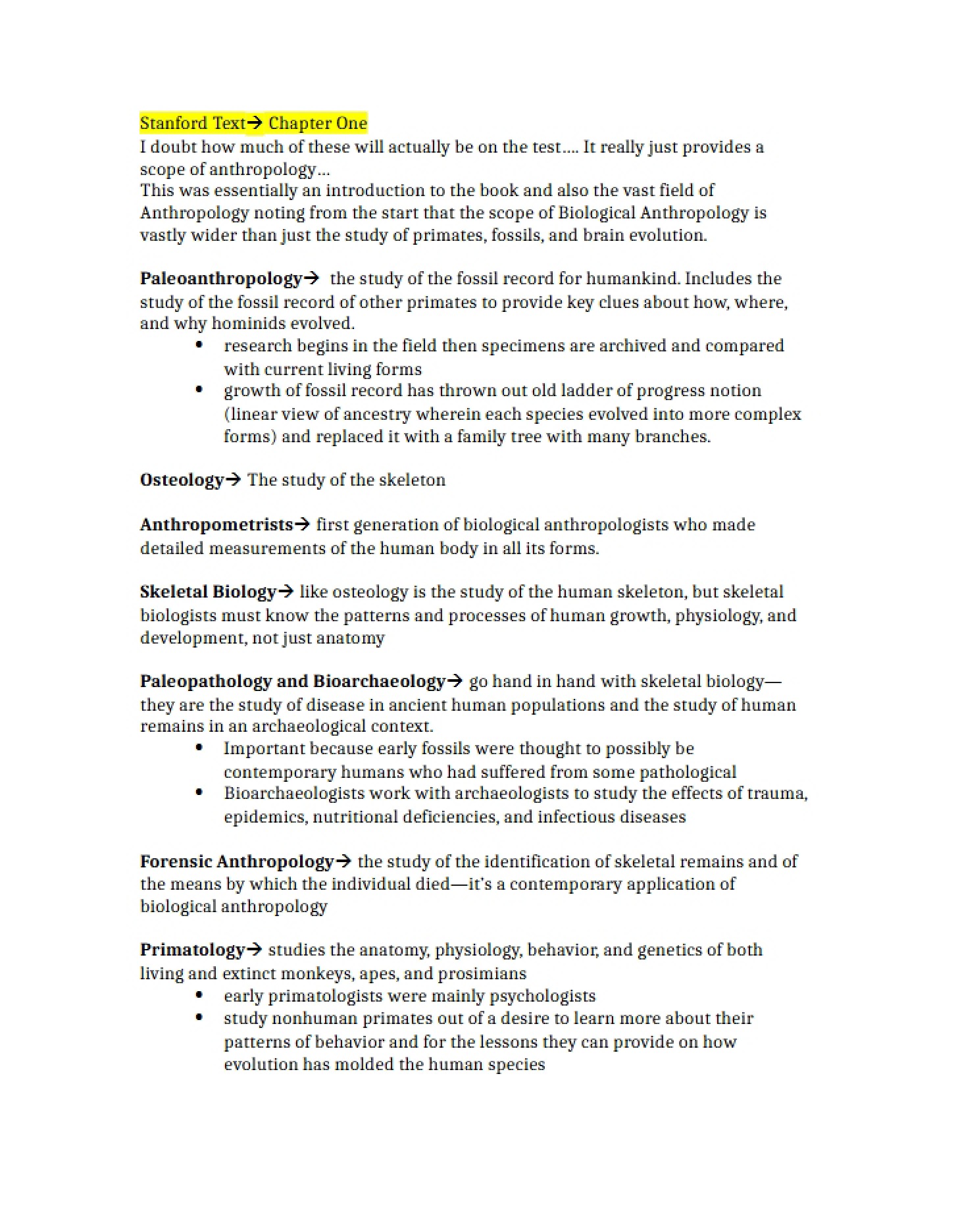
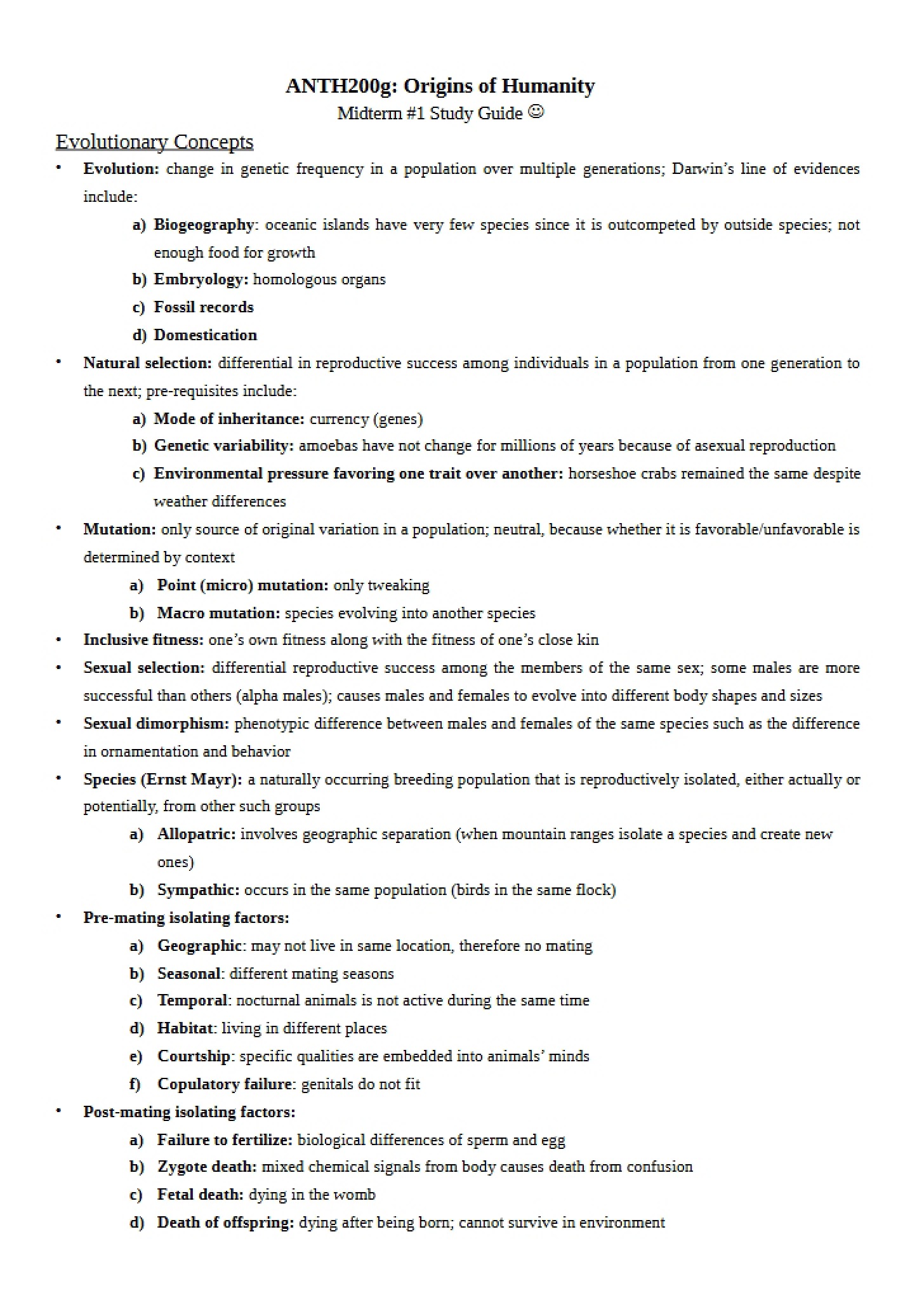
This is a comprehensive study guide designed to help students prepare for Exam 1 in ANTH 200: The Human Animal at the University of Southern California. It focuses on foundational concepts within the field of anthropology, specifically exploring the nature of scientific inquiry and the historical development of thought surrounding biological diversity and the origins of life. The guide delves into the core principles that underpin scientific methodology and examines the ongoing dialogues between scientific findings and alternative belief systems.
Why This Document Matters
This study guide is an invaluable resource for any student enrolled in ANTH 200 looking to solidify their understanding of the course’s introductory material. It’s particularly useful for students who benefit from a structured review of key ideas before an exam, or those who want to proactively identify areas where they may need further clarification. Utilizing this guide will help you build a strong foundation for more complex topics covered later in the semester. It’s best used in conjunction with your lecture notes and assigned readings.
Common Limitations or Challenges
This study guide is intended as a *supplement* to the course materials, not a replacement. It does not contain the full scope of lecture content, nor does it provide direct answers to potential exam questions. It won’t offer detailed explanations of specific research studies or data sets presented in class. Furthermore, it assumes a basic familiarity with the core concepts introduced in the course. Access to the full guide is required to unlock the detailed explanations and supporting information.
What This Document Provides
* An overview of the fundamental principles of the scientific method.
* A discussion of the characteristics that define a scientific approach to understanding the natural world.
* Exploration of the historical context surrounding debates about evolutionary theory.
* An examination of different perspectives on the origins of life and the diversity of species.
* Introductions to the contributions of key historical figures in the development of biological thought.
* Definitions of important terminology related to scientific paradigms and creationist viewpoints.