What This Document Is
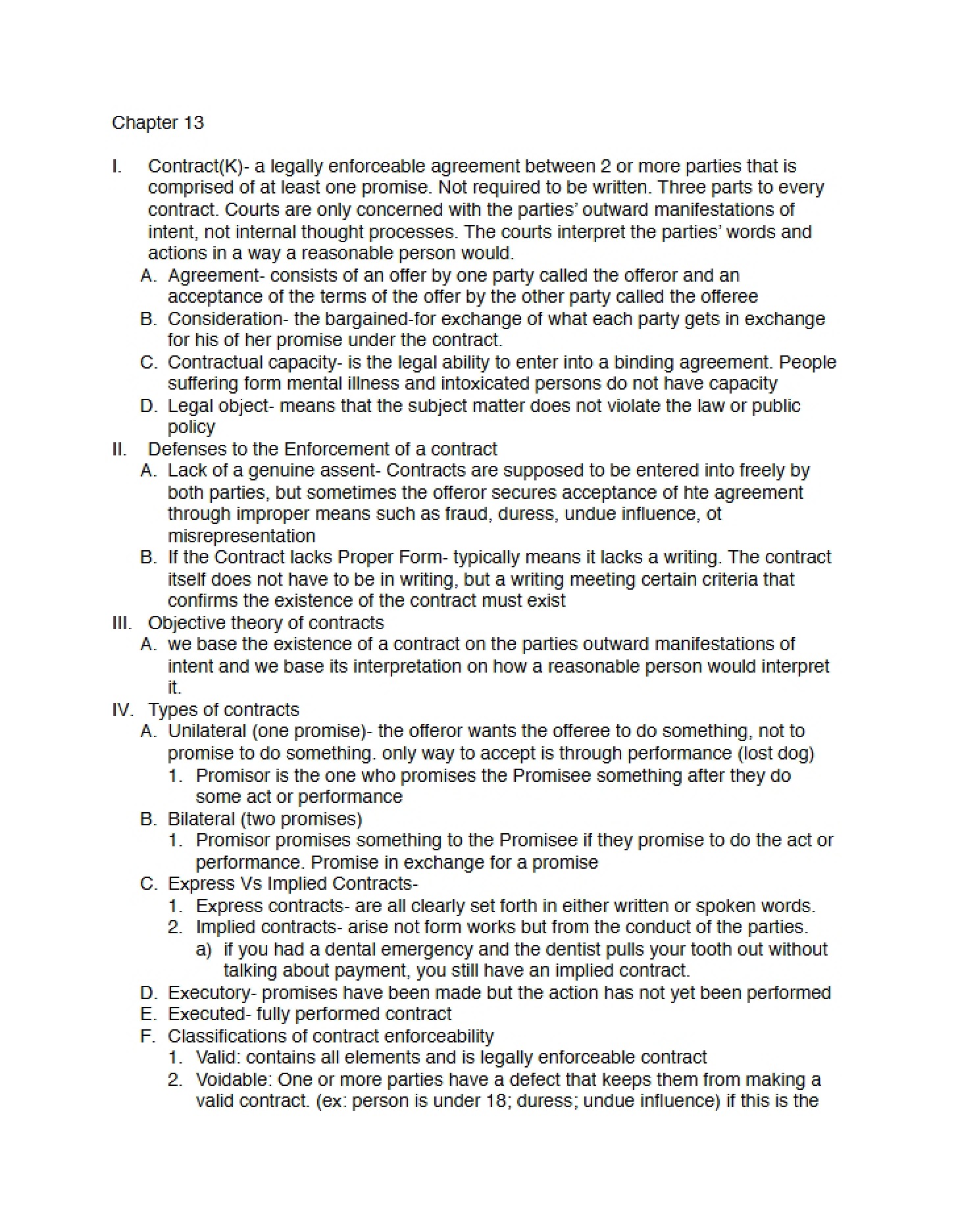
This is a comprehensive study guide focusing on the foundational principles of contract law, designed for students in a Business Law course. It delves into the core elements required for a legally binding agreement and explores the various factors that can impact a contract’s validity and enforceability. The guide systematically examines the nuances of contract formation, potential defenses to enforcement, and the distinctions between different types of contracts.
Why This Document Matters
This study guide is an invaluable resource for students preparing for exams, quizzes, or seeking a deeper understanding of contract law concepts. It’s particularly helpful for those needing to solidify their grasp of the legal requirements for creating enforceable promises and navigating potential disputes. Business students, future legal professionals, and anyone involved in commercial transactions will find this a useful tool for building a strong foundation in this critical area of law. It’s best utilized alongside course lectures and assigned readings to reinforce learning.
Common Limitations or Challenges
This guide provides a detailed overview of contract law principles, but it does not offer legal advice or substitute for professional counsel. It focuses on general legal concepts and may not cover specific state law variations in exhaustive detail. Furthermore, it does not include case briefs or detailed analyses of specific court decisions – it’s designed to provide the framework for understanding those cases, not to replace them. It also doesn’t provide pre-written answers for assignments or exam questions.
What This Document Provides
* A clear explanation of the essential elements of a valid contract.
* An overview of defenses that can be used to challenge the enforceability of a contract.
* A discussion of the objective theory of contracts and its implications.
* An examination of the sources of contract law, including common law and the Uniform Commercial Code (UCC).
* A breakdown of different classifications of contracts (bilateral vs. unilateral, express vs. implied).
* An exploration of the concept of quasi-contracts and their legal basis.
* Definitions of key terms like “Statute of Frauds” and “Statute of Limitations” as they relate to contract law.