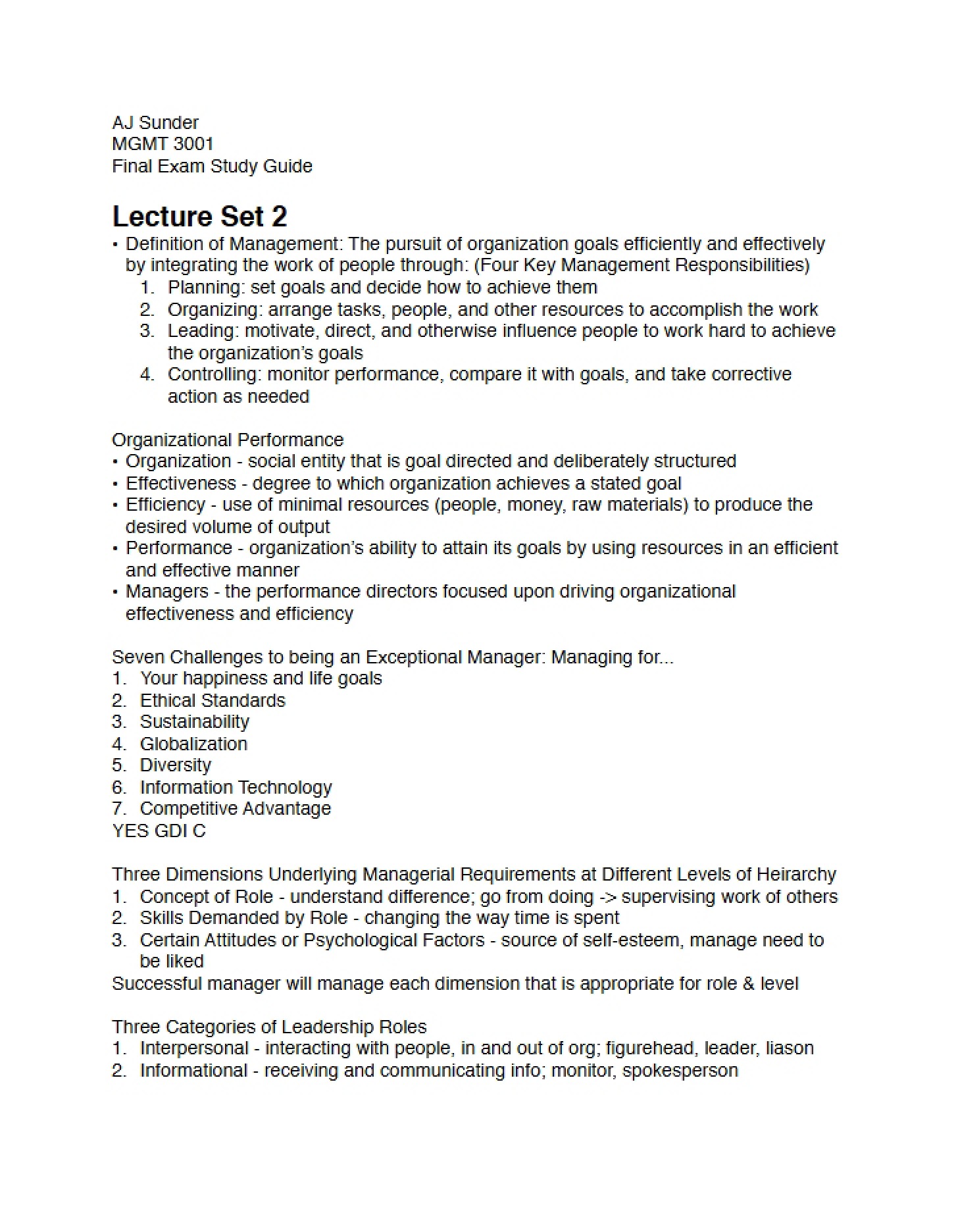
What This Document Is
This study guide is designed to help students prepare for Midterm 2 in MGMT 3001: Introduction to Management at the University of Minnesota Twin Cities. It focuses on the critical topic of organizational communication, a cornerstone of effective management. This guide synthesizes key lecture material, providing a structured overview of the concepts covered in class. It’s intended to be a focused resource for review, helping you identify areas for further study.
Why This Document Matters
This guide is invaluable for students aiming to solidify their understanding of how information flows within organizations and how managers can optimize these processes. It’s particularly useful in the weeks leading up to the midterm, serving as a concentrated review tool. Students who utilize this guide will be better equipped to analyze communication challenges and apply effective strategies in real-world management scenarios. It’s ideal for those who want a concise, organized recap of the communication lectures.
Common Limitations or Challenges
This study guide is *not* a substitute for attending lectures or completing assigned readings. It’s a supplementary resource intended to reinforce learning, not replace it. It does not include practice questions or detailed explanations of every nuance discussed in class. Furthermore, it doesn’t cover topics outside of the communication lecture series included on the midterm. Access to the full guide is required to gain a comprehensive understanding of the material.
What This Document Provides
* A breakdown of the fundamental definition and importance of communication in a managerial context.
* An overview of the core elements involved in the communication process.
* Exploration of different communication channels and their relative effectiveness.
* Categorization of communication flows within organizations (upward, downward, horizontal).
* Discussion of the concept of “the grapevine” and its impact on organizational information.
* Analysis of communication styles and their implications.
* Identification of common barriers to effective communication.
* Strategies for improving communication within organizations.
* Examination of the role of feedback in the communication process.