What This Document Is
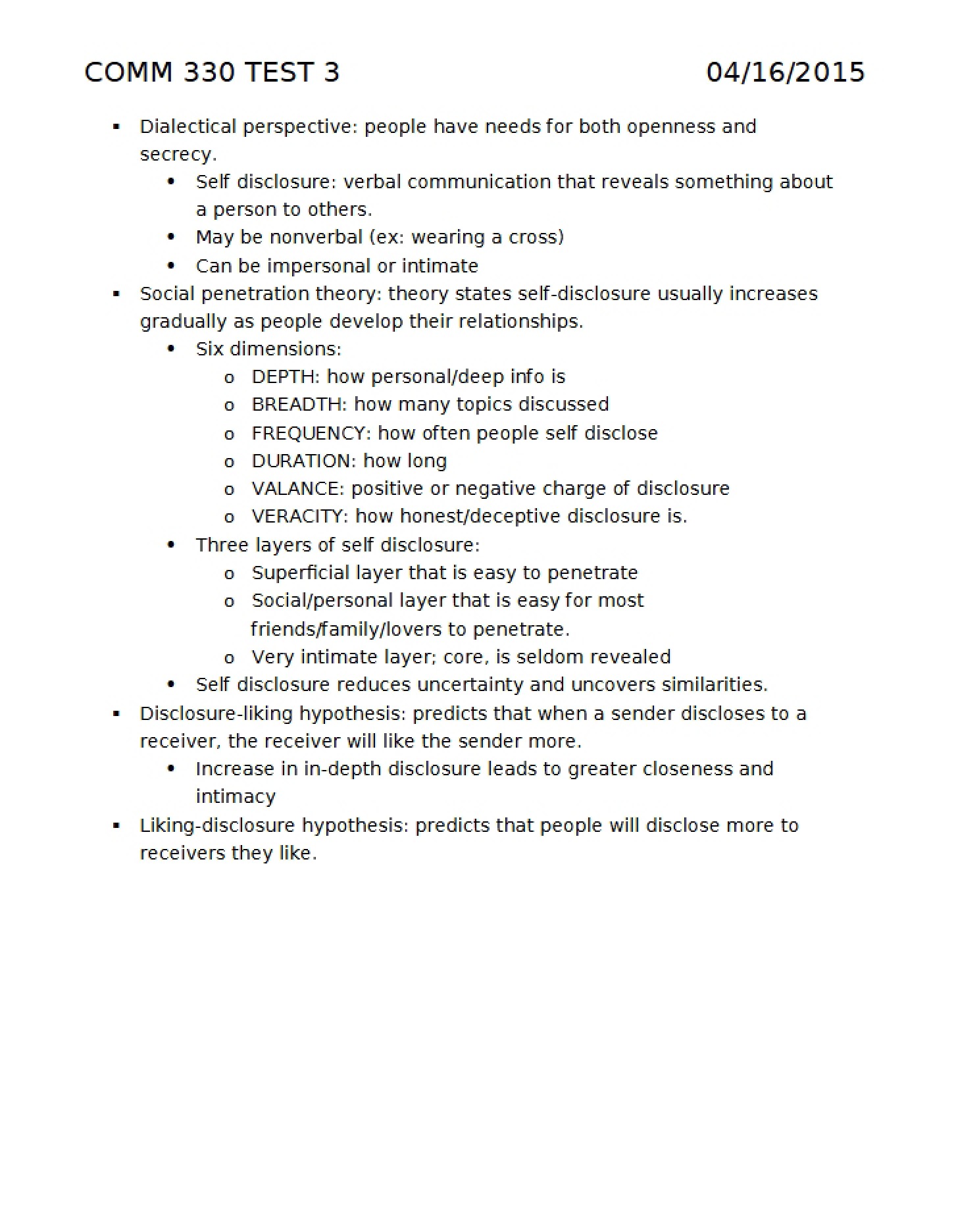
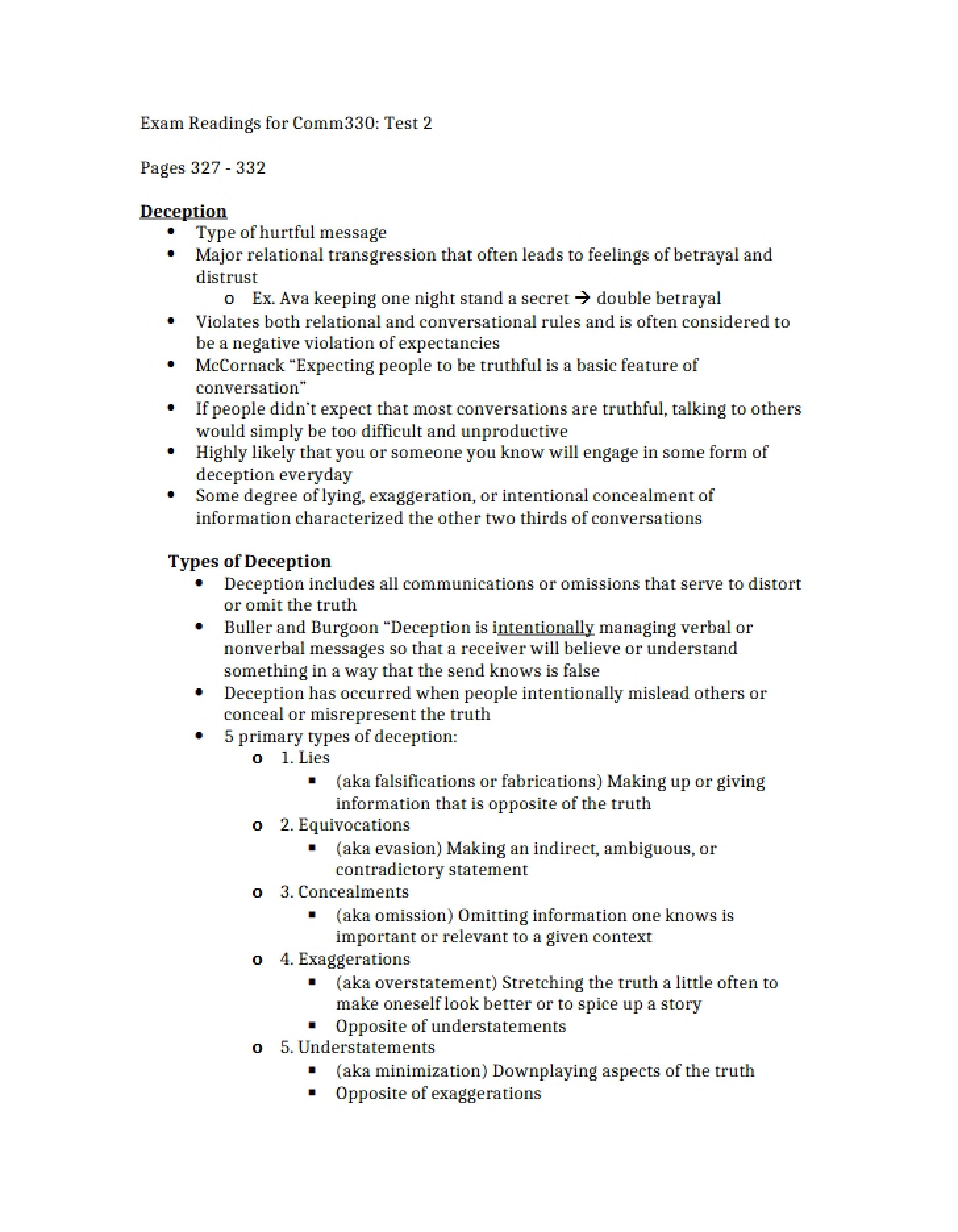
This is a comprehensive study guide designed to help students prepare for the second exam in COMM 330: Communication and Interpersonal Behavior at the University of Delaware. It focuses on the complexities of human interaction, specifically exploring how and why discrepancies can arise between what is said and what is meant. The guide delves into the theoretical underpinnings and practical applications of understanding deceptive communication.
Why This Document Matters
This study guide is an invaluable resource for any student aiming to excel on the upcoming exam and gain a deeper understanding of interpersonal dynamics. It’s particularly useful for students who want to move beyond surface-level comprehension and explore the nuances of communication, including the factors that influence truthfulness and the challenges of detecting deception. Utilizing this guide will help you solidify your understanding of key concepts before the exam, allowing for more focused and efficient studying.
Topics Covered
* Different forms of deceptive communication strategies.
* The influence of social factors (gender, socialization) on deceptive behaviors.
* The role of cognitive processes, such as “Theory of Mind,” in deception.
* The connection between leadership qualities and communication patterns.
* Methods and challenges associated with identifying deceptive communication.
* Strategies for increasing the cognitive load on individuals during questioning.
* Types of verbal and nonverbal cues potentially associated with deception.
What This Document Provides
* A detailed overview of various deception types and their motivations.
* Exploration of research findings related to deception and interpersonal communication.
* Discussion of the complexities of interpreting nonverbal cues.
* Insights into techniques for eliciting more revealing information.
* A framework for understanding the cognitive processes involved in both truthful and deceptive communication.
* Key concepts and terminology essential for exam success.