What This Document Is
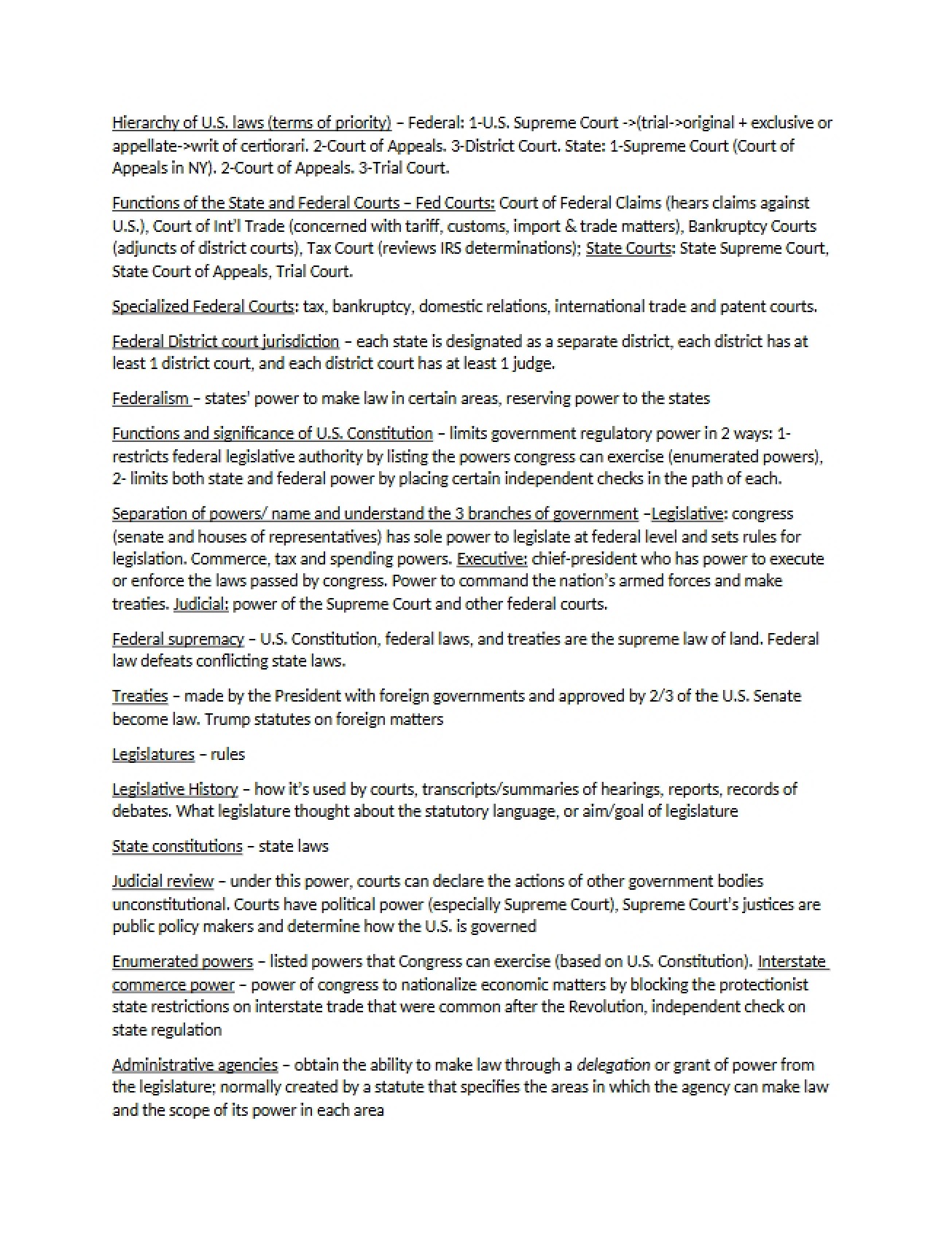
This study guide is designed to help students prepare for the first exam in Legal Environment for Business (L 201) at Indiana University Bloomington. It consolidates key concepts and terminology from the first chapter of the course materials, providing a focused review of the foundations of the U.S. legal system.
Why This Document Matters
This guide is essential for students seeking to efficiently review core legal principles before their first exam. It’s particularly useful for understanding the hierarchy of laws, different types of legal authorities, and the basic structure of the court system. Students will benefit from using this guide to identify areas where they need further study and to test their understanding of fundamental concepts. It’s intended to be used *in conjunction with* course lectures and assigned readings, not as a replacement for them.
Common Limitations or Challenges
This study guide provides a condensed overview and does not offer in-depth analysis of complex legal issues. It’s a review tool, not a comprehensive legal textbook. Users will still need to engage with the full course materials to fully grasp the nuances of each topic and to prepare for application-based exam questions. It does not include practice exam questions or detailed case summaries.
What This Document Provides
This study guide includes concise summaries of:
* The Tenth Amendment and its role in federalism.
* Different sources of law: statutory law, ordinances, uniform law (including the UCC), administrative law, and case law.
* The distinction between courts of law and courts of equity, and the remedies available in each.
* Key concepts like precedent, *stare decisis*, and controlling precedents.
* An overview of different schools of legal thought (natural law, legal positivism, etc.).
* The difference between substantive and procedural law.
* The basics of civil law and the burden of proof.
This preview *does not* include detailed explanations of legal reasoning, the IRAC method, or specific case examples beyond what is listed above. It also does not contain any practice questions or a complete discussion of jurisprudence.