What This Document Is
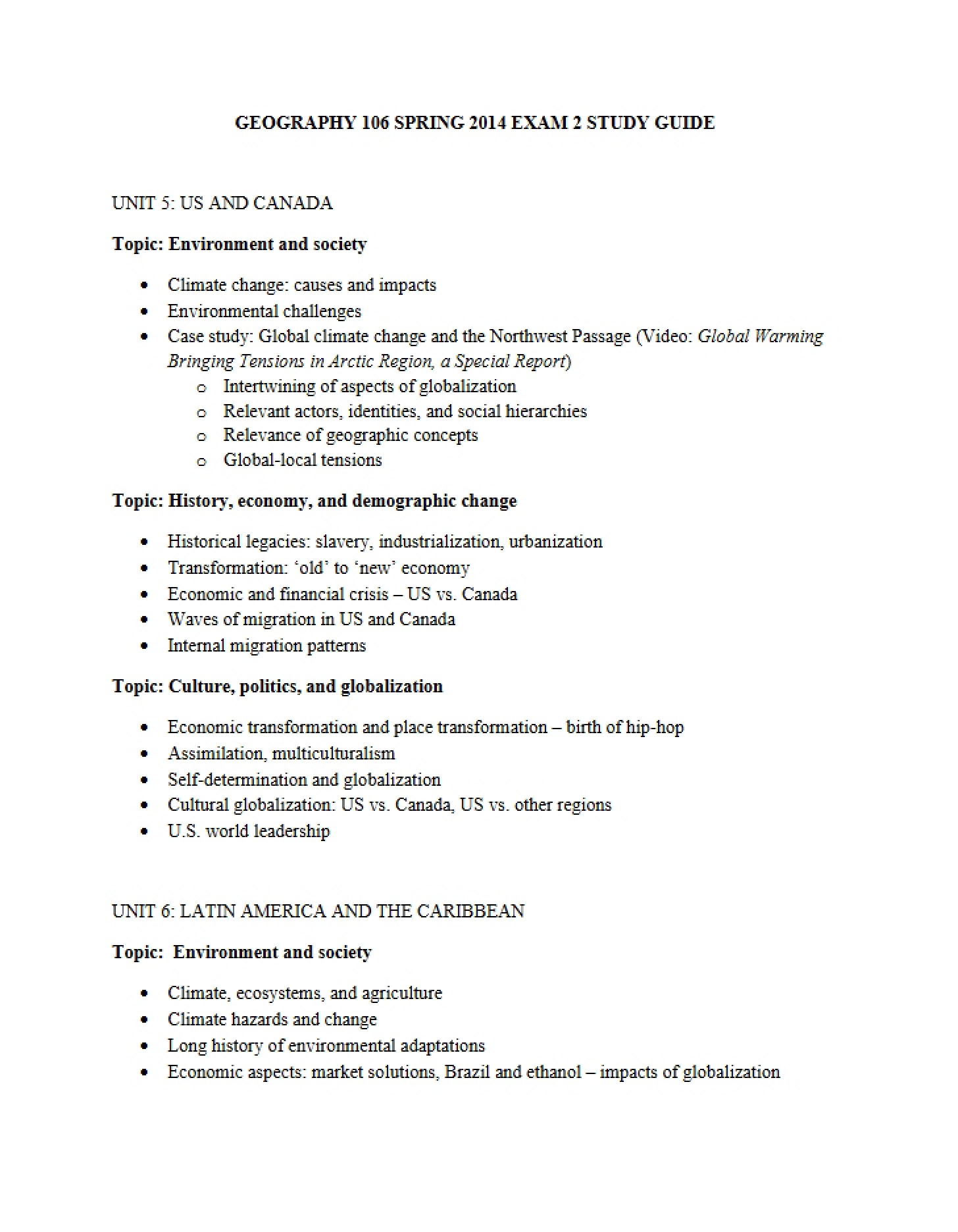
This is a comprehensive study guide designed to help students prepare for the third exam in GEOG 106: Geographies of Globalization at the University of Illinois at Urbana-Champaign. It focuses on the complex interplay between globalization and regional geographies, examining key themes and case studies across diverse regions of the world. The guide synthesizes course material to aid in focused review and deeper understanding of the subject matter.
Why This Document Matters
This study guide is an invaluable resource for students enrolled in GEOG 106 who are looking to solidify their understanding of the course’s core concepts before a major assessment. It’s particularly useful during the exam preparation phase, offering a structured overview of the material. Students who utilize this guide can expect to approach the exam with greater confidence and a more organized grasp of the course’s key arguments and regional examples.
Topics Covered
* Environment and society within the contexts of globalization across multiple regions.
* The lasting impacts of historical legacies – including colonialism, empire, and political mandates – on contemporary global dynamics.
* Economic transformations and the role of various regions within the global economy, including analysis of vulnerabilities and inequalities.
* The relationship between globalization, migration patterns, and cultural shifts.
* Specific regional case studies, including the Middle East & North Africa, Sub-Saharan Africa, East Asia, South Asia, and Southeast Asia.
* The interplay of geopolitics and geoeconomics in a globalized world.
What This Document Provides
* A thematic breakdown of course content organized by major units.
* Key topics and sub-topics for each region studied in GEOG 106.
* Identification of important case studies used to illustrate broader concepts.
* A structured framework for reviewing the complex relationships between globalization, regional geographies, and societal changes.
* A focused overview of the material to help prioritize study efforts.