What This Document Is
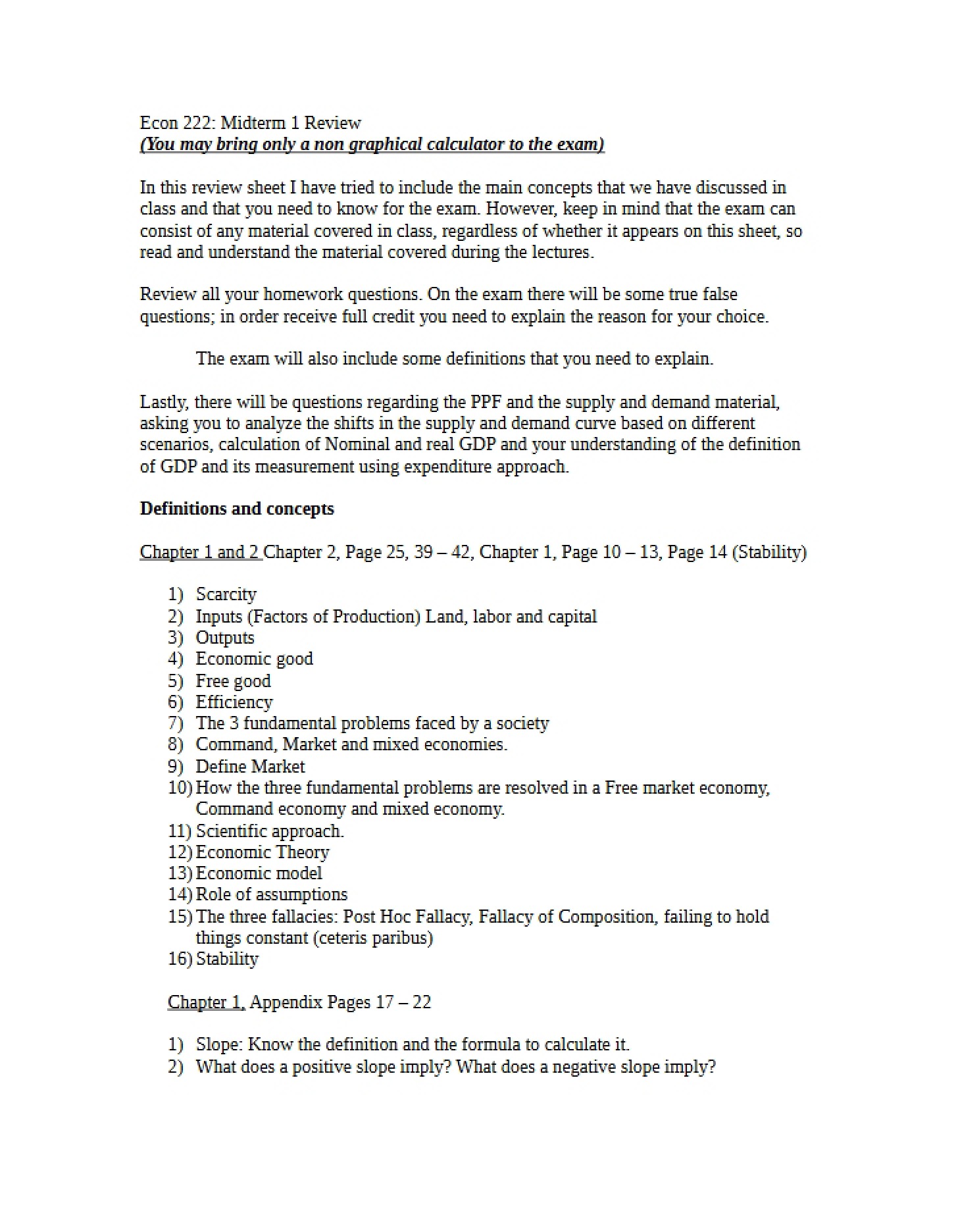
This is a comprehensive study guide designed to support students enrolled in Principles of Macroeconomics (ECON 222) at the University of South Carolina. It focuses on foundational Unit One concepts, providing a structured overview of the core principles that underpin the field of economics. This guide is intended to be a learning *aid*, not a replacement for course lectures or assigned readings.
Why This Document Matters
This study guide is an invaluable resource for students seeking to solidify their understanding of introductory macroeconomic theory. It’s particularly helpful for those who benefit from a consolidated review of key ideas, or who are preparing for quizzes and exams covering the fundamental building blocks of the course. Students who proactively engage with this material will be better equipped to tackle more complex topics later in the semester. It’s best used *in conjunction* with your class notes and textbook.
Common Limitations or Challenges
This study guide does not contain fully worked-out problems or detailed explanations of mathematical models. It also doesn’t replace the need to actively participate in class discussions or complete assigned coursework. The guide provides a framework for understanding, but requires students to apply those concepts through independent study and practice. It will not provide direct answers to homework assignments or exam questions.
What This Document Provides
* A clear articulation of core economic concepts like scarcity, resources, and economic systems.
* An overview of the key decision-makers within a market economy and their respective roles.
* An exploration of different economic goals and the distinction between positive and normative economics.
* A foundational understanding of opportunity cost and its implications for economic decision-making.
* An introduction to the Production Possibilities Frontier (PPF) and its use in illustrating economic trade-offs and efficiency.
* Discussion of concepts like absolute and comparative advantage and the benefits of specialization.