What This Document Is
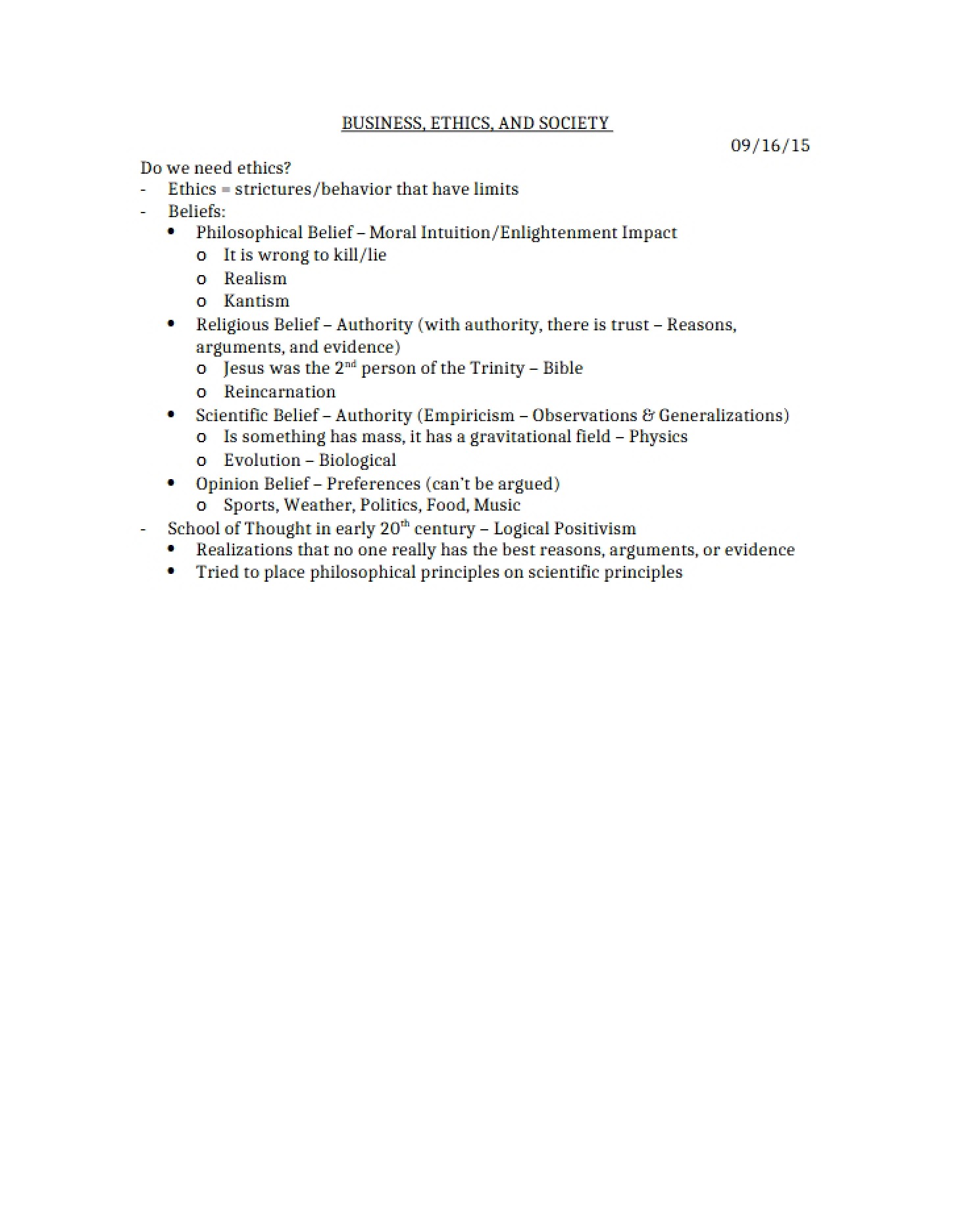
This document, “Study of Business Ethics,” from MGT 228 at DePaul University, provides a foundational overview of ethical theories and their application to the business world. It explores the philosophical underpinnings of ethical decision-making, moving from ancient Greek thought to modern perspectives like utilitarianism and neoliberalism. The document examines the complex relationship between ethics and law, and introduces key concepts related to free will and cultural influences on ethical standards.
Why This Document Matters
This material is essential for students in business programs, future managers, and anyone seeking to understand the ethical challenges inherent in commercial activity. It’s used in introductory business ethics courses to establish a common vocabulary and framework for analyzing ethical dilemmas. Understanding these concepts is crucial for responsible leadership and navigating the increasingly scrutinized landscape of corporate social responsibility.
Common Limitations or Challenges
This document serves as a starting point for ethical inquiry. It presents a range of perspectives but does not offer definitive answers or solutions to specific ethical problems. It’s a theoretical foundation, and applying these concepts to real-world business scenarios requires further analysis and critical thinking. This preview does not provide case studies or detailed application exercises.
What This Document Provides
The full document includes:
* An exploration of core philosophical “isms” (communism, democracy, neoliberalism) and their ethical implications.
* A discussion of the distinction between criminal and civil liability.
* An overview of Freudian psychology and its relevance to ethical behavior.
* An examination of ancient Greek ethical thought, including the ideas of Socrates and Plato (specifically Plato’s Allegory of the Cave).
* An introduction to Aristotle’s Virtue Ethics.
* A discussion of Utilitarianism, including the Ford Pinto case study.
* Initial concepts related to astronomy and the idea of perception vs. reality.
This preview *does not* include detailed case studies, practice questions, or in-depth analysis of specific business ethics issues. It is a high-level overview of the topics covered.