What This Document Is
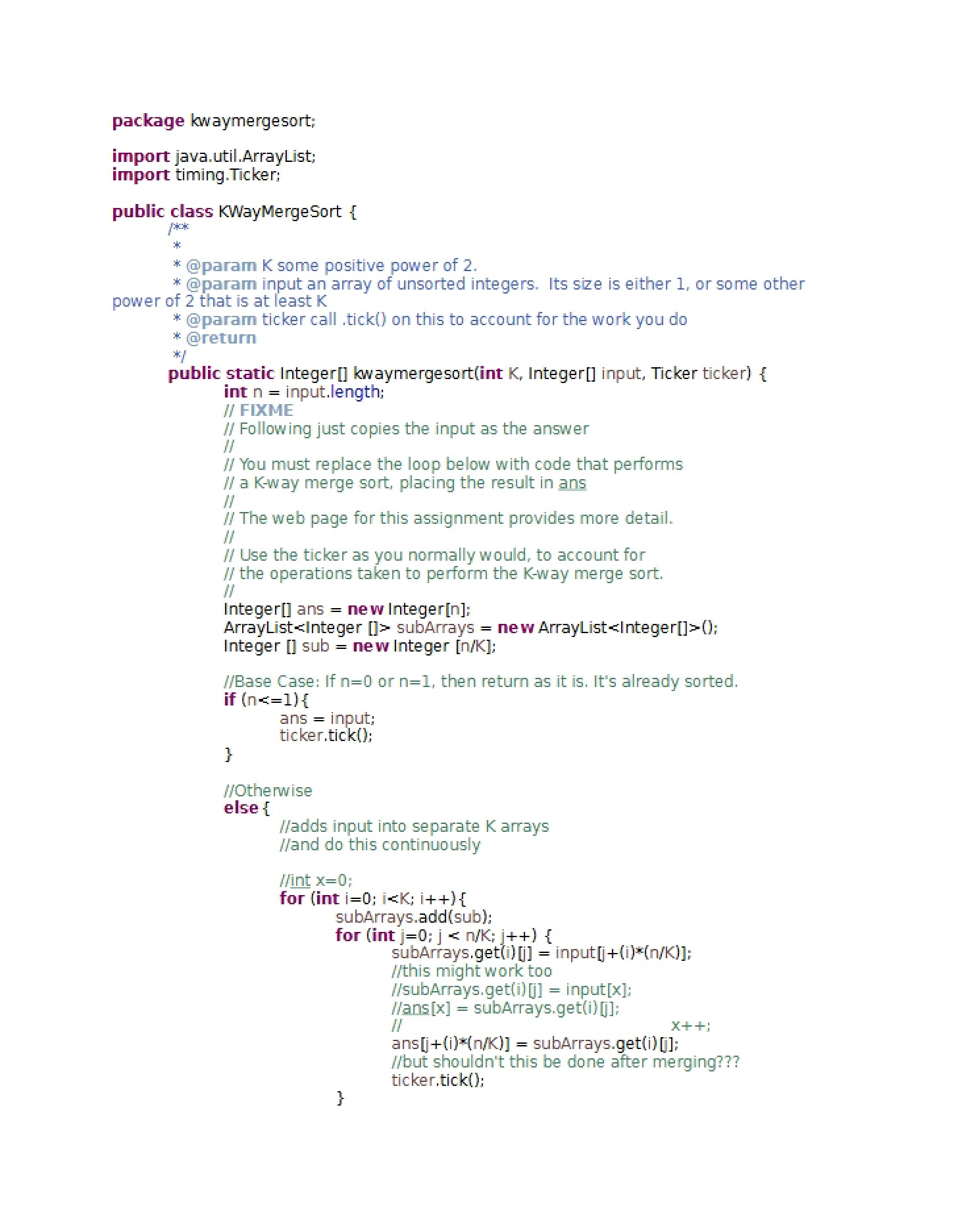
This document contains detailed subject notes focused on the implementation and analysis of the K-Way Merge Sort algorithm, a core topic within Data Structures and Algorithms (CSE 247) at Washington University in St. Louis. It delves into the intricacies of dividing and conquering large datasets for efficient sorting, building upon foundational sorting concepts. The notes present a structured exploration of this advanced sorting technique, likely including code-level details and performance considerations.
Why This Document Matters
These notes are invaluable for students seeking a deeper understanding of divide-and-conquer algorithms and their practical application in sorting. They are particularly helpful when tackling assignments or preparing for exams that require implementing or analyzing sorting algorithms beyond the basic approaches. Students who struggle with recursive thinking or understanding how to optimize sorting performance will find this resource especially beneficial. It’s designed to supplement lectures and textbook material, offering a focused and detailed perspective on K-Way Merge Sort.
Common Limitations or Challenges
This resource focuses specifically on the K-Way Merge Sort algorithm. It does *not* provide a comprehensive overview of all sorting algorithms, nor does it cover broader algorithmic design paradigms outside of divide-and-conquer. It assumes a foundational understanding of basic sorting algorithms (like insertion sort or merge sort) and recursion. While performance aspects are likely discussed, it won’t provide a complete analysis of all possible optimization strategies or comparisons to other advanced sorting techniques.
What This Document Provides
* A detailed exploration of the K-Way Merge Sort algorithm’s logic.
* Potential code-level implementation details (likely in Java, based on the package declaration).
* Discussion of how to break down a sorting problem into smaller, manageable subproblems.
* Insights into the role of parameters like ‘K’ in influencing algorithm performance.
* Possible considerations for measuring and improving the efficiency of the sorting process.
* An examination of how to combine sorted sub-arrays into a final, fully sorted array.