What This Document Is
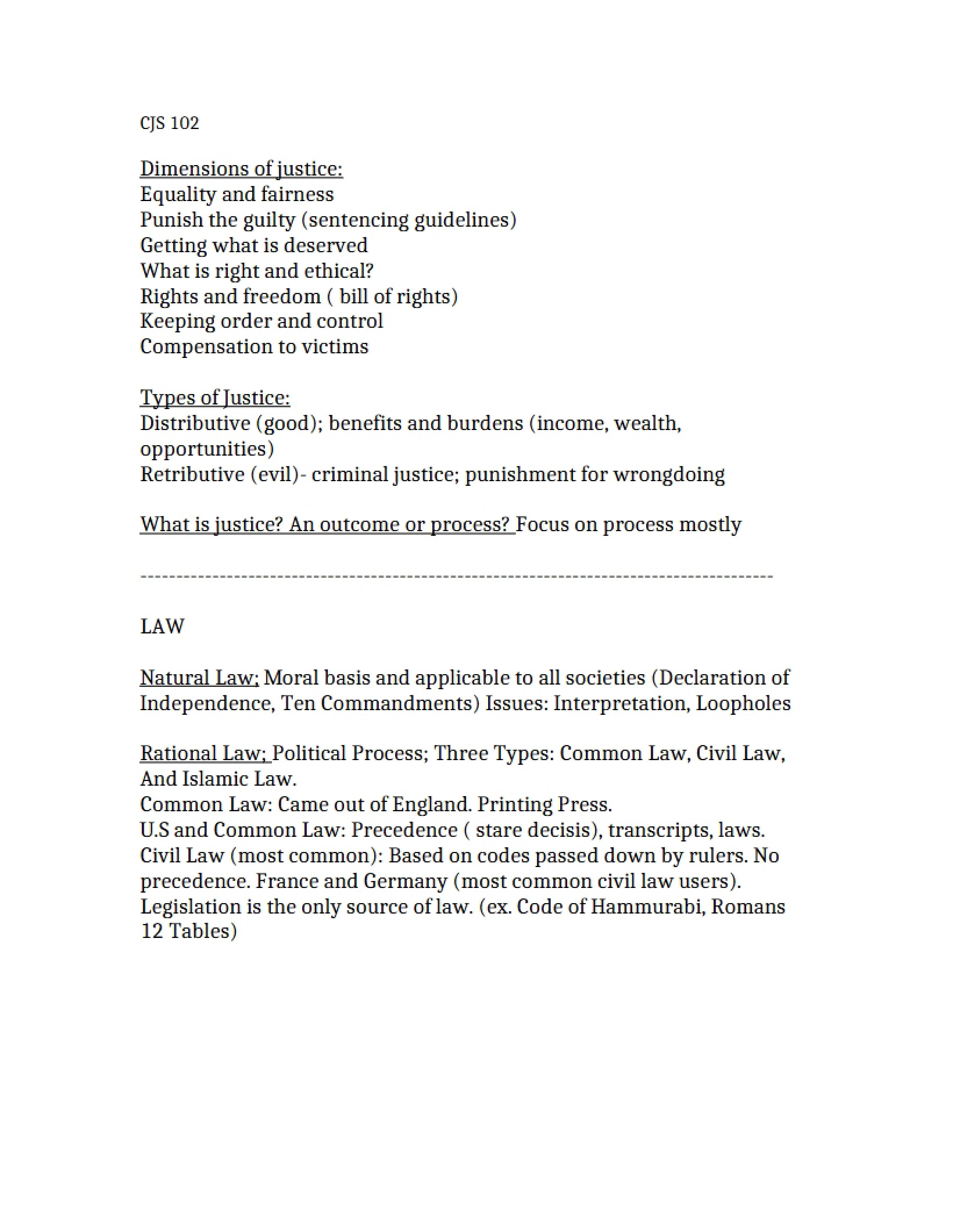
This document is a summary of key concepts from Chapters 1-8 of “Pursuing Justice,” a text used in Illinois State University’s Individuals, Society, and Justice (CJS 102) course. It’s designed to quickly recap the main ideas explored in those chapters, focusing on historical and philosophical foundations of justice.
Why This Document Matters
This study guide is valuable for students enrolled in CJS 102 who are preparing for exams, reviewing course material, or needing a concise overview of complex topics. It’s particularly useful for understanding the diverse perspectives on justice presented in the textbook, from religious and philosophical traditions to the development of legal and political thought. It serves as a focused review tool to reinforce learning.
Common Limitations or Challenges
This document provides a *summary* and does not replace the need to read the full textbook chapters. It’s not a substitute for in-class discussions or independent critical thinking. The summaries are necessarily brief and may not capture the full nuance of the original material. It does not offer analysis or application of these concepts to contemporary issues.
What This Document Provides
This guide includes concise summaries of:
* Early concepts of justice in the Hammurabi Code and the Old Testament.
* Key tenets of Judaism, Islam, Hinduism, and Buddhism related to justice and ethics.
* Philosophical perspectives on justice from Plato, Aristotle, Mill, Kant, and Rawls.
* Historical development of ideas about the state, including the divine right of kings, social contract theory (Hobbes & Locke), and concepts of natural law, positivism, and sociological jurisprudence.
* Distinctions between libertarian and egalitarian viewpoints.
* A brief note on the changing nature of warfare.
This preview *does not* include detailed explanations of complex philosophical arguments, comprehensive coverage of religious beliefs, or in-depth analysis of historical events. It also does not cover material beyond Chapter 8.