What This Document Is
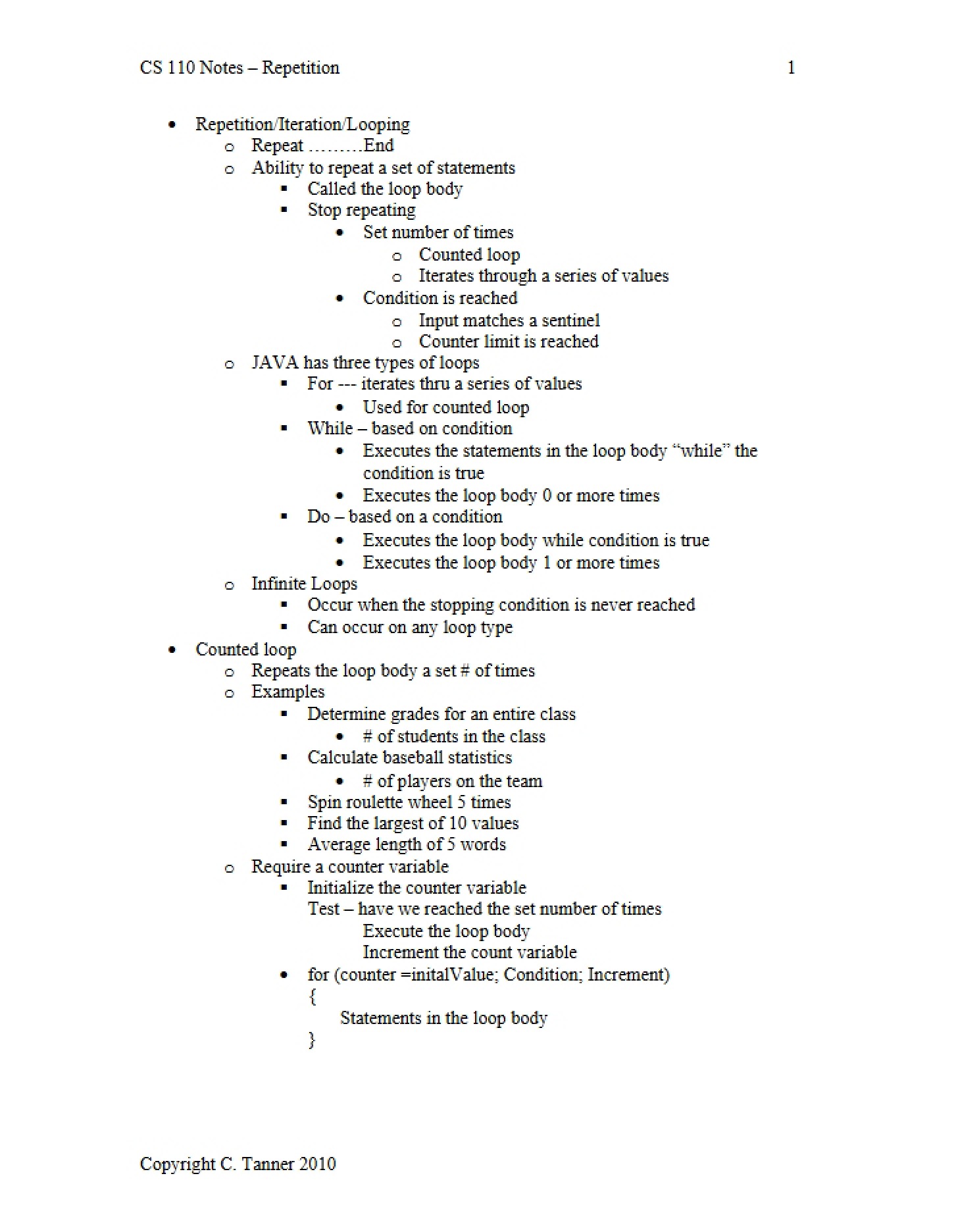
This resource is a focused exploration of fundamental programming concepts within an introductory computer science context. Specifically, it delves into the application of iterative structures – commonly known as loops – to solve common computational problems. The material centers around the idea of accumulating results through repeated application of a process, starting with simple numerical calculations and progressing towards more generalized problem-solving approaches. It uses code examples (in Java) to illustrate these concepts, but the core focus is on the *logic* behind the code, not just the syntax.
Why This Document Matters
This material is ideal for students beginning their journey in computer science, particularly those enrolled in an introductory CS course like CS 110 at West Virginia University. It’s beneficial for anyone struggling to grasp how to translate a real-world problem – like summing a series of numbers – into a set of instructions a computer can execute. Understanding loops is crucial for building more complex programs and is a foundational skill for nearly all areas of software development. This resource can be used during independent study, as a supplement to lectures, or as a reference while working on programming assignments.
Common Limitations or Challenges
This resource focuses on the core principles of iterative calculations and doesn’t provide a comprehensive overview of all looping structures or advanced programming techniques. It assumes a basic familiarity with fundamental programming concepts like variables and data types. While code examples are provided, the material doesn’t offer extensive debugging assistance or cover every possible error scenario. It also doesn’t cover alternative methods for solving the presented problems beyond the iterative approach.
What This Document Provides
* Illustrative examples demonstrating how to solve problems using iterative processes.
* A breakdown of the essential components needed to construct a loop-based program.
* Discussion of how to adapt a basic program to handle more generalized calculations based on user input.
* An exploration of how iterative techniques can be applied to modify existing programs, such as those utilizing conditional statements.
* A foundation for understanding how to design algorithms that repeat a set of instructions until a specific condition is met.