What This Document Is
This is a supplementary homework assignment designed to reinforce key concepts from Introduction to Statistical Methods (STAT 301) at the University of Wisconsin-Madison. It focuses on applying statistical testing principles, particularly within the context of completely randomized designs (CRD) and contingency tables. The assignment builds upon material covered in Sections 2.3 and 2.5 of the course, delving into scenarios involving hypothetical data and the evaluation of statistical skepticism. It requires students to work through problems related to test statistic calculations and P-value interpretations.
Why This Document Matters
This assignment is ideal for students in STAT 301 who are looking for extra practice to solidify their understanding of hypothesis testing. It’s particularly helpful for those who want to test their ability to apply theoretical knowledge to practical problems involving experimental design and data analysis. Working through these exercises will strengthen your skills in determining the validity of statistical claims and interpreting results, preparing you for more complex statistical analyses and assessments. It’s best used *after* reviewing the corresponding lecture materials and textbook sections.
Common Limitations or Challenges
This assignment does not provide a comprehensive review of all statistical methods covered in STAT 301. It specifically targets concepts related to contingency tables and the Fisher’s test, and assumes a foundational understanding of statistical principles. It does not offer step-by-step solutions or fully worked-out examples; rather, it presents problems for independent practice. Access to the course textbook and lecture notes is highly recommended for successful completion.
What This Document Provides
* Practice problems involving balanced and unbalanced completely randomized designs.
* Scenarios requiring the calculation of test statistics under different treatment assignments.
* Exercises focused on evaluating the impact of a “skeptic’s” assumptions on statistical results.
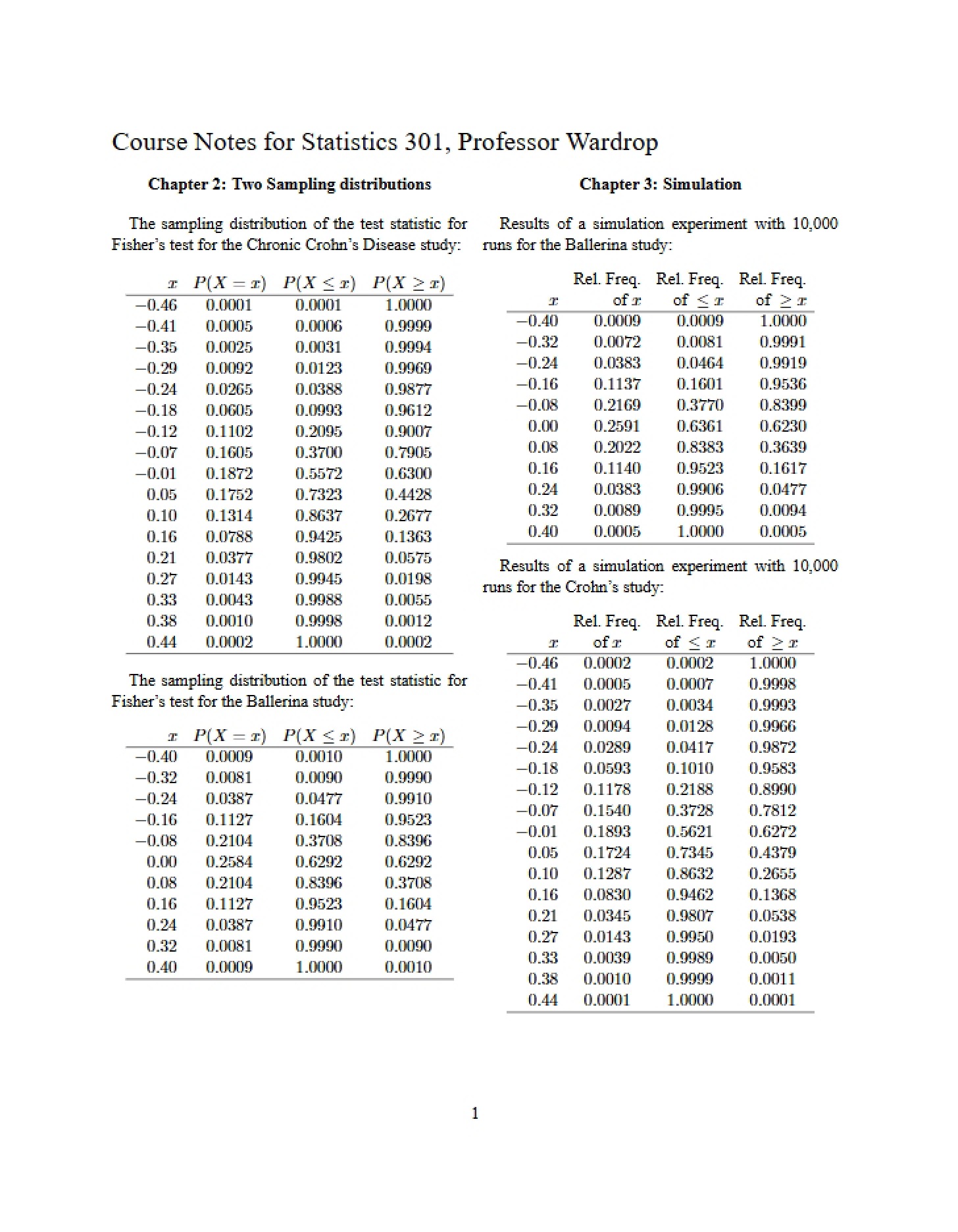
* Problems centered around interpreting sampling distributions of test statistics.
* Tasks involving the determination of P-values for various alternative hypotheses.
* Application of statistical concepts to dichotomous response variables.
* Exercises utilizing contingency tables to analyze data.