What This Document Is
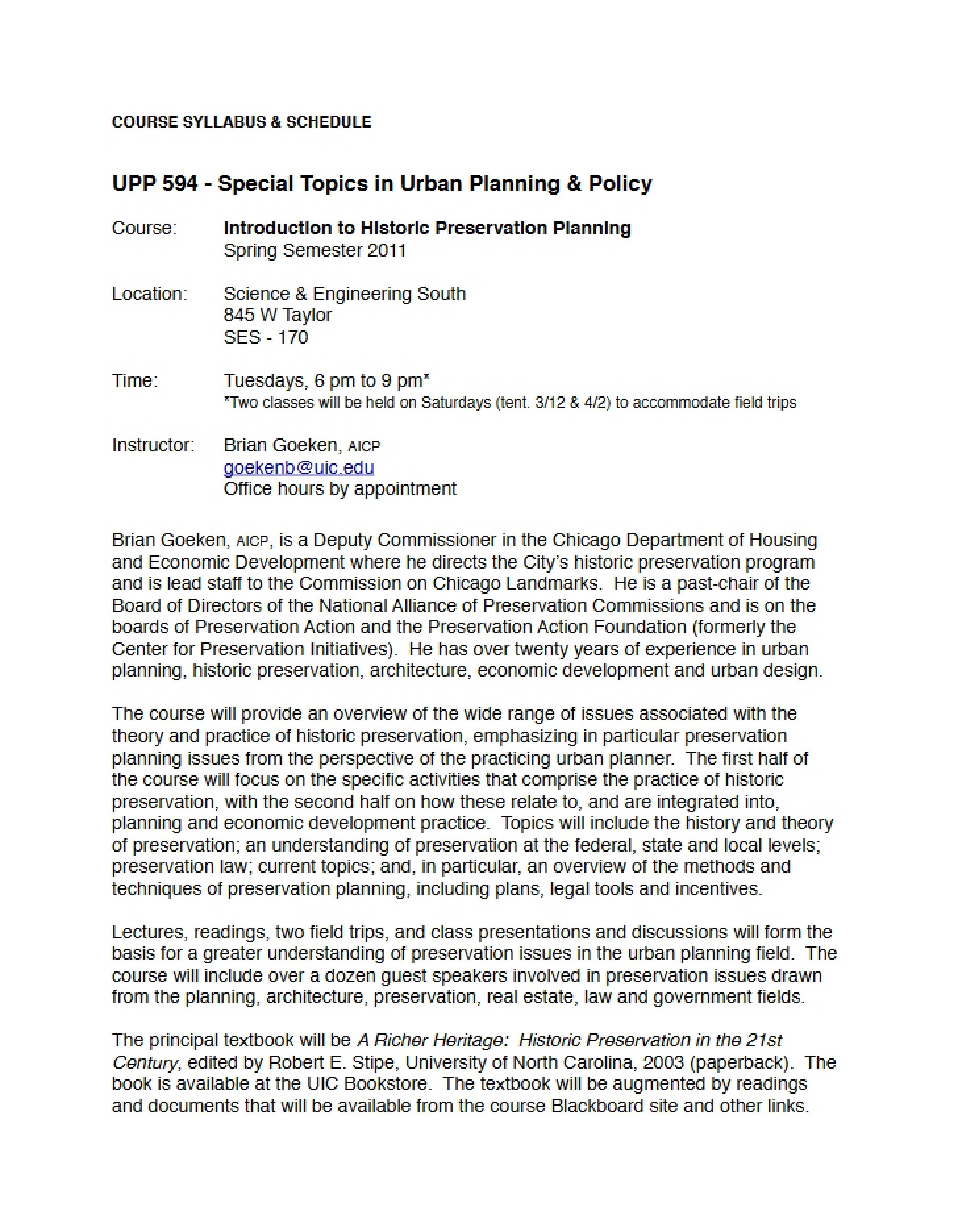
This is a detailed syllabus for an upper-level urban planning course focusing on a specialized area within the field: historic preservation planning. Offered at the University of Illinois at Chicago, this syllabus outlines the course structure, expectations, and schedule for a semester-long exploration of the principles and practices involved in protecting and utilizing historic resources. It serves as a foundational guide for students intending to engage with the complexities of preserving cultural heritage within modern urban environments.
Why This Document Matters
This syllabus is essential for prospective students considering enrollment in the course. It allows individuals to understand the scope of the subject matter, the instructor’s background, and the methods of assessment. Current students will find it to be a crucial reference throughout the semester, detailing assignment deadlines, required readings, and the overall learning objectives. Professionals in urban planning, architecture, and related fields may also benefit from reviewing the syllabus to gain insight into current academic approaches to historic preservation.
Topics Covered
* The foundational principles and rationale behind historic preservation efforts.
* Legal and regulatory frameworks governing preservation at the federal, state, and local levels.
* Economic considerations and funding mechanisms related to preservation projects.
* Planning techniques for identifying, evaluating, and protecting historic resources.
* The application of preservation standards and guidelines to various types of properties.
* The role of community engagement and advocacy in preservation planning.
* Processes for design review and demolition control.
* Case studies illustrating successful preservation initiatives.
What This Document Provides
* A comprehensive course schedule with weekly topics and assigned readings.
* Information about the instructor’s expertise and contact details.
* A clear breakdown of the grading components and their respective weights.
* A list of required textbooks and supplementary resources, including online links.
* Descriptions of specific assignments designed to develop practical skills in preservation planning.
* References to key legislation and professional organizations in the field.