What This Document Is
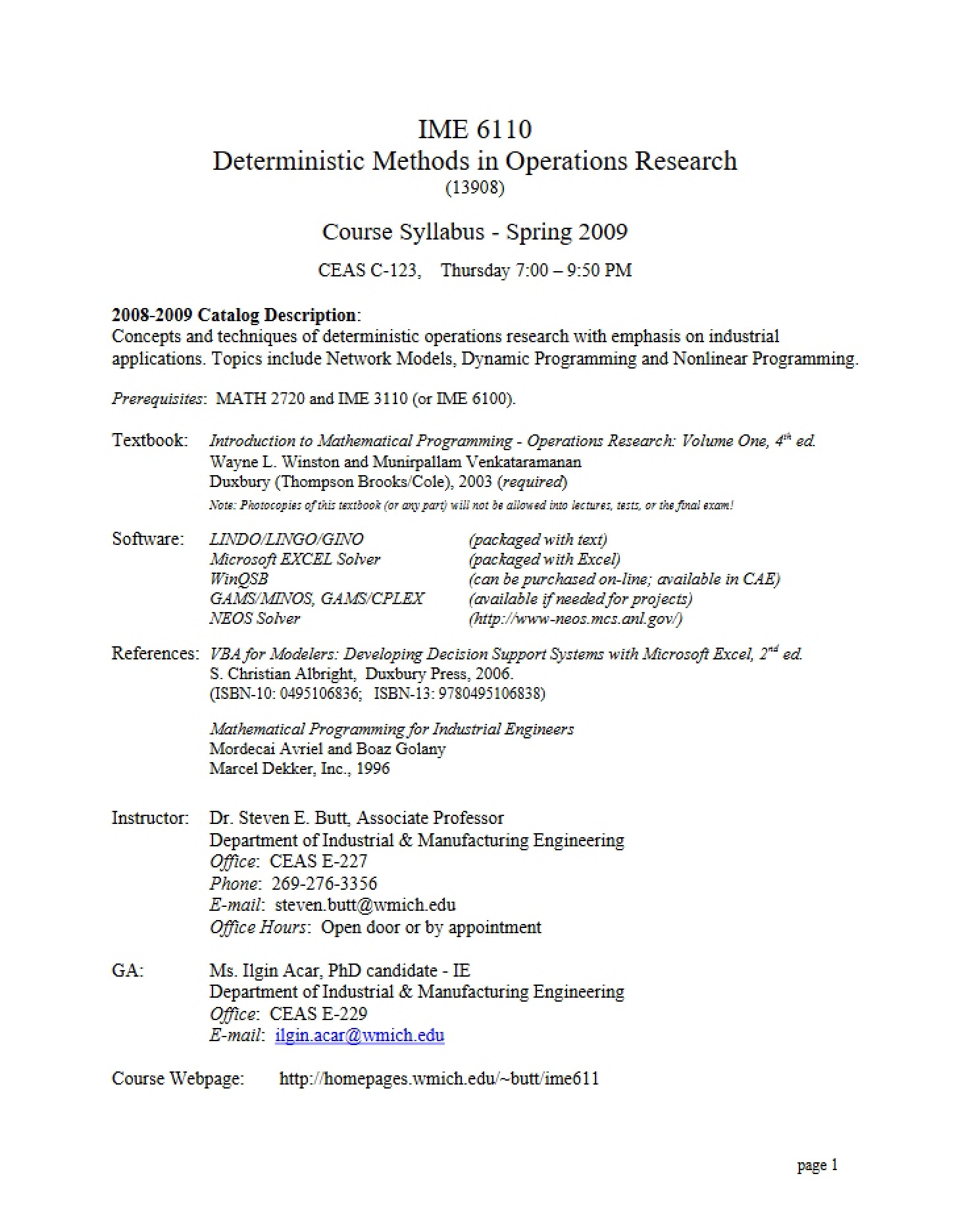
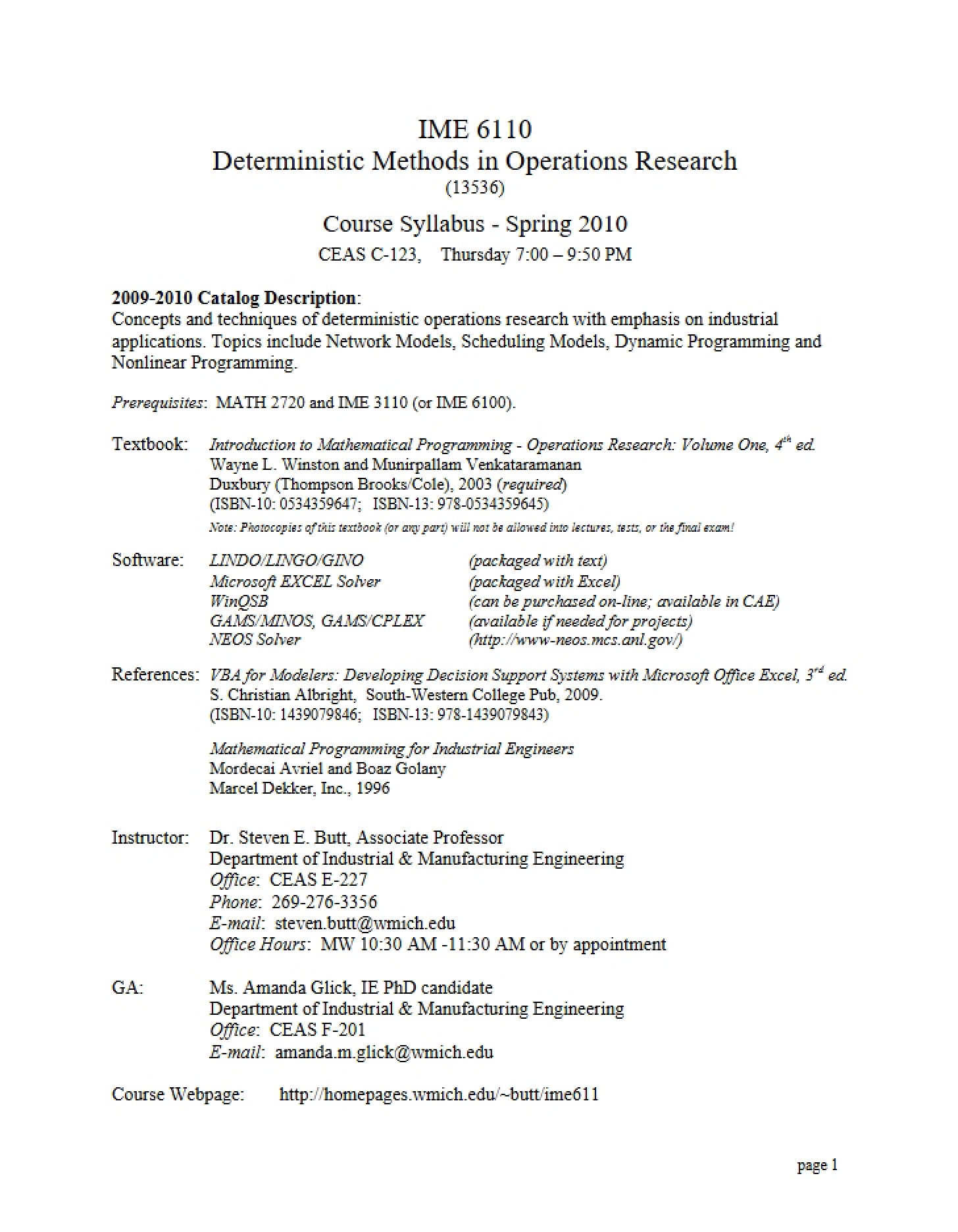
This is a course syllabus for IME 6110: Deterministic Methods in Operations Research, offered at Western Michigan University. It’s a foundational document outlining the expectations, structure, and policies for students enrolled in this graduate-level course during the Spring 2011 semester. The syllabus serves as a contract between the instructor and students, detailing how the course will be conducted and assessed. It’s a crucial starting point for understanding the requirements and workload associated with the course.
Why This Document Matters
This syllabus is essential for any student considering enrolling in, or currently enrolled in, IME 6110. It clarifies prerequisites, required materials, and the grading breakdown. Prospective students can use it to determine if their academic background aligns with the course’s demands. Current students will refer to it throughout the semester to stay informed about assignment due dates, exam schedules, and the instructor’s policies on attendance and academic integrity. Understanding the syllabus upfront can significantly contribute to success in the course.
Common Limitations or Challenges
This syllabus provides an overview of the course but does *not* contain the actual course content, lecture notes, assignments, or exam questions. It outlines the topics that *will* be covered – network models, scheduling, dynamic and nonlinear programming – but doesn’t delve into the specific methodologies or problem-solving techniques. It also doesn’t offer detailed explanations of the software packages mentioned, only that they are required or recommended for use.
What This Document Provides
* A clear description of the course objectives and its place within the broader Industrial & Manufacturing Engineering curriculum.
* Information about required and recommended textbooks and software.
* Details regarding instructor contact information and office hours.
* A breakdown of the grading components (assignments, tests, project, final exam) and their respective weights.
* The university’s policies on academic honesty and attendance.
* Information on where to find the course webpage.
* A description of the course’s evaluation criteria and grading scale.