What This Document Is
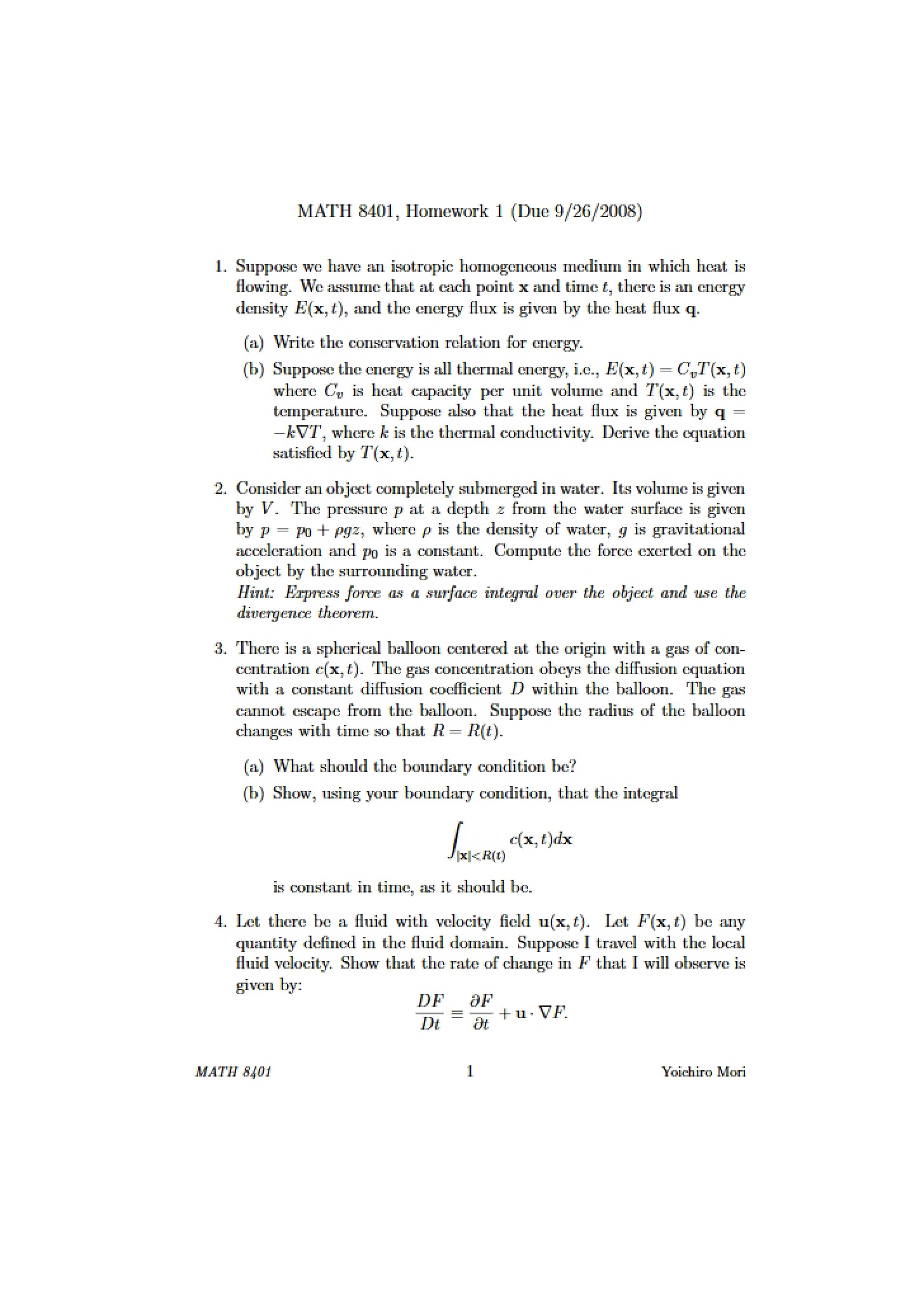
This is the official syllabus for MATH 8401: Mathematical Modeling and Methods of Applied Mathematics, offered at the University of Minnesota Twin Cities. It’s a foundational course outlining the structure, expectations, and scope of a graduate-level exploration into the core principles of applied mathematics. The syllabus serves as a contract between the instructor and students, detailing essential course information.
Why This Document Matters
This syllabus is crucial for any student considering enrollment in MATH 8401, or currently registered. It’s essential reading *before* the course begins to understand the prerequisites, required background knowledge, and the overall approach to the subject matter. Prospective students can use it to assess if their mathematical foundation aligns with the course demands. Current students will refer to it throughout the semester for important dates, policies, and a roadmap of the topics to be covered. It’s particularly valuable for students planning to continue with the subsequent course, MATH 8402.
Common Limitations or Challenges
This syllabus provides a high-level overview and tentative plan. It does *not* contain the detailed lecture notes, problem sets, or specific solutions that form the core learning experience of the course. The syllabus outlines topics, but doesn’t delve into the intricacies of the mathematical derivations or applications. It also doesn’t offer personalized guidance or address individual learning needs – those are best addressed through direct interaction with the instructor.
What This Document Provides
* Instructor contact information and office hours (once scheduled).
* A list of recommended reference materials, including relevant textbooks.
* Clearly stated prerequisites to ensure students have the necessary background.
* A broad course description outlining the central themes and methodologies.
* A tentative list of key mathematical areas to be explored, including differential equations, Fourier analysis, integral equations, and the calculus of variations.
* Information regarding the relationship to a follow-on course (MATH 8402).