What This Document Is
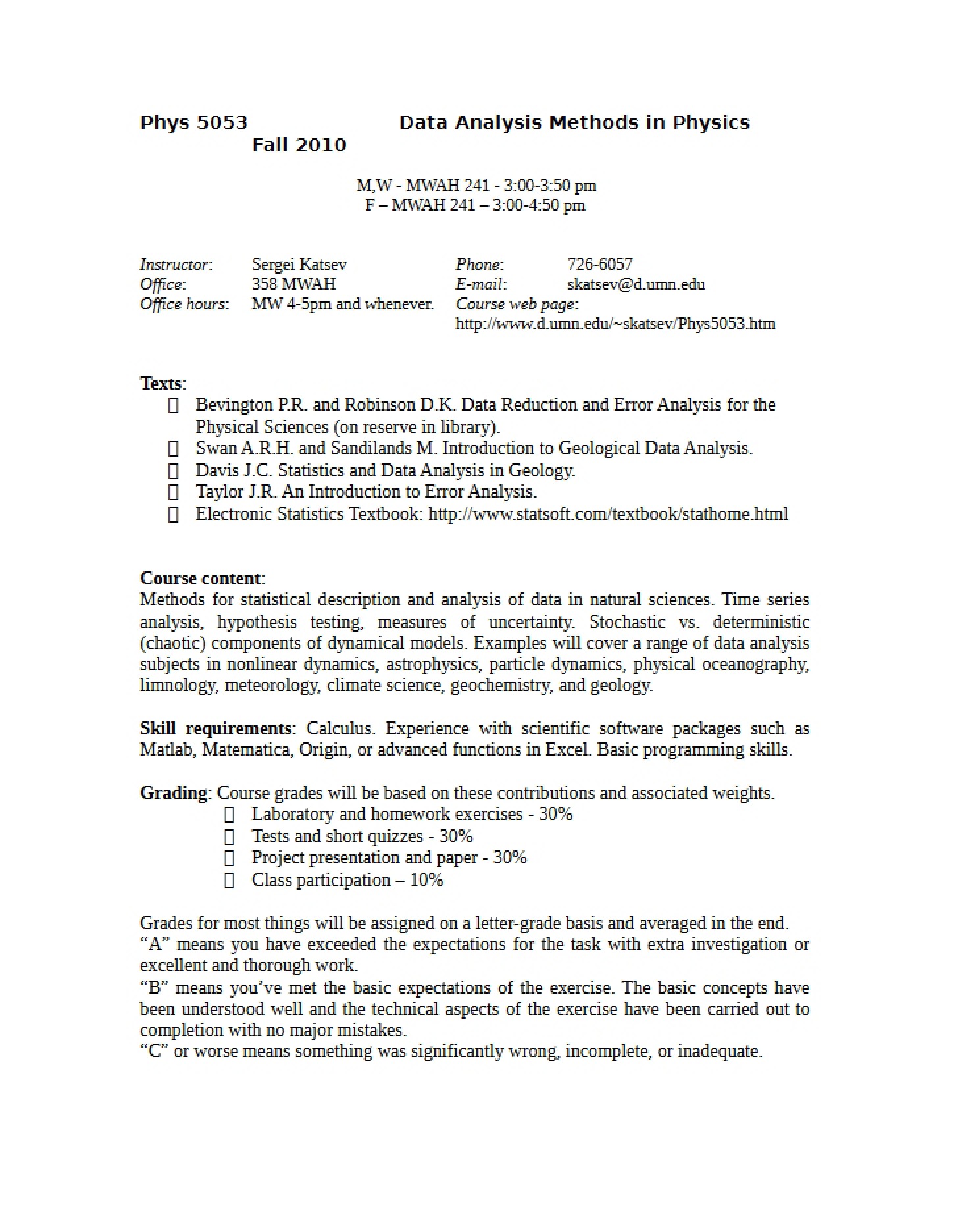
This is a comprehensive syllabus for Phys 5053, a graduate-level Data Analysis course offered at the University of Minnesota Twin Cities. It outlines the course structure, expectations, and assessment methods for students studying statistical methods applied to problems in the physical sciences. The syllabus details the scope of data analysis techniques covered, ranging from fundamental statistical descriptions to more advanced topics like time series analysis and hypothesis testing.
Why This Document Matters
This syllabus is essential for anyone considering enrolling in Phys 5053, or currently registered, to fully understand the course requirements and expectations. Prospective students can determine if their existing skillset – particularly in calculus and scientific computing – aligns with the course prerequisites. Current students will find crucial information regarding grading criteria, project guidelines, and policies related to class participation and academic integrity. It serves as a central reference point throughout the semester.
Common Limitations or Challenges
This syllabus provides an overview of the course; it does *not* contain the detailed lecture notes, specific problem sets, or solutions to exercises. It outlines the *types* of data and scientific fields explored, but doesn’t reveal the specific datasets used in analysis. The syllabus also doesn’t provide in-depth explanations of the statistical methods themselves – those are covered within the course materials. It’s a roadmap, not the territory.
What This Document Provides
* A clear outline of course logistics: meeting times, location, and instructor contact information.
* A list of recommended textbooks and online resources for further study.
* A description of the core skills expected of students, including programming and software proficiency.
* A breakdown of the grading components and their respective weights (homework, tests, projects, participation).
* Guidance on the expectations for assignments, including the importance of clear communication and visualization of results.
* Information regarding university policies related to students with disabilities.
* An overview of the final project requirements and timeline.