What This Document Is
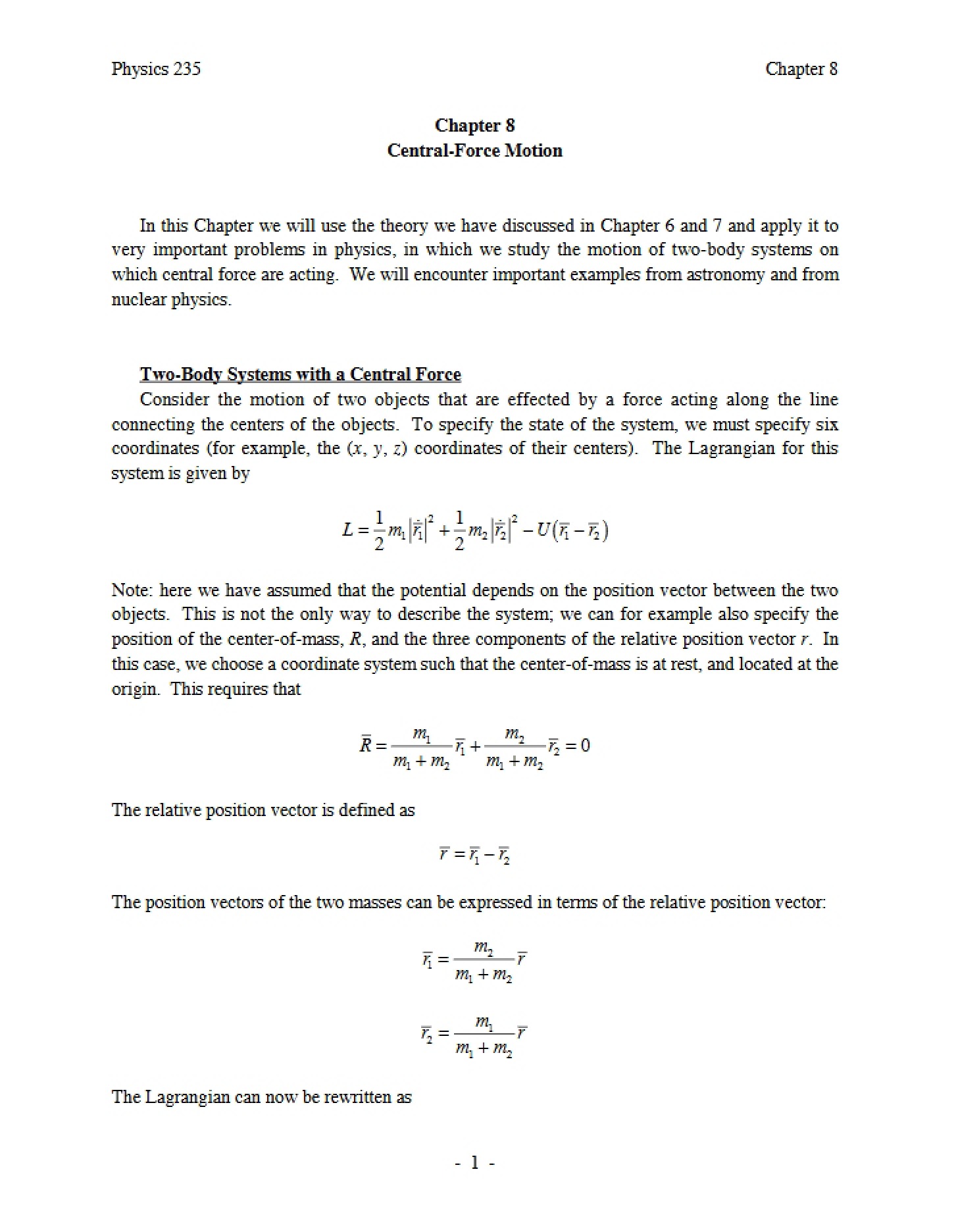
These are comprehensive notes covering the dynamics of systems comprised of multiple particles, specifically tailored for a Classical Mechanics course (PHY 235) at the University of Rochester. This material expands upon foundational concepts introduced in earlier modules, moving beyond the analysis of single particles or simple two-body problems to explore the complexities of interacting particle systems. It delves into the mathematical framework needed to describe and predict the motion of such systems under the influence of both internal and external forces.
Why This Document Matters
This resource is invaluable for students enrolled in intermediate to advanced physics courses, particularly those focusing on mechanics. It’s most beneficial when studying topics like multi-body systems, rotational motion, and conservation laws. Students preparing for exams or tackling complex problem sets will find these notes a strong foundation for understanding the underlying principles. It’s designed to supplement lectures and textbook readings, offering a consolidated and focused review of key concepts.
Common Limitations or Challenges
These notes are a focused exploration of theoretical concepts and their application to particle systems. They do *not* include worked examples or step-by-step solutions to practice problems. While the notes provide the necessary equations and definitions, applying these concepts to specific scenarios requires independent practice and problem-solving skills. This resource assumes a prior understanding of introductory mechanics, calculus, and vector algebra.
What This Document Provides
* A detailed examination of the concept of the center of mass and its significance in simplifying the analysis of complex systems.
* A rigorous treatment of linear momentum for systems of particles, including its relationship to external forces.
* An exploration of the conditions under which linear momentum is conserved within a system.
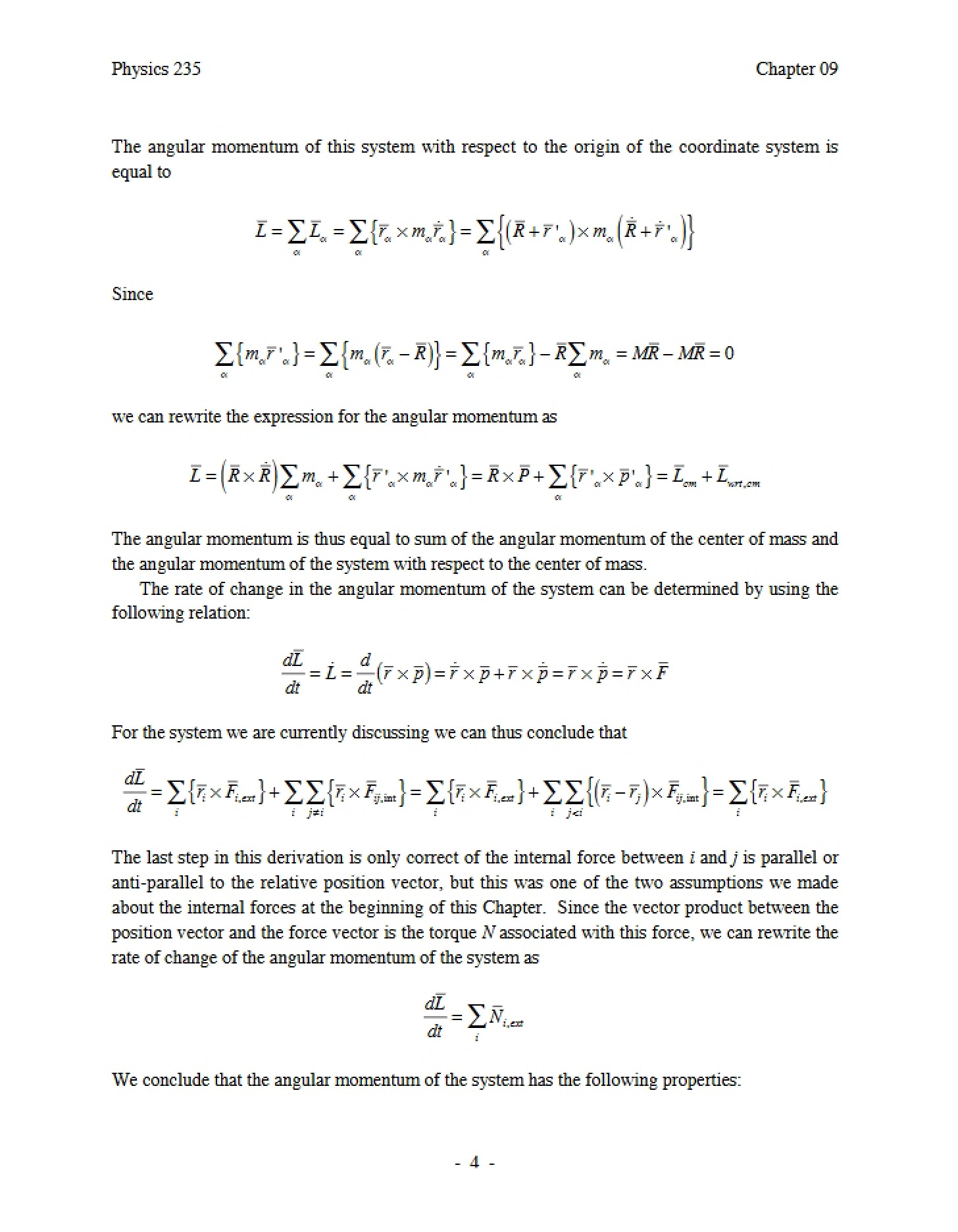
* A foundational understanding of angular momentum in the context of multi-particle systems.
* A framework for separating the motion of a system into the motion of its center of mass and the motion of particles relative to that center of mass.