What This Document Is
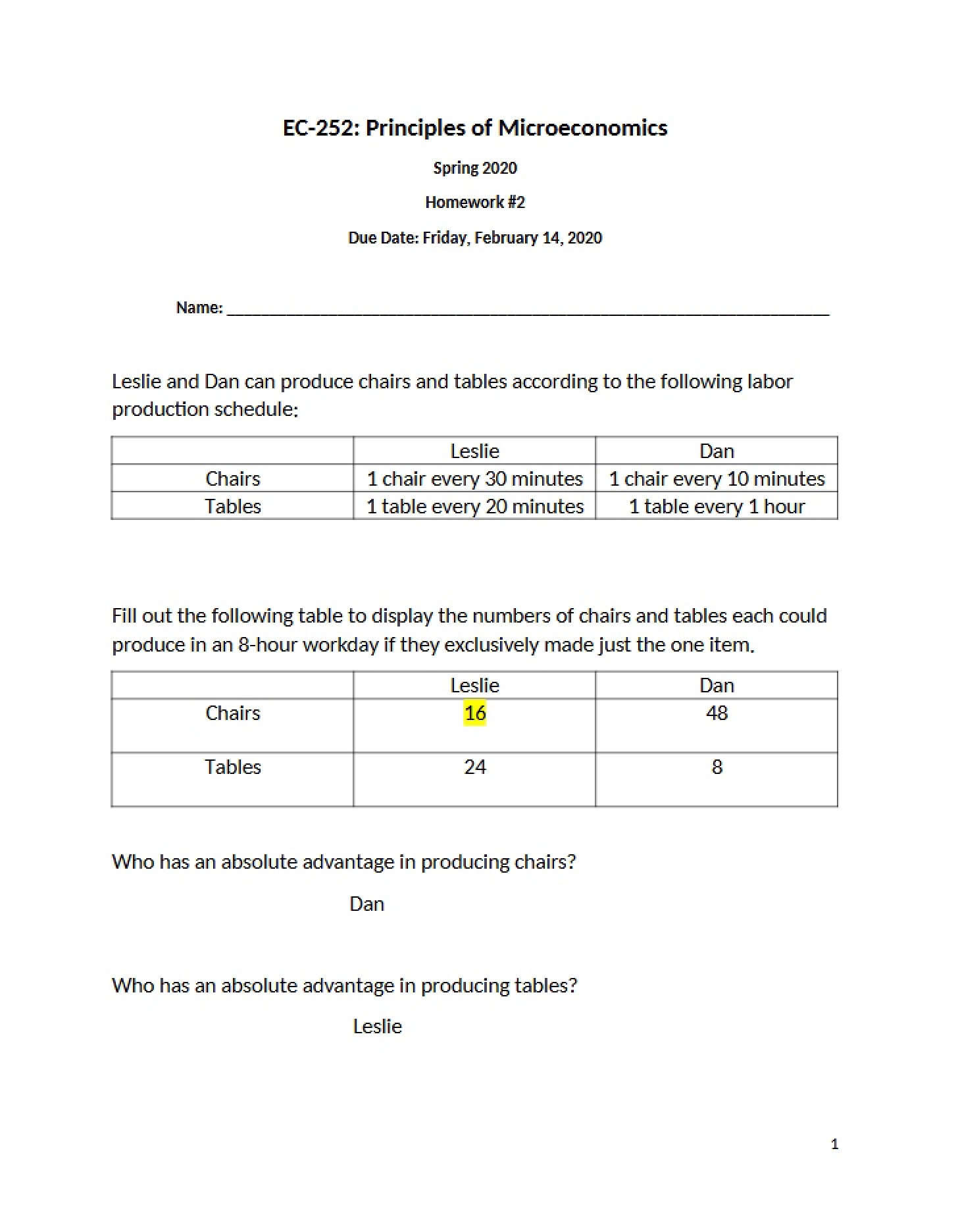
This is a problem set – Task 01 – for QM 291: Statistical Process Control at the University of North Alabama. It’s designed to assess your understanding of foundational economic principles and their application to production and trade scenarios. The assignment focuses on core concepts from microeconomics, including production possibilities frontiers, valuation, opportunity cost, and comparative advantage. It requires both graphical analysis and calculations to demonstrate comprehension.
Why This Document Matters
This assignment is crucial for students enrolled in QM 291. Successfully completing it will solidify your grasp of fundamental economic concepts that are essential for understanding statistical process control. It’s particularly helpful for students who are building a base in economic reasoning and preparing to apply these principles to quality management and operational efficiency. Working through these problems will strengthen your analytical skills and prepare you for more complex topics covered later in the course. It’s best utilized *after* reviewing relevant lecture materials and textbook chapters.
Common Limitations or Challenges
This assignment focuses on applying theoretical concepts to simplified scenarios. It does *not* provide a comprehensive overview of all microeconomic principles, nor does it delve into the statistical methods that will be central to the QM 291 course. It also doesn’t offer step-by-step solutions; it’s designed to be a self-directed learning exercise where you apply your knowledge. The problems require careful reading and a solid understanding of the underlying economic models.
What This Document Provides
* A series of problems relating to core microeconomic principles.
* Scenarios involving production possibilities frontiers and resource allocation.
* Exercises requiring the determination of individual valuations for different goods.
* Opportunities to analyze trade scenarios and identify potential gains.
* Problems focused on calculating opportunity costs and comparative advantage.
* Graphical analysis tasks to illustrate economic concepts.
* A practical application of economic principles to a manufacturing context.