What This Document Is
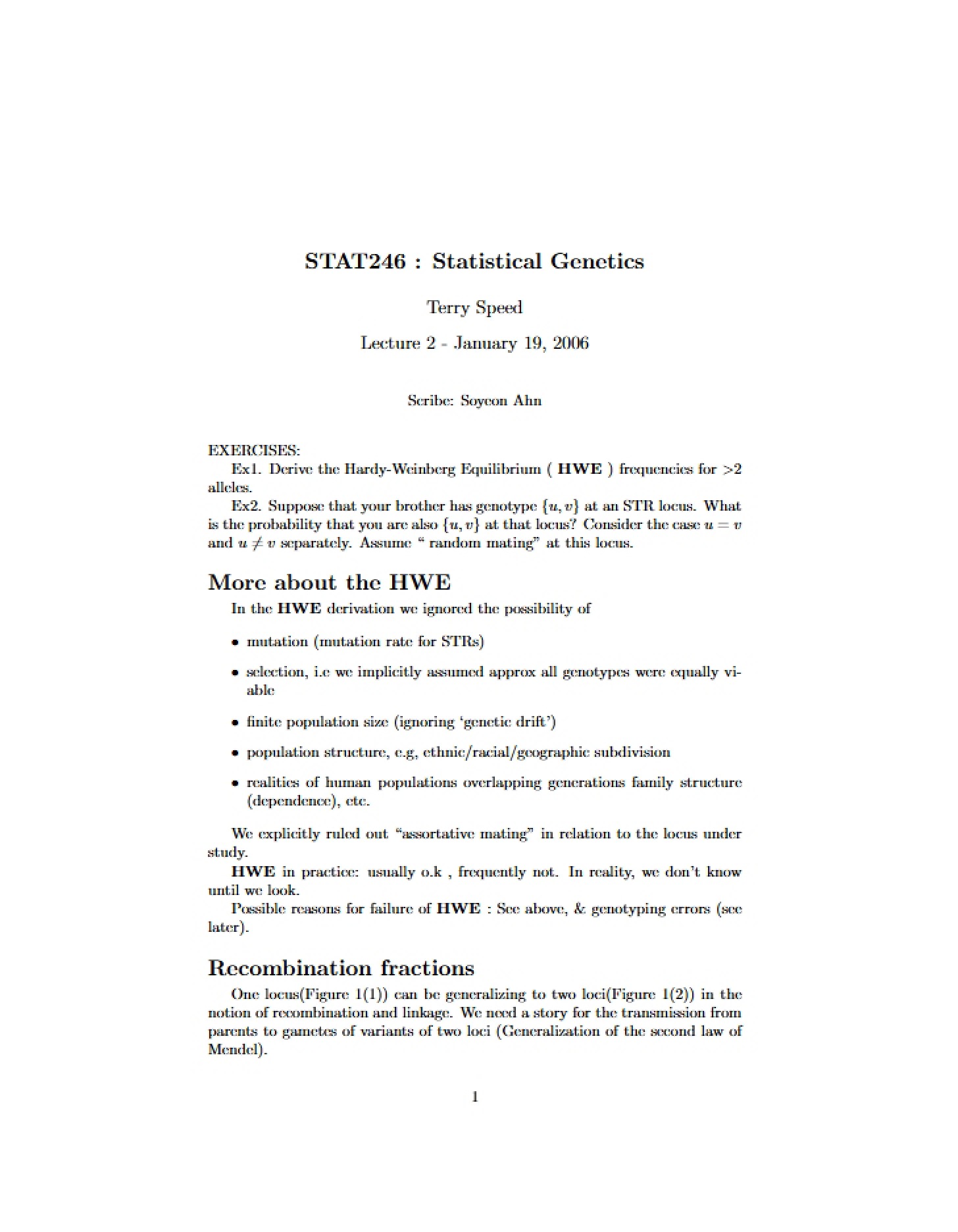
This document comprises lecture notes from Statistics 246, a Statistical Genetics course offered at the University of California, Berkeley. Specifically, it focuses on the application of statistical methods to investigate the genetic basis of complex diseases, using Multiple Sclerosis (MS) as a case study. The material delves into the challenges and approaches used in identifying genetic factors contributing to disease susceptibility, moving beyond traditional genetic analysis techniques. It represents a focused exploration of population-based genetic studies.
Why This Document Matters
Students enrolled in advanced genetics, biostatistics, or related fields will find this resource particularly valuable. It’s ideal for those seeking a deeper understanding of how statistical principles are applied to real-world genetic research. Researchers involved in disease gene mapping or association studies will also benefit from the concepts discussed. This material is best utilized as a supplement to coursework or as a reference during independent study, providing a detailed look at the complexities of genetic association analysis.
Topics Covered
* Fundamentals of association mapping and linkage mapping
* The concept of linkage disequilibrium (LD) and its role in genetic studies
* Case-control study design and potential pitfalls, including population structure
* The Transmission Disequilibrium Test (TDT) and its advantages
* Haplotype analysis as a method for disease gene localization
* Challenges in identifying genetic contributions to complex diseases like MS
What This Document Provides
* A detailed examination of statistical approaches to genetic association studies.
* Discussion of the considerations when selecting appropriate control populations for genetic research.
* An overview of methods designed to mitigate the impact of population structure on study results.
* A framework for understanding the principles behind analyzing genetic data from family-based studies (triads).
* Conceptual foundations for interpreting the relationship between marker alleles and disease susceptibility.