What This Document Is
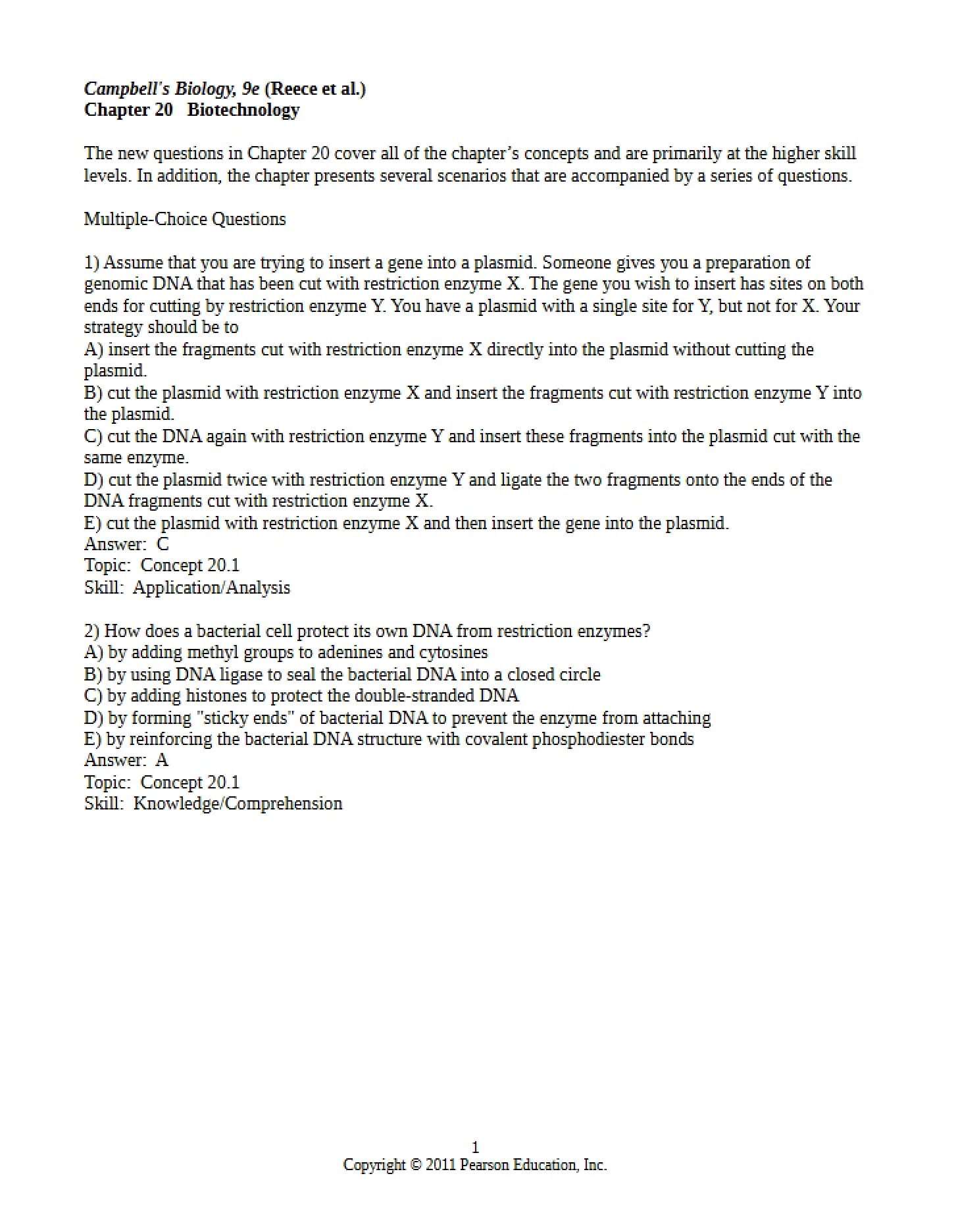
This document is a comprehensive test bank designed to assess your understanding of key concepts within Chapter 12 of a leading introductory biology textbook, focusing on the cell cycle. It’s structured as a series of multiple-choice questions, carefully aligned with the material typically covered in a university-level Introduction to Biology course (BIOL 101) at institutions like the University of South Carolina. The questions are intended to challenge your recall, application, and analytical skills related to cellular reproduction and its regulation.
Why This Document Matters
This resource is invaluable for students preparing for quizzes, midterms, or final exams covering the cell cycle. It’s particularly helpful for identifying areas where your understanding needs strengthening. Working through these types of questions can significantly improve your ability to apply biological principles and think critically about cellular processes. It’s best used *after* you’ve thoroughly reviewed the corresponding chapter in your textbook and attended related lectures. It’s also a great tool for study groups, allowing you to test each other and discuss challenging topics.
Common Limitations or Challenges
This test bank focuses primarily on factual recall and conceptual understanding through multiple-choice questions. It does *not* include detailed explanations of the answers, worked examples, or in-depth discussions of the underlying biological principles. It’s designed to *test* your knowledge, not to teach it. Furthermore, questions referencing specific diagrams or scenarios from the textbook are positioned separately and may require access to the textbook itself for full context.
What This Document Provides
* A large collection of multiple-choice questions covering the core concepts of the cell cycle.
* Questions categorized by relevant textbook “Concepts” to help focus your study.
* Indication of the “Skill” level each question assesses (Knowledge/Comprehension, Application/Analysis, Synthesis/Evaluation).
* Questions designed to test understanding of chromosome structure, mitosis, cytokinesis, and spindle formation.
* Questions exploring the impact of external factors on cell division.