What This Document Is
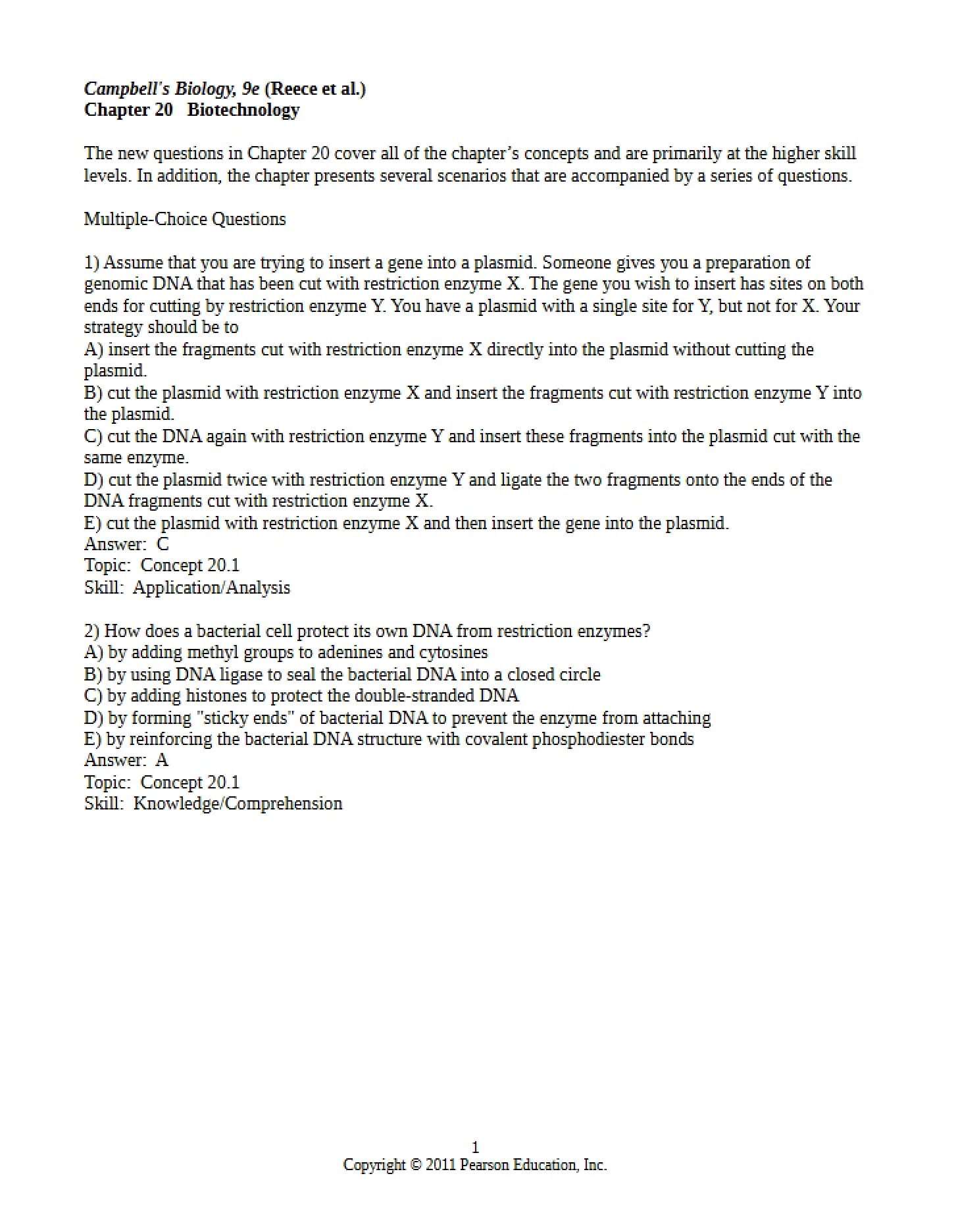
This document is a comprehensive test bank designed to assess your understanding of gene regulation, a core concept within introductory biology. Specifically, it focuses on the material typically covered in Chapter 18 of Campbell’s Biology, 9th edition. It’s structured as a series of multiple-choice questions, mirroring the format you can expect on quizzes and exams within a university-level biology course. The questions are designed to probe your knowledge of prokaryotic gene regulation mechanisms.
Why This Document Matters
This test bank is an invaluable resource for students enrolled in BIOL 101 at the University of South Carolina, or any similar introductory biology course. It’s perfect for self-assessment, allowing you to identify areas where your understanding is strong and where further review is needed. Use it to prepare for in-class assessments, midterms, or the final exam. Working through these questions will help solidify your grasp of complex biological processes and improve your test-taking skills. It’s particularly useful for students who benefit from active recall and applying concepts in a question-and-answer format.
Common Limitations or Challenges
This test bank is a tool for *evaluating* your knowledge, not a substitute for thorough study of the textbook and lecture materials. It does not contain detailed explanations of the underlying biological principles. While questions are categorized by relevant concepts, it doesn’t offer a re-teaching of the material. Successfully utilizing this resource requires a foundational understanding of gene expression and its regulation. It also doesn’t include essay questions or other assessment types.
What This Document Provides
* A large number of multiple-choice questions covering key concepts related to gene regulation.
* Questions categorized by specific concepts within the chapter.
* Indication of the cognitive skill level required to answer each question (Knowledge/Comprehension, Application/Analysis).
* Questions designed to test your understanding of repressible and inducible operons.
* Questions exploring the roles of various regulatory molecules like repressors, inducers, and corepressors.
* Questions relating to allosteric proteins and their function in gene regulation.