What This Document Is
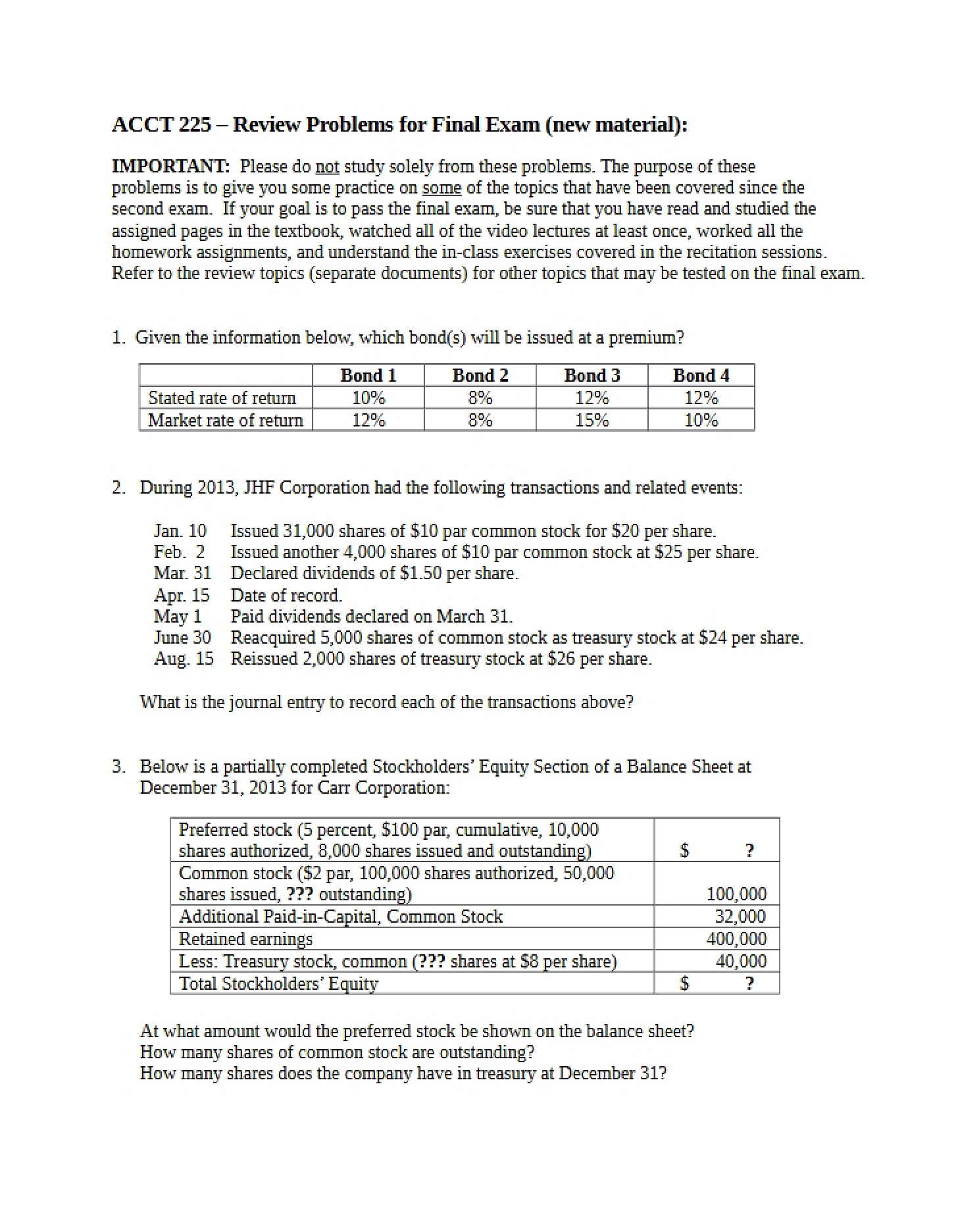
This resource is a focused preparation tool for Test Three in ACCT 225, Introduction to Financial Accounting at the University of South Carolina. It’s designed as a comprehensive vocabulary and concepts review, covering a range of topics crucial for success on the assessment. The material centers around key accounting principles and their application in various financial scenarios. Expect a detailed overview of areas like investments, equity, and cash flow analysis.
Why This Document Matters
This is an invaluable resource for students aiming to solidify their understanding of intermediate financial accounting concepts *before* a high-stakes exam. It’s particularly helpful for those who benefit from a structured review of terminology and foundational principles. Use this as a final check of your knowledge, a tool to identify areas needing further study from your course materials, or a quick refresher before the test. Students who proactively review these concepts will be better prepared to apply them to complex problems and case studies.
Common Limitations or Challenges
This resource is *not* a substitute for attending lectures, completing assigned readings, or working through practice problems. It does not include detailed explanations of accounting procedures, step-by-step calculations, or solved examples. It also doesn’t cover every single topic potentially included on the exam – it focuses on a core set of concepts. Access to the full resource is required to gain a complete understanding of the material.
What This Document Provides
* A glossary of essential accounting terms related to investments and securities.
* Key definitions surrounding stock transactions and equity classifications.
* An overview of different valuation methods, including present and future value concepts.
* A breakdown of dividend-related terminology and important dates.
* An introduction to the components of the Statement of Cash Flows.
* Explanations of financial statement analysis techniques (horizontal, vertical, and ratio analysis).
* Categorization of cash flow activities (operating, investing, and financing).