What This Document Is
This document comprises chapter outlines and class notes from THEA 102, Introduction to Theater at Binghamton University, compiled by a student, Victoria Scaglione. It appears to be a study aid created to accompany a theater textbook, covering key concepts and playwrights discussed in the course. The notes span at least Chapters 1 and 5 of the textbook.
Why This Document Matters
This resource is valuable for students currently enrolled in THEA 102, or those revisiting the foundational concepts of theater studies. It’s particularly useful for review before quizzes or exams, or for quickly referencing core ideas from lectures and readings. The notes offer a condensed overview of complex topics, potentially saving time compared to re-reading entire chapters.
Common Limitations or Challenges
These notes represent one student’s interpretation and organization of the course material. They should not be considered a substitute for attending lectures, completing assigned readings, or engaging with the full textbook. The notes are incomplete, covering only select chapters and potentially missing nuances discussed in class.
What This Document Provides
The full document includes:
* Outlines of key concepts from at least Chapters 1 and 5 of the course textbook.
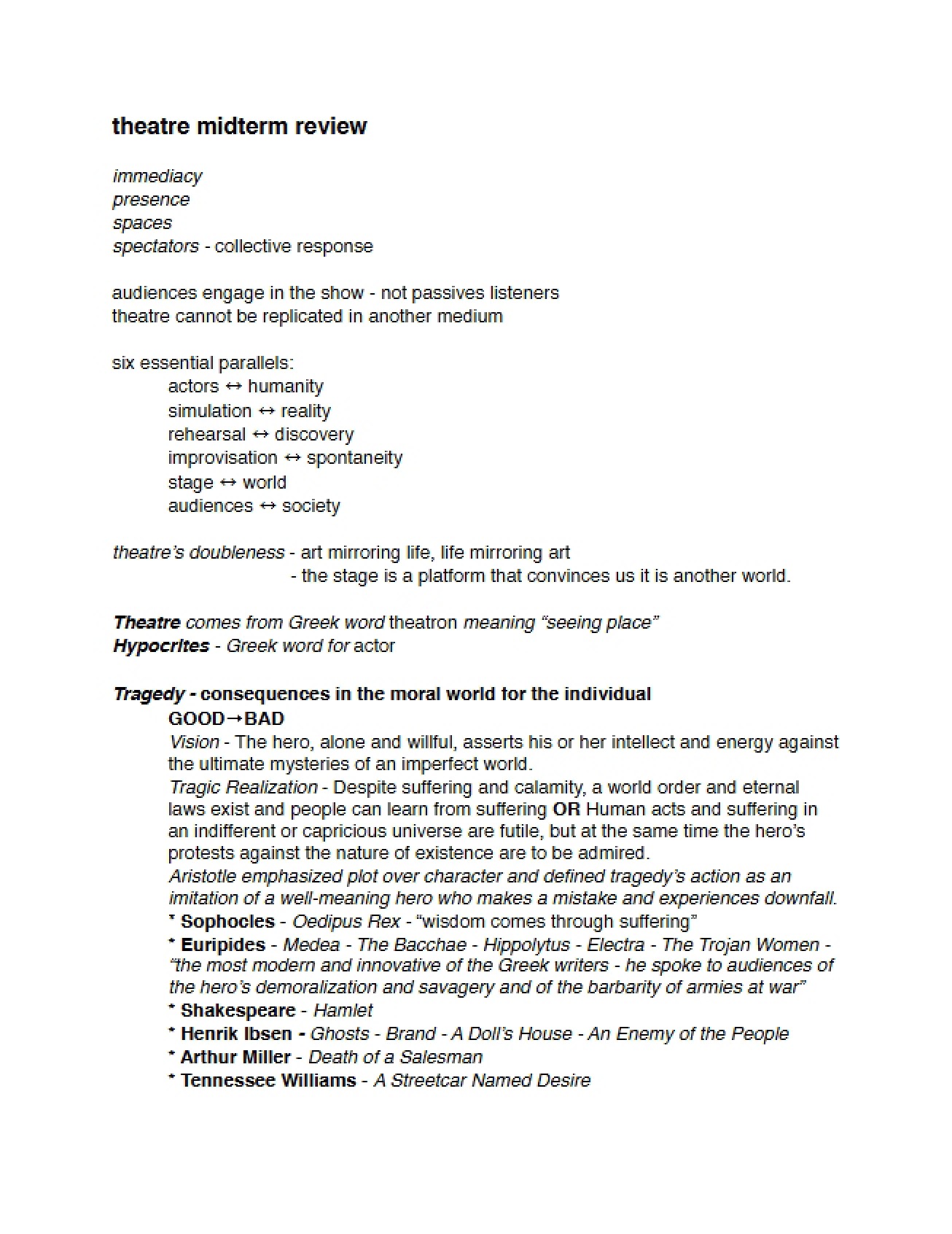
* Notes on the core elements of theater: actor, space, and audience.
* Discussion of theatrical parallels (actor vs. humanity, simulation vs. reality, etc.).
* An overview of different dramatic categories: tragedy, comedy, tragicomedy, farce, epic, absurd, and melodrama.
* Information on playwrights such as Sophocles, Moliere, Anton Chekhov, and Samuel Beckett.
* Notes on audience expectations in the theater.
This preview *does not* include the complete content of all chapters, the reference chart mentioned, or any visual aids that may be present in the original notes. It also does not include any practice questions or exam preparation materials beyond the core concepts outlined.