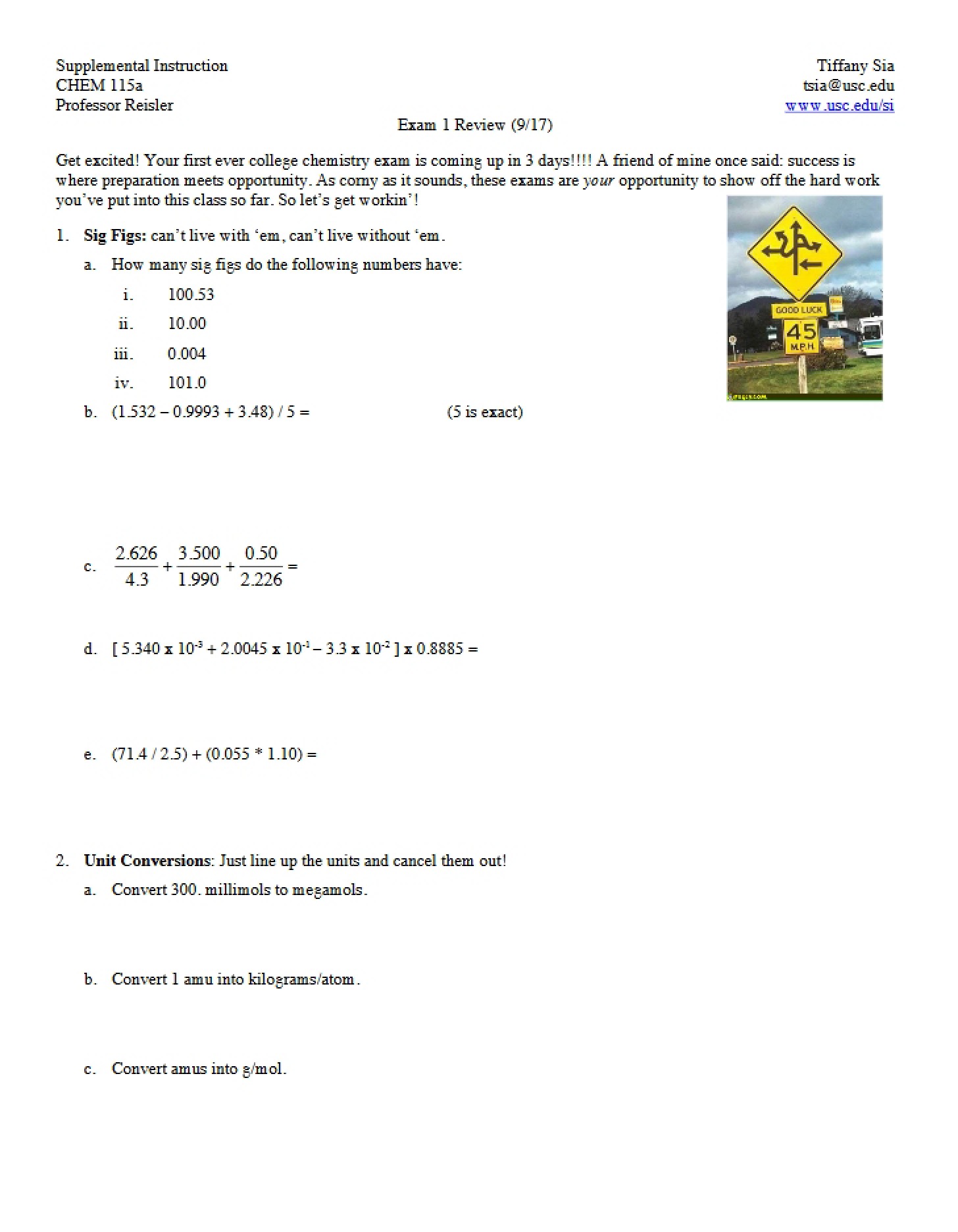
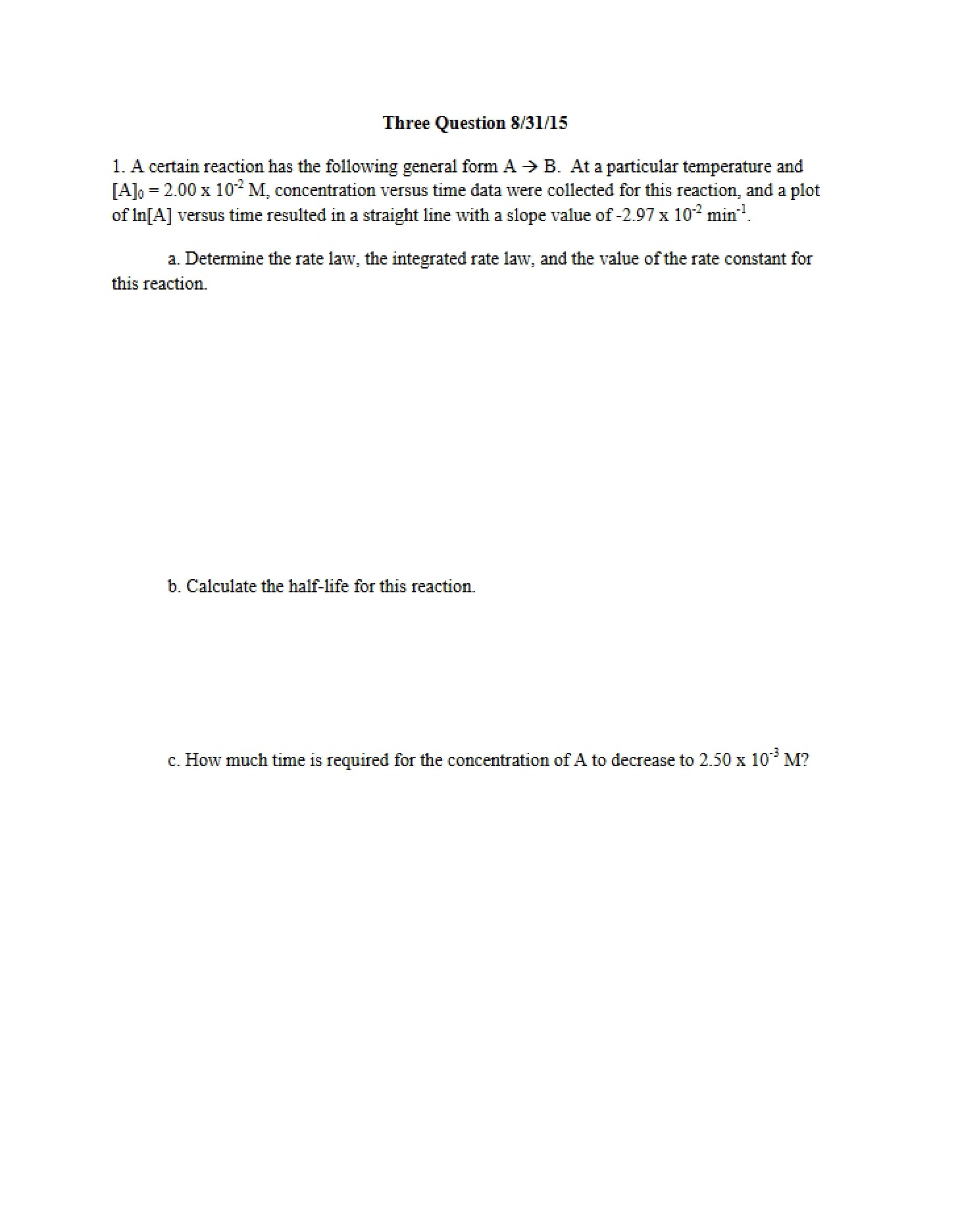
What This Document Is
This is a comprehensive study guide focused on the principles of thermodynamics, specifically tailored to a General Chemistry (CHEM 105) course at the University of Southern California. It’s designed to help students solidify their understanding of energy, heat transfer, and the behavior of matter as it relates to these fundamental concepts. The guide centers around Chapters 5 & 19 of the course material and utilizes a practice-focused approach.
Why This Document Matters
This study guide is an invaluable resource for any student enrolled in a General Chemistry course, particularly those finding thermodynamics challenging. It’s most beneficial when used *in conjunction with* lectures, textbooks, and homework assignments. Students preparing for quizzes and exams will find it particularly helpful for self-assessment and identifying areas needing further review. It’s ideal for reinforcing core concepts and building confidence before tackling complex problem-solving. Those aiming for a strong grasp of chemical principles will find this a useful tool.
Common Limitations or Challenges
This study guide is *not* a substitute for attending lectures or completing assigned readings. It does not provide detailed explanations of the underlying theory behind thermodynamic principles. It also doesn’t offer step-by-step solutions to problems; instead, it presents opportunities for self-testing. While it covers key concepts, it may not encompass *every* nuance discussed in the course. Access to the full guide is required to unlock the complete set of practice questions and fully benefit from its features.
What This Document Provides
* A broad range of multiple-choice questions covering core thermodynamics concepts.
* Focus on key areas such as kinetic and potential energy, heat transfer (endothermic & exothermic processes), and specific heat capacity.
* Practice identifying relationships between thermal energy, temperature, and the motion of particles.
* Opportunities to test understanding of state functions and their applications.
* Questions relating to heat capacity calculations and the properties of different materials.
* Practice applying concepts to real-world scenarios involving mixtures and phase changes.