What This Document Is
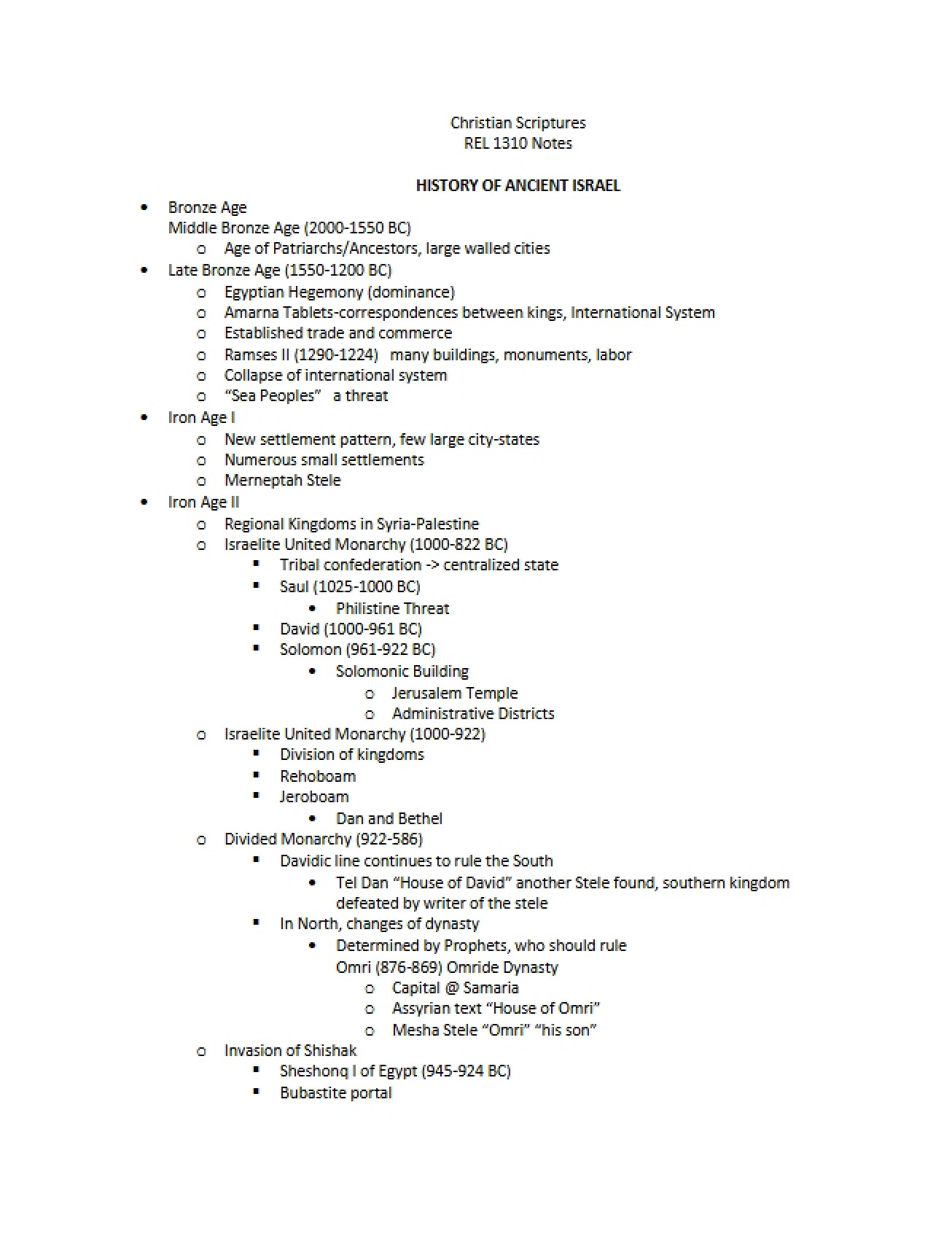
This document is a review guide for the third exam in Baylor University’s Christian Scriptures (REL 1310) course. It focuses on the historical and religious context surrounding the emergence of Christianity, specifically First Century Judaism, and provides an overview of introductory material on the Gospels. It’s designed to help students prepare for an exam assessing their understanding of these foundational topics.
Why This Document Matters
This review is essential for students enrolled in REL 1310 who are preparing for Exam #3. It consolidates key information regarding the political landscape of Judea under Roman rule, the diverse Jewish groups of the time (Pharisees, Sadducees, Essenes, Zealots, Samaritans), and the nature of the Gospels as historical and faith-based texts. Understanding this context is crucial for interpreting the New Testament. This review is most useful when used *in conjunction with* course lectures, readings, and assignments.
Common Limitations or Challenges
This review guide is not a substitute for attending class or completing assigned readings. It provides a condensed overview and does not offer in-depth analysis or detailed explanations of complex theological concepts. It will not teach you the material, but rather highlight what you should already know. It also doesn’t include practice questions or exam answers.
What This Document Provides
This review includes:
* An outline of the political situation in the First Century, covering the periods following Alexander the Great and the rule of figures like Pompey, Herod the Great, and Herod Antipas, as well as Pontius Pilate.
* Descriptions of the key beliefs and characteristics of various Jewish groups during this period (Pharisees, Sadducees, Essenes, Zealots, Samaritans).
* An introduction to the Gospels, including their nature as faith perspectives and the methods historians use to study the “historical Jesus.”
* A summary of Jesus’ background, ministry, arrest, and execution.
* An overview of the Synoptic Gospels (Matthew, Mark, Luke) and the Two-Source and Farrer Theories.
* Detailed notes on the Gospel of Mark, including its structure, key themes (Messianic Secret), and interpretive centers (healings, passion predictions).
* An introduction to the Gospel of Matthew, focusing on its structure and thematic inclusio.
This preview *does not* include detailed analysis of the Gospel of John, comprehensive coverage of all Gospel theories, or practice exam questions. It also does not include the full content of the thematic inclusio in Matthew.