What This Document Is
This document represents session three of an upper-division undergraduate course focused on the systematics of vascular plants, complete with a laboratory component. It delves into the core principles guiding our understanding of plant evolutionary relationships, building upon foundational concepts in phylogenetics and the introduction to tracheophytes (vascular plants). The material explores how scientists interpret shared characteristics to reconstruct the tree of life for plants.
Why This Document Matters
This session is crucial for students enrolled in plant systematics, botany, or evolutionary biology courses. It’s particularly beneficial when you’re grappling with understanding how evolutionary history informs plant classification. Use this resource to solidify your grasp of key terminology and concepts *before* tackling more complex phylogenetic analyses or laboratory exercises involving plant identification and character analysis. It’s designed to provide a strong theoretical foundation for practical application.
Topics Covered
* Distinguishing informative versus non-informative shared characteristics in phylogenetic analysis.
* Defining and differentiating key character state concepts: apomorphy, autapomorphy, synapomorphy, plesiomorphy, and symplesiomorphy.
* Understanding the concepts of homology and homoplasy and their impact on phylogenetic reconstruction.
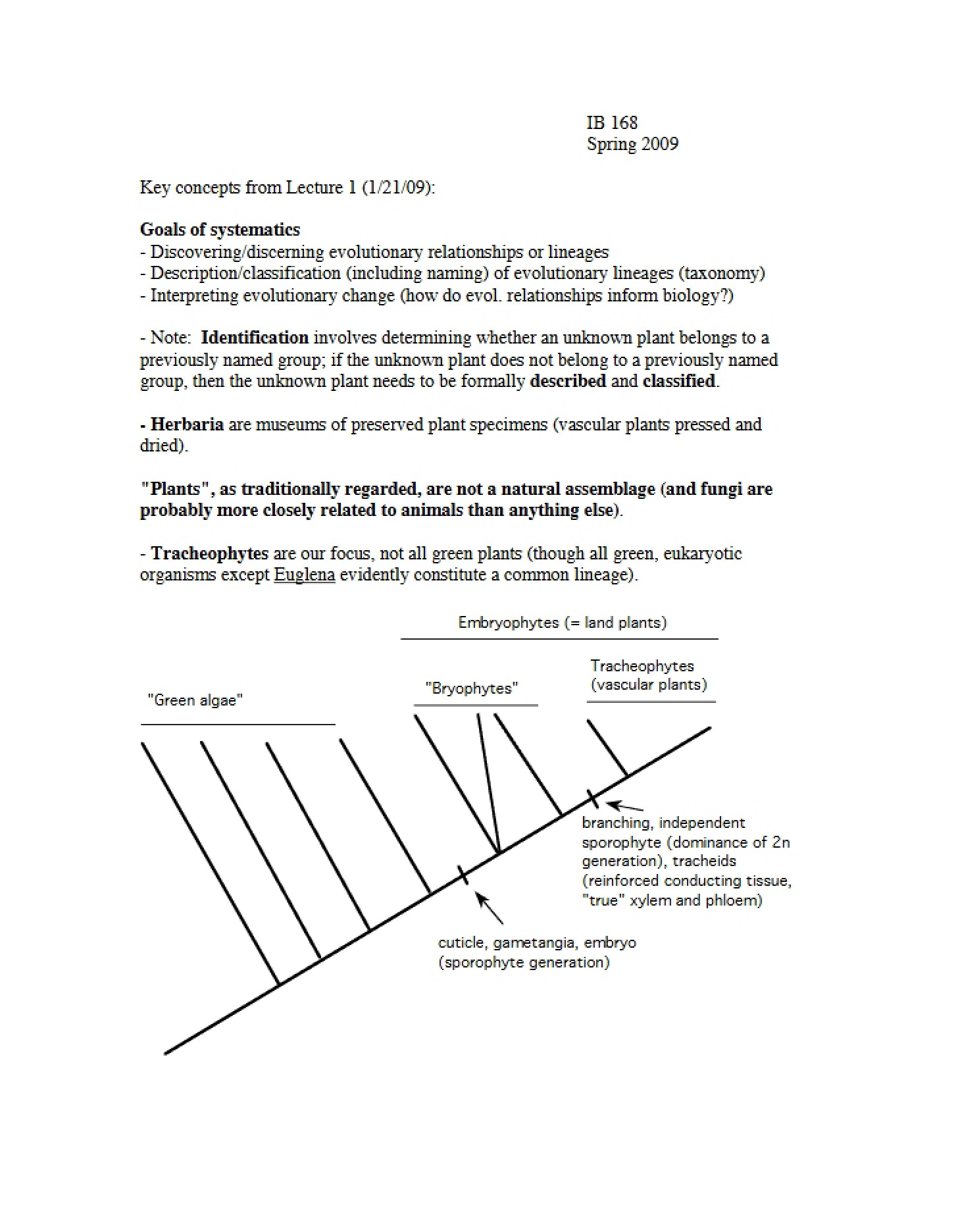
* Exploring the evolutionary transition from gametophyte-dominant to sporophyte-dominant life cycles in early vascular plants.
* An overview of the major lineages within tracheophytes – Lycophytes, Ferns, and Seed Plants.
* The independent evolution of heterospory across different tracheophyte groups.
What This Document Provides
* Clear definitions of essential terminology used in plant systematics.
* Conceptual explanations of how character states are used to define evolutionary relationships.
* A discussion of the evolutionary history of vascular plants, focusing on key transitions.
* A framework for understanding the relationships between major groups of tracheophytes.
* Illustrative examples to aid in comprehension of complex concepts.