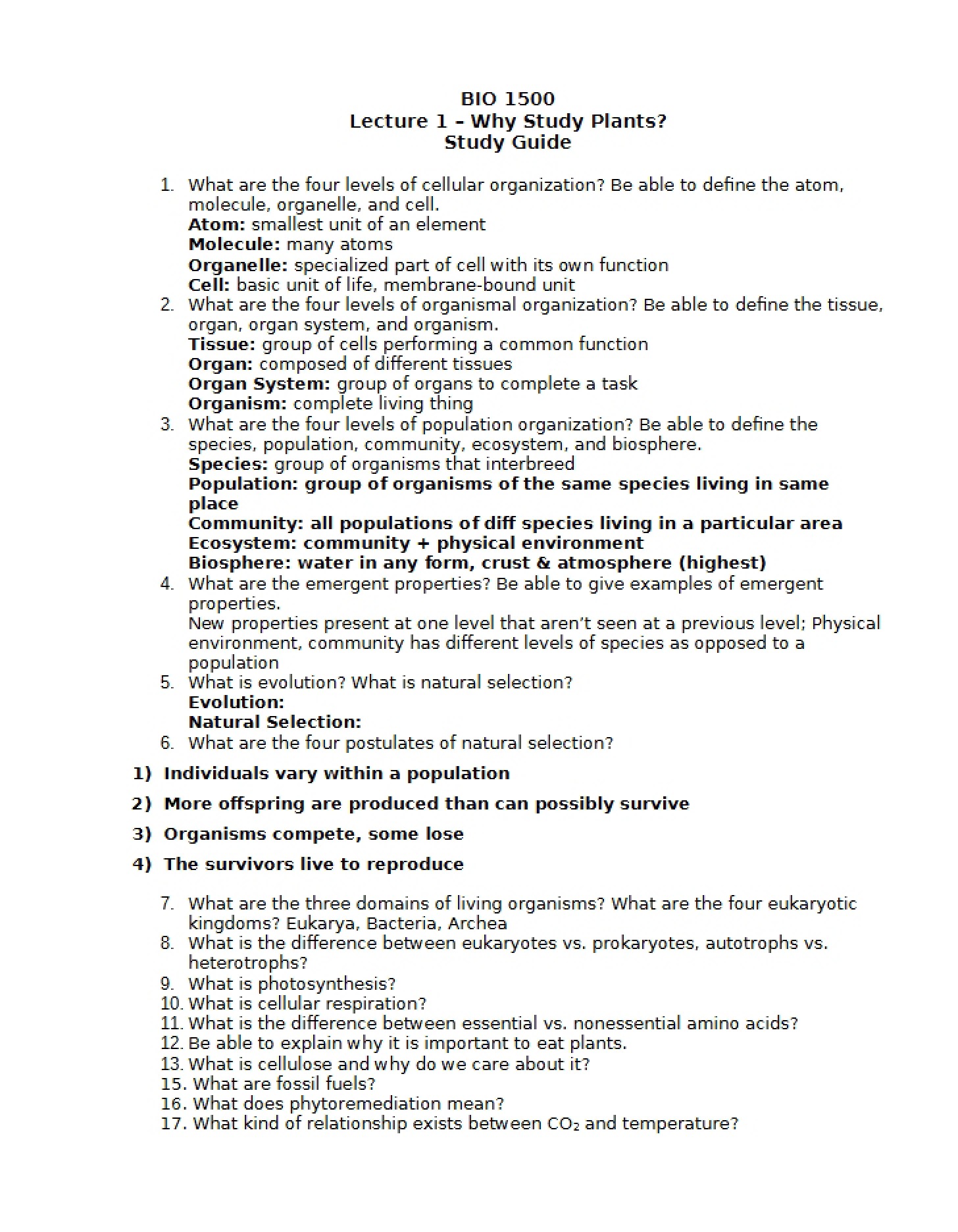
What This Document Is
This study guide provides a focused overview of plant cells and tissues, designed to support learning in an introductory biology course. It delves into the fundamental building blocks of plant life, exploring the distinctions between different cell types and how they organize into complex tissue systems. The material centers around understanding plant structure and the relationship between structure and function. It’s geared towards students needing a concentrated resource for grasping core concepts in plant anatomy and physiology.
Why This Document Matters
If you’re enrolled in BIO 1500 at Wayne State University, or a similar introductory biology course, this resource can be incredibly valuable. It’s best used as a companion to lectures and textbook readings, helping you to solidify your understanding of plant biology before quizzes or exams. Students who find themselves needing to clarify the roles of different plant structures, or who struggle with the terminology surrounding plant tissues, will particularly benefit. It’s a strong foundation for more advanced topics in botany and plant science.
Common Limitations or Challenges
This study guide is designed to *complement* – not replace – your core course materials. It doesn’t include detailed experimental data, comprehensive lab protocols, or in-depth explorations of specific plant species. It focuses on general principles and foundational knowledge. While it highlights key areas of study, it won’t provide step-by-step solutions or fully worked-out examples. Access to the full resource is required for complete explanations and detailed information.
What This Document Provides
* Key distinctions between plant and animal cells.
* An exploration of the roles of roots and shoots in plant life.
* A breakdown of primary versus secondary cell walls and their significance.
* Detailed information regarding meristematic tissues and their impact on plant growth.
* Descriptions of the functions of dermal, ground, and vascular tissues.
* Comparisons of different cell types within ground tissue.
* An overview of xylem and phloem, including their roles in plant transport.
* Information on specialized plant structures like guard cells, stomata, trichomes, and root hairs.