What This Document Is
This resource outlines the essential topics covered on Exam One for BIOL 243, Human Anatomy and Physiology I at the University of South Carolina. It’s designed as a focused review of the foundational concepts introduced in the first five chapters of the course material. Think of it as a roadmap to help you prioritize your studying and ensure you’re concentrating on the areas that will be assessed. It details the breadth of knowledge expected for successful performance on the exam.
Why This Document Matters
This is an invaluable tool for students enrolled in BIOL 243 who are preparing for their first major assessment. It’s particularly helpful for students who benefit from a clear overview of exam scope, those who want to self-assess their understanding of key concepts, and anyone looking to create a targeted study plan. Utilizing this outline *before* diving into detailed review will maximize your study efficiency and reduce test-day anxiety. It’s best used in conjunction with your lecture notes, textbook readings, and other course materials.
Common Limitations or Challenges
This document serves as a high-level overview and does *not* contain detailed explanations, practice questions, or worked examples. It will not substitute for thorough engagement with the course materials. It also doesn’t provide any specific weighting of topics on the exam – you should assume all listed areas are important. Access to the full resource is required to gain a comprehensive understanding of each topic and prepare effectively.
What This Document Provides
* A categorized list of topics from Chapter 1, focusing on foundational anatomical principles and the concept of homeostasis.
* Key areas of focus from Chapter 2 related to basic chemistry, including atomic structure, chemical bonding, and important biological molecules.
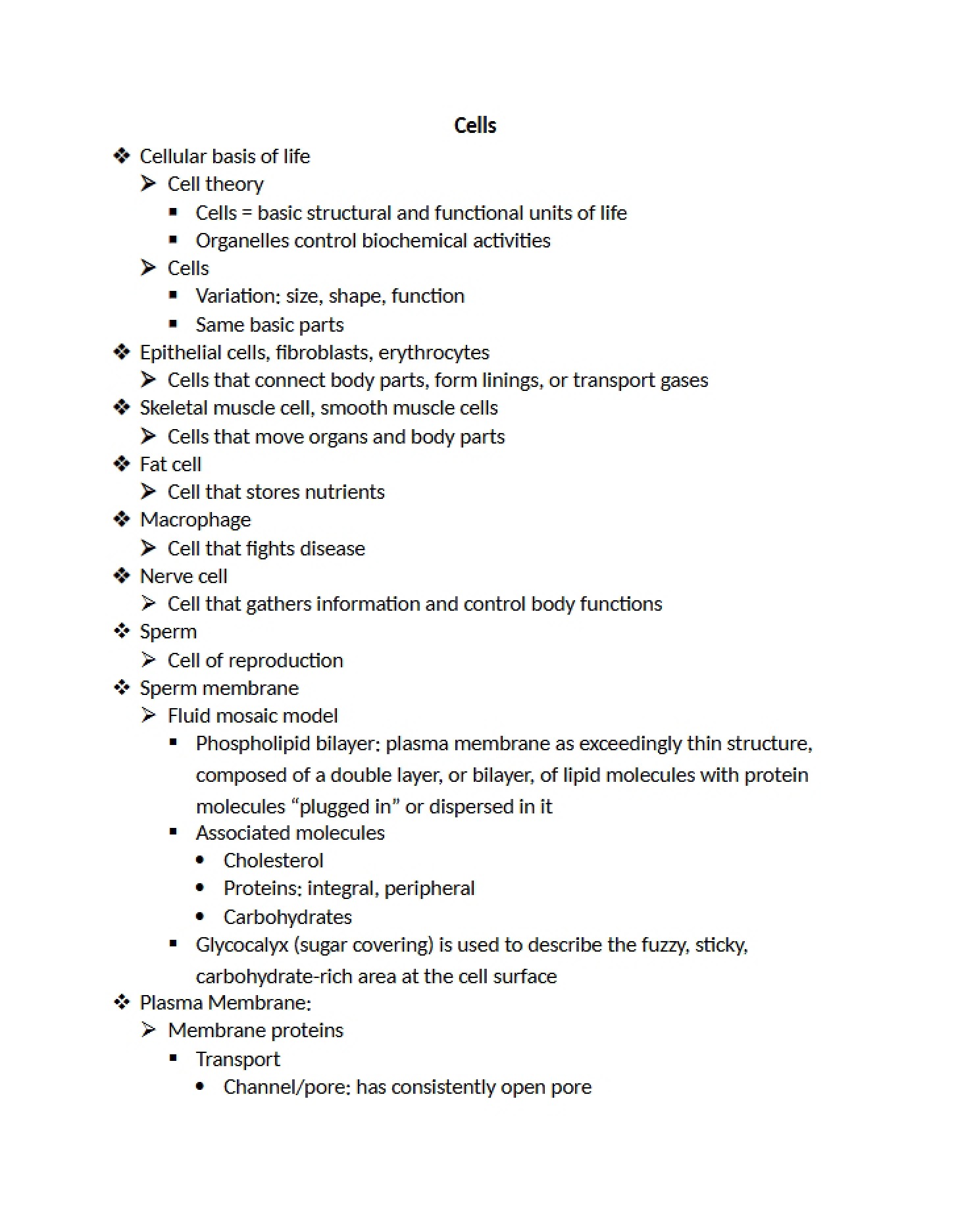
* An overview of cellular processes covered in Chapter 3, such as the cell cycle, membrane transport, and the roles of key cellular components.
* A breakdown of tissue types and their characteristics as presented in Chapter 4.
* A summary of the major components of the integumentary system, as detailed in Chapter 5, including its layers, structures, and functions.