What This Document Is
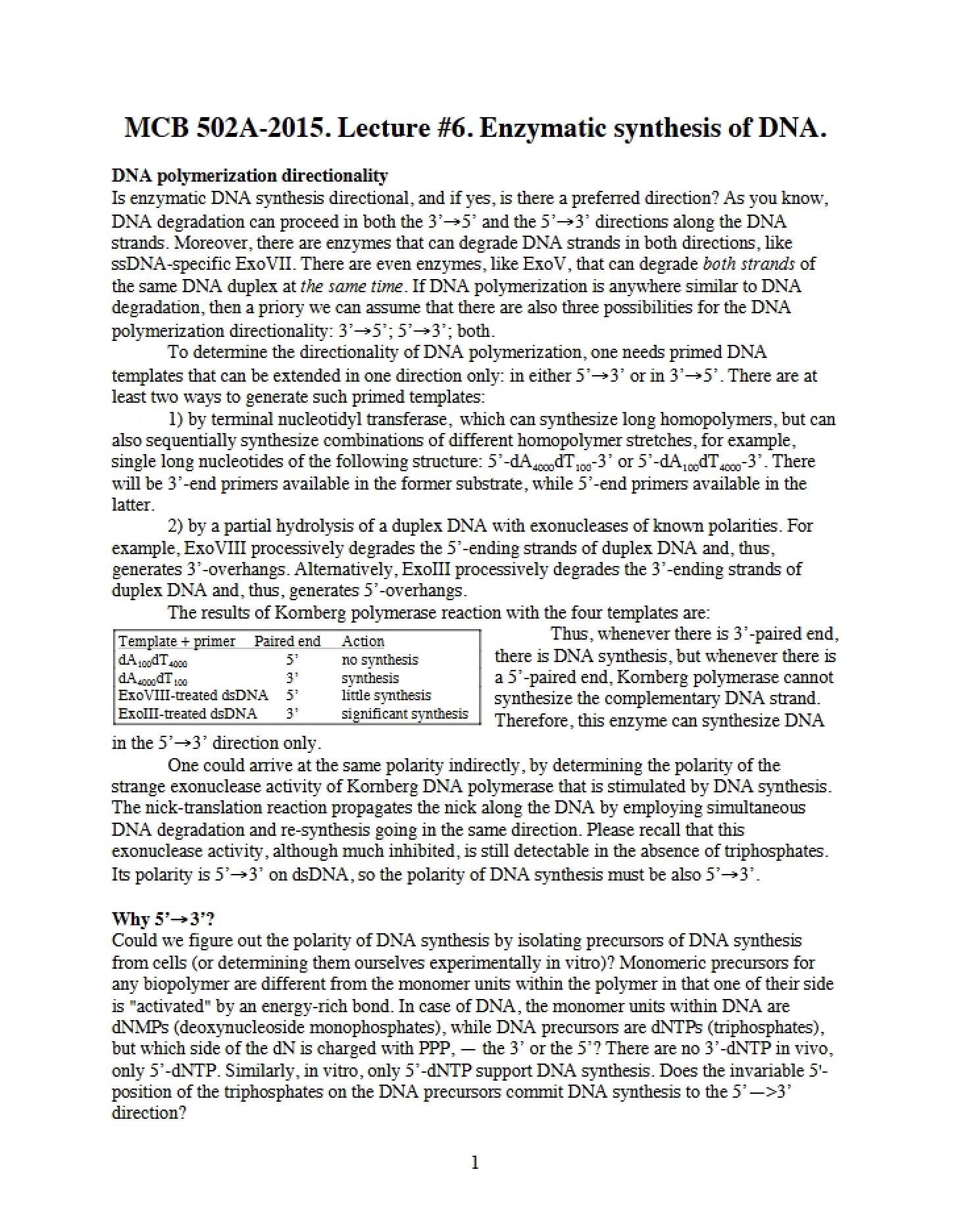
This document represents lecture notes from an advanced molecular genetics course (MCB 502) at the University of Illinois at Urbana-Champaign, specifically focusing on lecture #6: Enzymatic Synthesis of DNA. It delves into the fundamental mechanisms governing how DNA is created within biological systems. The material explores the intricacies of DNA polymerization, examining the directional aspects of this crucial process and the enzymatic machinery involved. It’s a deep dive into the biochemical principles underpinning genome maintenance and replication.
Why This Document Matters
This resource is invaluable for students enrolled in upper-level molecular genetics, biochemistry, or related life science courses. It’s particularly helpful for those seeking a comprehensive understanding of DNA replication, repair, and the enzymatic processes that drive these events. Students preparing for exams, working on research projects involving DNA manipulation, or needing a solid foundation for further study in genomics and biotechnology will find this material exceptionally useful. It’s best utilized *alongside* textbook readings and class discussions to reinforce core concepts.
Common Limitations or Challenges
This document presents a focused exploration of enzymatic DNA synthesis. It does *not* provide a complete overview of all DNA replication processes, nor does it cover broader genetic principles beyond the scope of polymerization. It assumes a pre-existing understanding of basic molecular biology concepts like DNA structure, base pairing, and enzyme function. It also doesn’t include experimental protocols or detailed laboratory techniques. Access to the full content is required for a complete understanding of the concepts presented.
What This Document Provides
* An examination of the directionality of enzymatic DNA synthesis.
* Discussion of how experimental approaches can be used to determine the polarity of DNA polymerization.
* Exploration of the relationship between DNA degradation and synthesis.
* Consideration of the chemical basis for preferred polymerization direction.
* Analysis of different mechanisms of polymer biosynthesis (tail growth vs. head growth).
* Insight into the role of nucleotide precursors in DNA synthesis.