What This Document Is
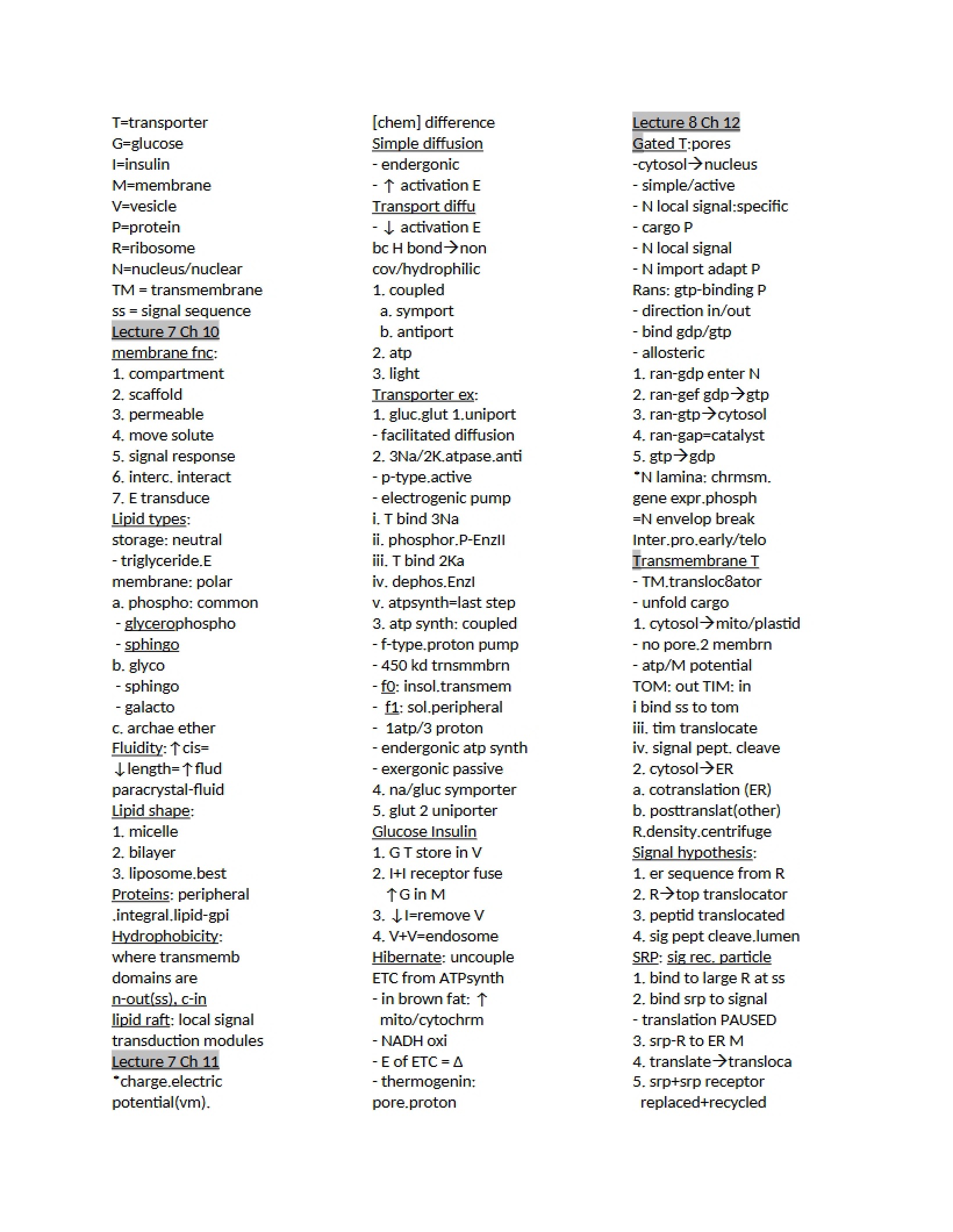
This document is a review sheet designed to accompany a video on transport across cell membranes, a fundamental process in biology. It summarizes key concepts related to how substances move into, out of, and within cells. The sheet focuses on both passive and active transport mechanisms, including diffusion, osmosis, facilitated diffusion, and active transport utilizing pumps.
Why This Document Matters
This review sheet is valuable for students in Cell, Molecules & Developmental Biology (BIO 209) at Drexel University—and more broadly, anyone studying introductory biology—who are learning about cellular processes. It serves as a focused study aid to reinforce understanding *after* engaging with the core video content. It’s particularly useful when preparing for quizzes or exams covering cell membrane transport. Understanding these principles is crucial for comprehending how cells maintain homeostasis and carry out essential functions.
Common Limitations or Challenges
This document is a *review* sheet, meaning it assumes prior learning. It doesn’t provide a comprehensive introduction to cell biology or membrane structure. It relies on the accompanying video for detailed explanations and visual demonstrations. It also doesn’t offer practice problems or in-depth analysis of complex transport systems beyond the examples provided. It is not a substitute for attending lectures or completing assigned readings.
What This Document Provides
This review sheet includes:
* Key definitions of passive and active transport.
* Explanations of diffusion, osmosis (including hypotonic, hypertonic, and isotonic solutions), and facilitated diffusion.
* A description of active transport, with a focus on the sodium-potassium pump.
* An overview of large-scale transport mechanisms like endocytosis and exocytosis.
* Questions designed to prompt recall of important concepts from the associated video.
This preview does *not* include the answers to the review questions, diagrams from the video (such as the U-Tube experiment or red blood cell illustrations), or detailed explanations of co-transport mechanisms. The full document provides a complete reference for students actively learning the material.