What This Document Is
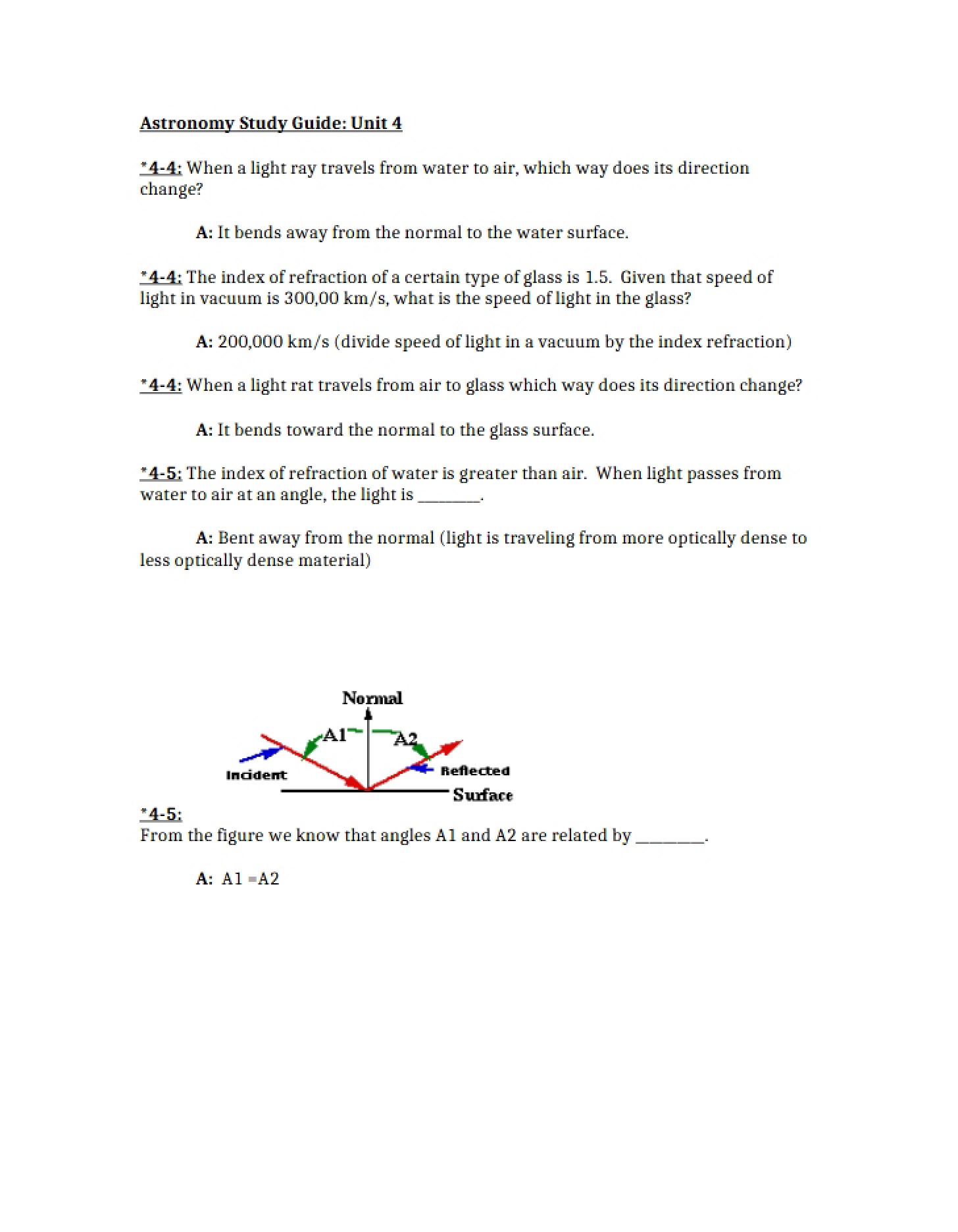
This is a comprehensive study guide designed to support students enrolled in Descriptive Astronomy I (ASTR 111) at the University of South Carolina. It focuses on the principles of light and how astronomical instruments utilize those principles to observe the universe. The guide delves into the behavior of light as it interacts with different media, and explores the capabilities and limitations of telescopes. It’s structured to help students master key concepts related to optical astronomy.
Why This Document Matters
This resource is invaluable for students preparing for assessments in Unit Four of ASTR 111. It’s particularly helpful for those who benefit from a focused review of core ideas and want to test their understanding of fundamental concepts *before* tackling more complex problems. Use this guide during your independent study, as a supplement to lectures, or as a final review before quizzes and exams. It’s designed to reinforce your grasp of the material and build confidence in your astronomical knowledge.
Common Limitations or Challenges
This study guide is not a substitute for attending lectures or completing assigned readings. It doesn’t provide a complete re-explanation of all course material, but rather a concentrated review of specific topics. It also doesn’t include detailed derivations of formulas or extensive background information on the historical development of astronomical techniques. Access to the full guide is required to reveal the specific details and explanations covered within.
What This Document Provides
* A focused review of the interaction of light with different materials.
* Key concepts related to the properties of light, including refraction and diffraction.
* An overview of telescope characteristics and their impact on observation.
* Discussion of factors influencing telescope performance, such as aperture and resolving power.
* Exploration of the challenges associated with astronomical imaging, including atmospheric effects.
* A framework for understanding how telescopes are used to study celestial objects.