What This Document Is
These are lecture notes from PSYC 101, General Psychology, at Loyola University Chicago, covering foundational concepts introduced in Unit One. The notes provide an overview of the field of psychology, its various subfields, and the historical perspectives that have shaped its development. It also touches on the biological and evolutionary underpinnings of behavior, and introduces major psychological perspectives.
Why This Document Matters
These notes are essential for students enrolled in introductory psychology courses. They serve as a concentrated resource for understanding core definitions, key figures, and the broad scope of psychological study. They are most valuable when used *in conjunction with* course readings, lectures, and assignments – providing a framework for deeper learning. Understanding these foundational concepts is crucial for success in subsequent psychology courses.
Common Limitations or Challenges
This document is a *summary* of lecture material, not a comprehensive textbook. It provides an overview and does not delve into the detailed research or nuanced debates within each topic. It’s designed to support learning, not replace active engagement with the course material. It won’t provide the full context of research studies or the ability to apply psychological principles to real-world scenarios.
What This Document Provides
This preview includes:
* A definition of psychology and its focus on both observable behavior and internal mental processes.
* A listing of several subfields within psychology (e.g., behavioral neuroscience, clinical, cognitive).
* An overview of the biological basis of behavior, including the role of the brain and nervous system.
* Discussion of evolutionary psychology and its implications for understanding human behavior, including mate selection.
* A brief history of major psychological perspectives: Structuralism, Functionalism, Psychoanalysis, and Gestalt psychology.
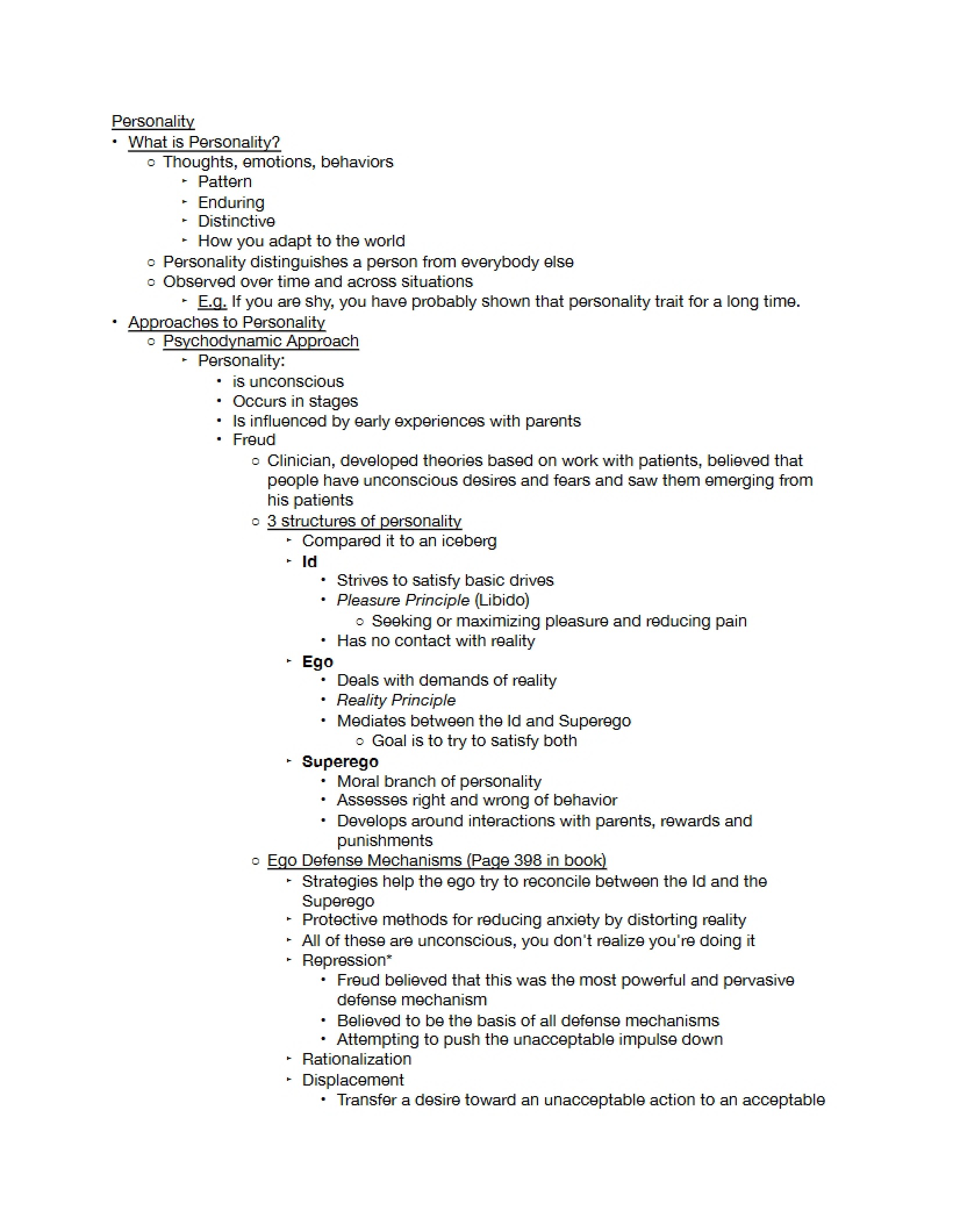
* An introduction to five major contemporary perspectives: Neuroscience, Psychodynamic, Behavioral, Cognitive, and Humanistic.
* Information regarding the educational paths to becoming a psychologist (PhD vs. PsyD).
This preview *does not* include detailed explanations of specific studies, in-depth analyses of psychological theories, or practice questions for review. It also does not cover all topics that will be addressed in Unit One.