What This Document Is
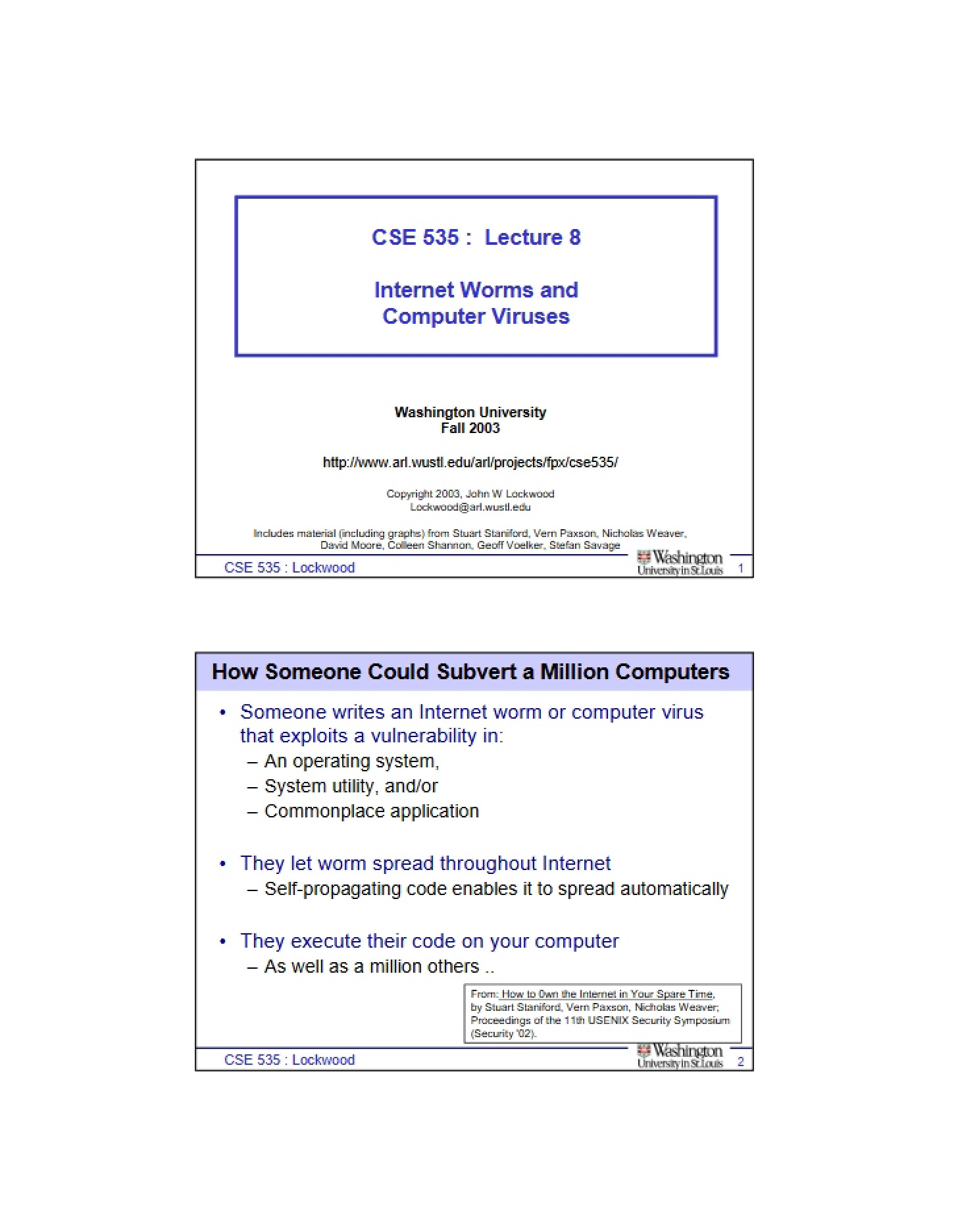
This document represents lecture notes from CSE 535: Acceleration of Algorithms in Hardware, offered at Washington University in St. Louis. Specifically, it delves into the critical topic of containing the spread of malicious software – internet worms and computer viruses – using a sophisticated approach: content filtering. The material explores how network infrastructure can be leveraged to mitigate threats, moving beyond traditional preventative measures like antivirus software. It appears to be a focused exploration of a specific security strategy within a broader computer science context.
Why This Document Matters
Students enrolled in advanced computer science courses, particularly those focusing on network security, computer architecture, or hardware acceleration, will find this material highly relevant. It’s also valuable for anyone seeking a deeper understanding of the practical application of hardware-level solutions to cybersecurity challenges. Professionals involved in network administration, security engineering, or incident response could benefit from the concepts discussed. This resource is particularly useful when studying network intrusion prevention and the design of high-performance security systems.
Common Limitations or Challenges
This document focuses on a specific containment *strategy* and does not offer a comprehensive overview of all virus and worm prevention techniques. It doesn’t provide a step-by-step guide to implementing content filters, nor does it cover the latest threat landscape in exhaustive detail. The material is rooted in research from 2003, so while the core principles remain relevant, specific technologies and attack vectors have evolved. It assumes a foundational understanding of networking concepts and hardware architecture.
What This Document Provides
* An examination of the challenges in preventing and treating worm and virus infections.
* A discussion of various technologies applicable to containment, including firewalls and content filters.
* Exploration of the importance of rapid detection and response times in effective containment.
* Insights into the potential of reconfigurable hardware, such as Field Programmable Port Extenders (FPXs), for implementing content scanning.
* Conceptual illustrations of network deployment strategies for a content-based containment system.
* Considerations for managing and programming dedicated hardware libraries for security purposes.