What This Document Is
This resource is a focused exploration of fundamental assumptions underlying statistical methods, specifically within the context of bioscience applications. It delves into the critical importance of verifying these assumptions before applying statistical tests, and the consequences of doing so—or not. The material centers around ensuring the reliability and validity of inferences drawn from data analysis, covering concepts relevant to STAT 571 at the University of Wisconsin-Madison. It builds a foundation for understanding when and how to address potential issues related to data characteristics.
Why This Document Matters
This is an essential resource for bioscience students and researchers who utilize statistical analysis in their work. If you're grappling with interpreting statistical outputs, or are unsure whether your data meets the necessary conditions for specific tests, this material will be invaluable. It’s particularly helpful when you need to justify your methodological choices and demonstrate a thorough understanding of statistical principles. Understanding these concepts is crucial for accurate data interpretation and avoiding misleading conclusions in research.
Common Limitations or Challenges
This resource focuses on the theoretical underpinnings and diagnostic approaches related to assumptions. It does *not* provide a comprehensive guide to performing every statistical test, nor does it offer step-by-step instructions for using statistical software packages. It also doesn’t cover advanced topics like power analysis in extensive detail, but rather introduces the core concepts. It assumes a basic familiarity with statistical terminology and foundational concepts.
What This Document Provides
* An overview of key assumptions commonly encountered in statistical analysis.
* Discussion of methods for detecting potential violations of these assumptions.
* Exploration of strategies for addressing assumption violations, including data transformations and alternative approaches.
* Illustrative examples demonstrating how to assess assumption validity.
* Guidance on utilizing statistical software (R) for assumption checking.
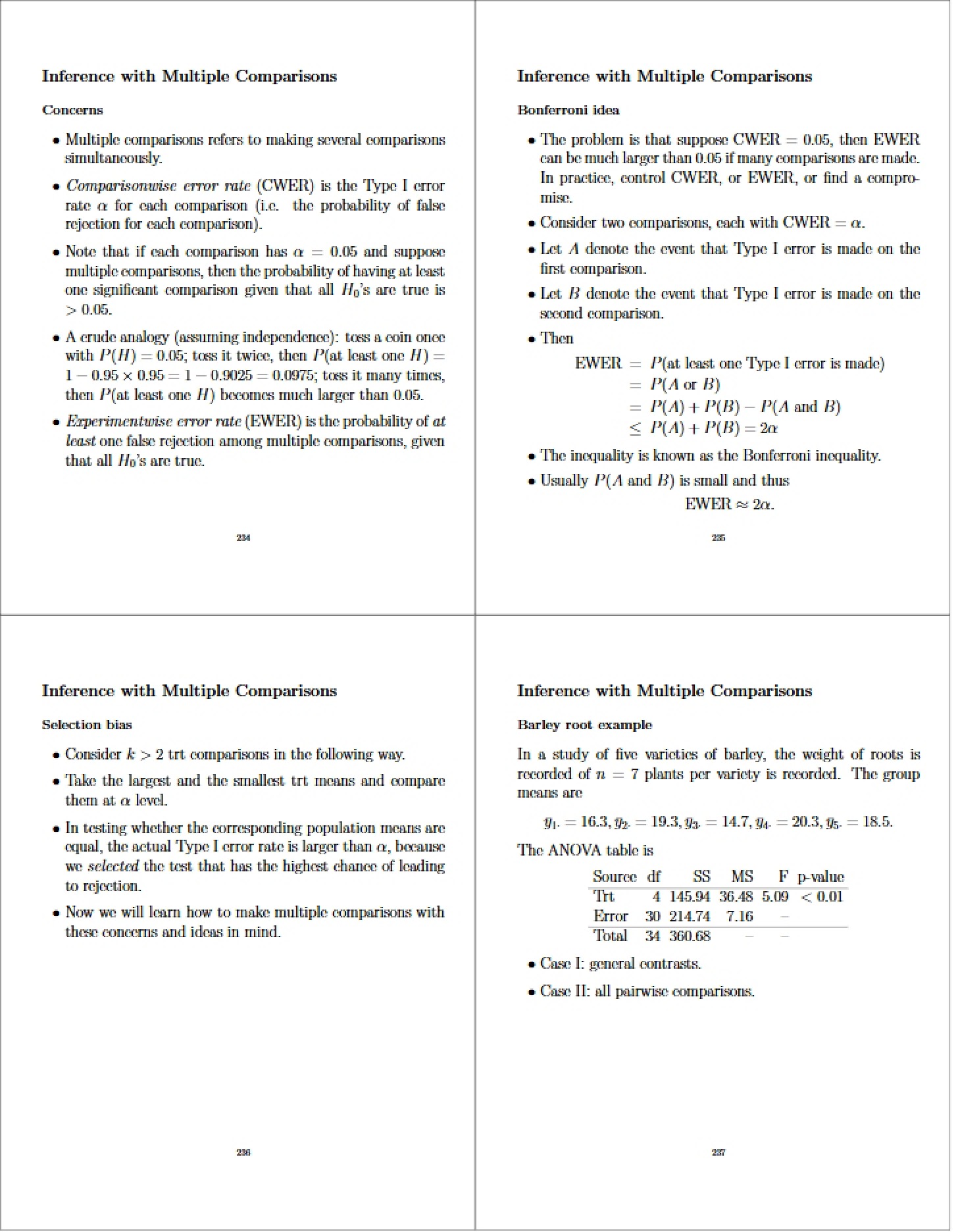
* A foundational understanding of hypothesis testing concepts, including rejection regions and their relation to error types.