What This Document Is
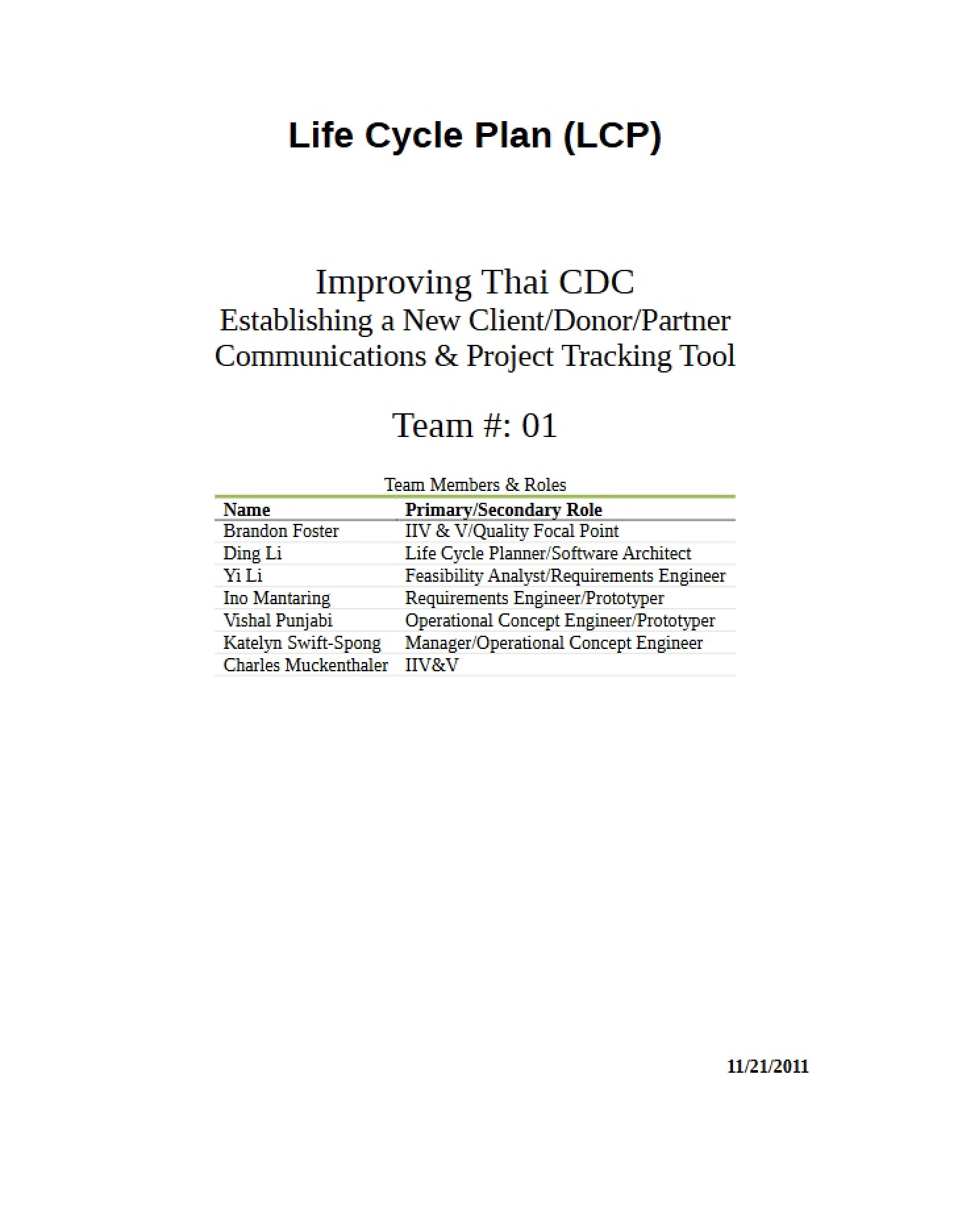
This is an Operational Concept Description (OCD) developed by a team of Software Engineering students at the University of Southern California (USC) for the CSCI 577a course. It details the envisioned functionality and operational aspects of a software solution designed to improve communications and project tracking for the Thai CDC organization. The OCD serves as a foundational blueprint for the system’s development, outlining the ‘what’ and ‘why’ before diving into the ‘how’ of implementation. It focuses on establishing a shared understanding of the project's goals among all stakeholders.
Why This Document Matters
This document is crucial for anyone involved in, or interested in learning about, the software development lifecycle, particularly within a real-world client context. Students studying requirements engineering, systems analysis, or project management will find it valuable. It demonstrates how to translate organizational needs into a coherent operational vision. For those following the project’s progress, it provides essential context for understanding the design choices and intended functionality of the final software product. Understanding the operational concept is key to evaluating the success of the implemented system.
Common Limitations or Challenges
This OCD focuses on the *concept* of operations – it does not contain the detailed technical specifications, code, or implementation details of the software. It doesn’t provide a user manual or training materials. The document represents a snapshot in time (Version 1.0) during the valuation phase, meaning the concepts and details may evolve as the project progresses and feedback is incorporated. It also doesn’t delve into the specifics of the technology stack chosen for development.
What This Document Provides
* A clear articulation of the project’s overall vision and goals.
* Identification of key stakeholders and their roles within the system.
* An overview of the intended system capabilities and how they address identified needs.
* A benefits chain illustrating the anticipated positive impacts of the system.
* Diagrams outlining the system’s boundaries and key workflows.
* A version history tracking changes and rationale behind them.
* A table detailing success-critical stakeholders and their relationship to the project.