What This Document Is
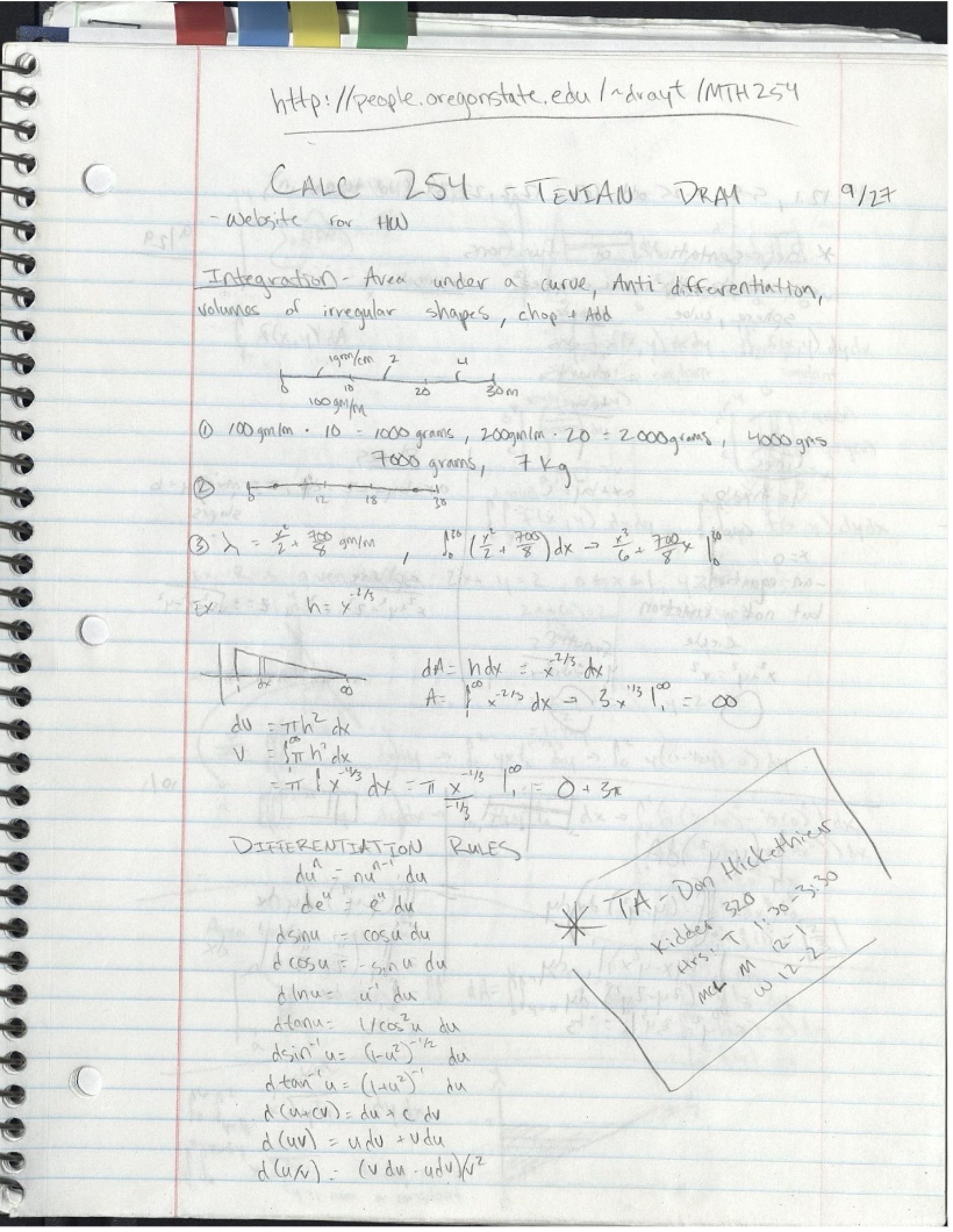
These are lecture notes from the first two weeks of Oregon State University’s MTH 254 Vector Calculus I course. The notes introduce the fundamental concepts of vectors, their representation, and basic operations within two and three-dimensional space. It builds a foundation for understanding more complex vector calculus topics covered later in the course.
Why This Document Matters
This document is essential for students enrolled in Vector Calculus I, or anyone needing a refresher on foundational vector concepts. It’s used during the initial stages of the course to establish the mathematical language and tools necessary for working with vector fields, multivariable functions, and applications in physics and engineering. Understanding vectors is crucial for modeling and solving problems involving quantities that have both magnitude and direction.
Common Limitations or Challenges
These notes provide a starting point but do not cover advanced applications or proofs. They focus on the mechanics of vector operations and geometric interpretations. Students will still need to practice applying these concepts to solve problems and develop a deeper intuitive understanding. This preview does not include all examples or practice problems found in the full document.
What This Document Provides
The full document includes:
* An introduction to vectors, their geometric representation, and component form.
* Methods for vector addition and scalar multiplication.
* The concept of unit vectors and their use in representing direction.
* An extension of vector concepts into three dimensions.
* An introduction to the dot product, including its geometric interpretation and applications for finding angles between vectors and projections.
* An introduction to the cross product, its geometric interpretation, and applications for finding normal vectors to planes.
* Basic equations for lines and planes in 3D space.
* A discussion of the right-hand rule and its use in determining vector orientations.
* Resources for interactive 3D graphing (math3d.org).
This preview only provides a high-level overview of the topics covered. It does *not* include detailed examples, practice problems, or the full mathematical derivations presented in the complete notes.