What This Document Is
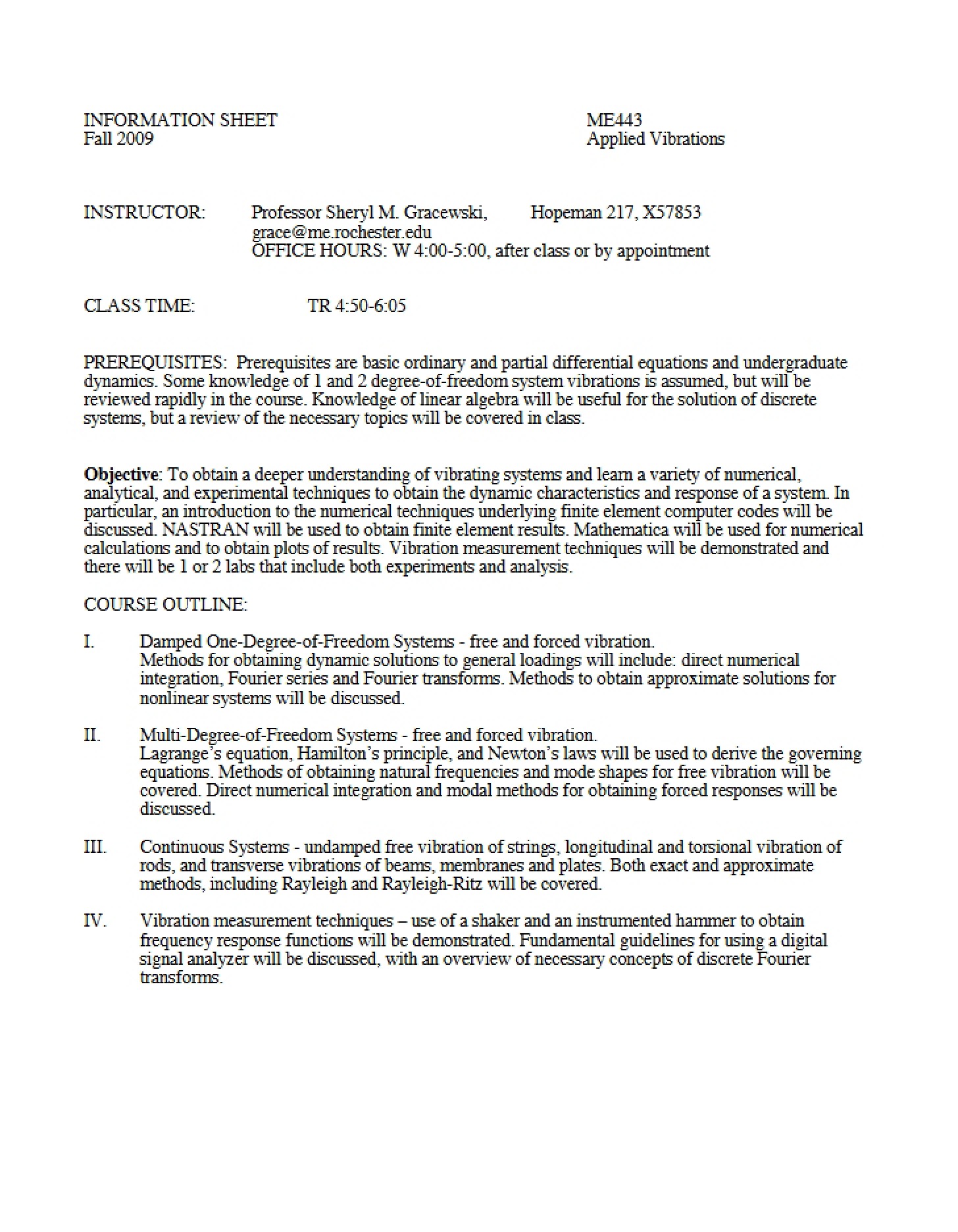
This document presents detailed notes on the principles and practical application of vibration testing – a crucial element within the field of applied vibration analysis. It delves into the core components required to perform effective vibration analysis, focusing on the methodologies used to characterize dynamic systems. The material is geared towards understanding how structures respond to external forces and how to interpret those responses.
Why This Document Matters
These notes are invaluable for mechanical engineering students, particularly those enrolled in advanced coursework related to dynamics, modal analysis, and structural health monitoring. Professionals involved in testing, design, and analysis of mechanical systems will also find this resource beneficial. It’s particularly useful when preparing to conduct laboratory experiments, interpret test data, or troubleshoot vibration-related issues in real-world engineering applications. Understanding these concepts is foundational for anyone seeking to predict and control the vibrational behavior of systems.
Common Limitations or Challenges
This resource focuses on the *methods* and *theory* behind vibration testing. It does not provide detailed mathematical derivations of the underlying equations, nor does it offer step-by-step instructions for specific software packages used in data acquisition and analysis. It also assumes a foundational understanding of signal processing and Fourier analysis. Practical considerations for specific industry standards or regulatory compliance are not covered in detail.
What This Document Provides
* An overview of essential excitation sources used in vibration testing.
* Discussion of various methods for measuring system response.
* Explanation of the role of digital signal processing in vibration analysis.
* Insight into the importance of frequency domain representation for interpreting vibration data.
* Considerations for selecting appropriate measurement devices (accelerometers, etc.).
* An exploration of how different excitation methods impact the frequency content of measured signals.