What This Document Is
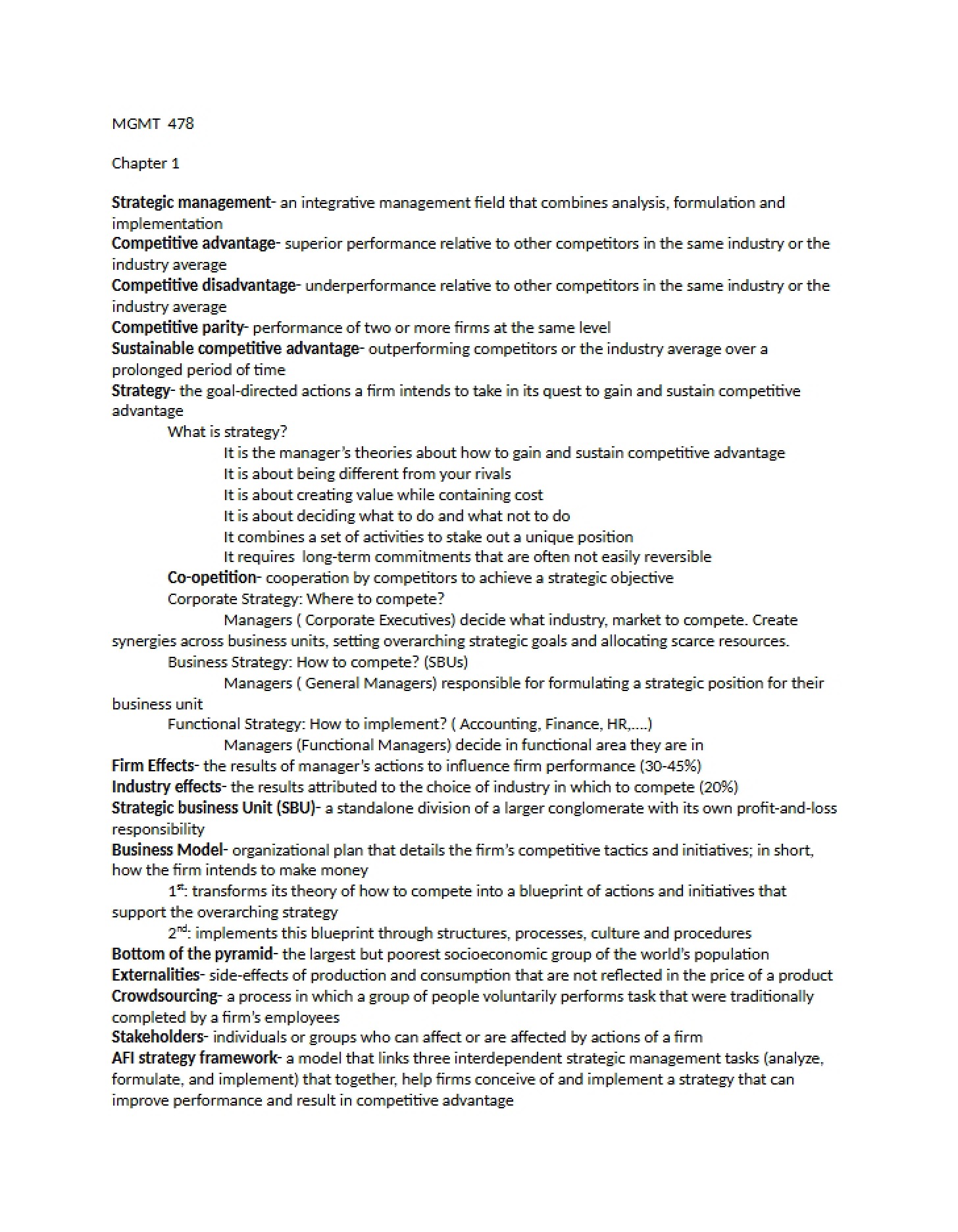
This resource is a focused vocabulary list designed to support students preparing for an exam – specifically, Test 2 – in MGMT 478 at the University of South Carolina. It centers around key terms and concepts introduced in Chapters 5, 6, and 7 of the course material. The document aims to solidify understanding of the foundational language used within the course, covering topics related to strategic management, competitive advantage, and innovation. It’s structured by chapter, offering a targeted approach to review.
Why This Document Matters
This vocabulary guide is invaluable for students who want to proactively strengthen their grasp of core concepts before an assessment. It’s particularly helpful for those who benefit from a concise, organized review of terminology. Utilizing this resource can improve exam performance by ensuring familiarity with the precise language used in questions and course materials. It’s best used in conjunction with your notes, textbook readings, and other study resources as part of a comprehensive exam preparation strategy. Students who struggle with defining and applying business and economic terms will find this especially useful.
Common Limitations or Challenges
This document is *not* a substitute for attending lectures, completing assigned readings, or engaging with other course materials. It provides definitions of terms, but does not offer in-depth explanations, real-world applications, or illustrative examples. It will not teach you *how* to apply these concepts to case studies or problem-solving scenarios. Furthermore, it does not include practice questions or sample exam content. Access to the full resource is required to unlock the complete definitions and ensure a thorough understanding.
What This Document Provides
* A curated list of terms from Chapters 5, 6, and 7 of MGMT 478.
* Definitions relating to value creation, economic contribution, and profitability.
* Key vocabulary surrounding business-level strategies and competitive positioning.
* Terms associated with organizational structure and innovation.
* Concepts related to cost management, economies of scale, and scope.
* Definitions of terms related to sustainability and the “triple bottom line.”