What This Document Is
This resource is a focused exploration of the mechanisms behind weakening in rocks undergoing ductile deformation – essentially, how rocks change shape permanently without fracturing. It delves into the geological processes occurring *within* rocks when subjected to intense pressure and temperature, examining the factors that allow them to flow and bend over geological timescales. The material centers on understanding strain localization, a critical concept in structural geology and tectonics. It utilizes examples from real-world geological formations to illustrate key principles.
Why This Document Matters
This material is invaluable for advanced undergraduate and graduate students in geology, geophysics, and related earth science disciplines. It’s particularly relevant for those studying structural geology, metamorphic petrology, and tectonics. Researchers investigating fault zones, shear zones, and mountain building processes will also find this a useful reference. If you’re grappling with understanding how rocks accommodate large-scale deformation, or are trying to model rock behavior under extreme conditions, this resource can provide a foundational understanding of the underlying principles.
Common Limitations or Challenges
This resource focuses on the *mechanisms* of weakening, and does not provide detailed field methods for identifying these features in hand sample or outcrop. It also doesn’t offer comprehensive coverage of all deformation styles – the focus is specifically on ductile processes. While real-world examples are presented, the document does not include detailed regional geological histories or complete datasets for those locations. It assumes a pre-existing understanding of basic concepts in mineralogy, petrology, and rock mechanics.
What This Document Provides
* An overview of weakening mechanisms related to phase transitions within rocks.
* Discussion of how the introduction of fluids can influence rock strength.
* Exploration of the role of anisotropy – directional dependence of properties – in controlling deformation.
* Detailed consideration of dynamic recrystallization processes and their impact on rock behavior.
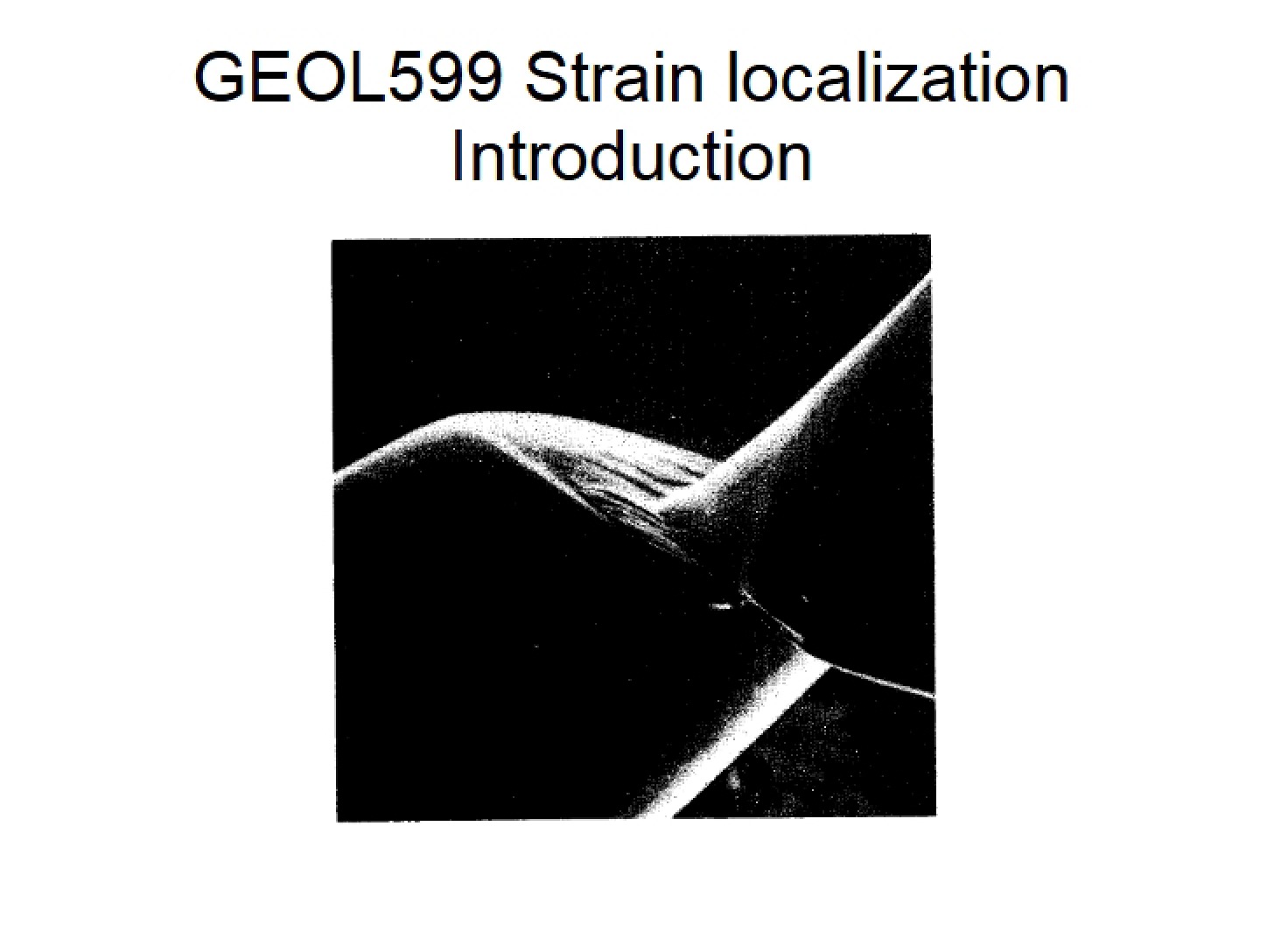
* Visual examples illustrating the manifestation of these mechanisms in naturally deformed rocks.