What This Document Is
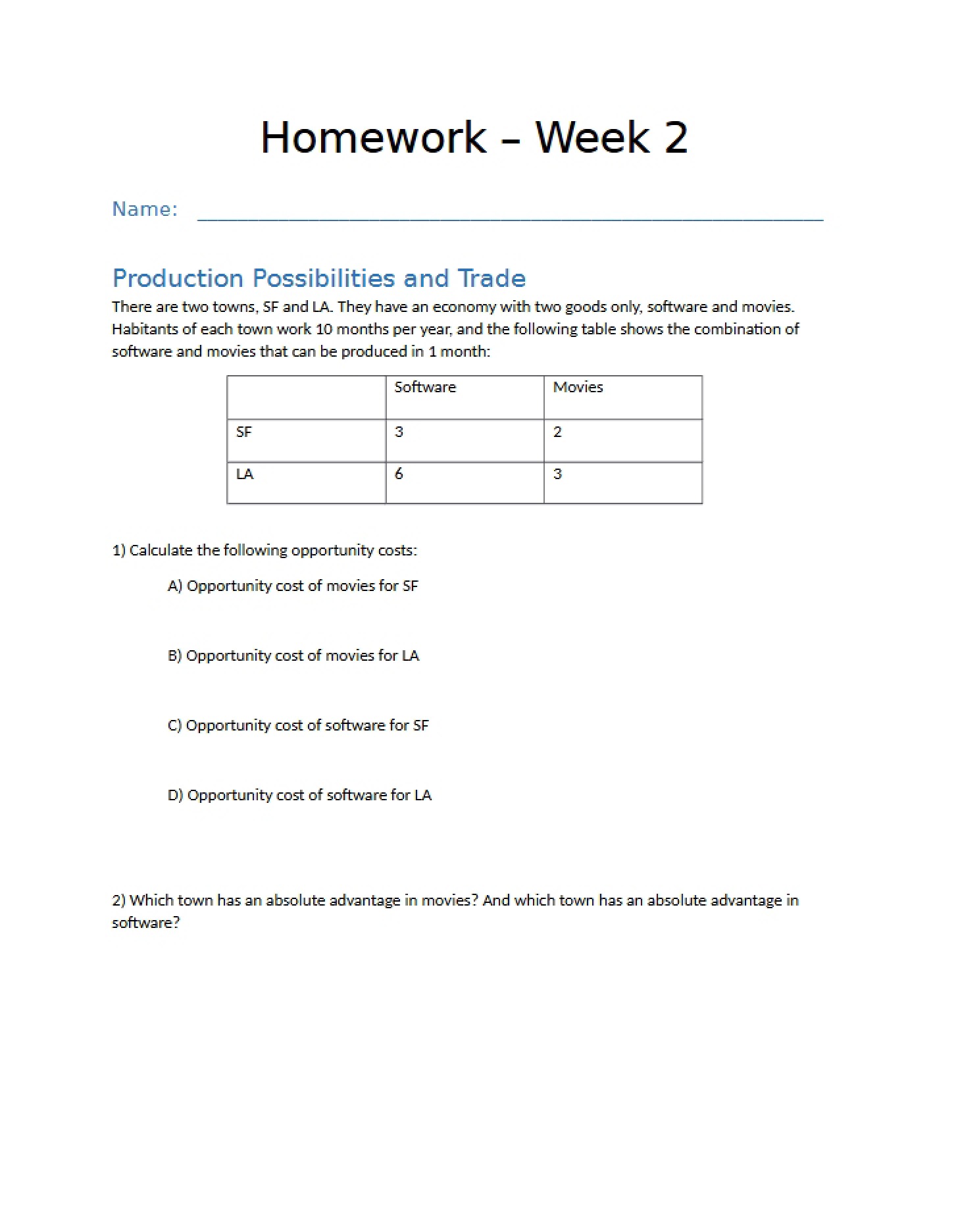
This is a homework assignment for Principles of Microeconomics (ECON 203) at the University of Southern California, specifically covering material typically addressed in Week Eight of the course. The assignment focuses on the economic principles surrounding costs of production and firm decision-making within competitive markets. It’s designed to test your understanding of how businesses analyze their costs, determine optimal production levels, and react to market forces. Expect a blend of quantitative problems and conceptual multiple-choice questions.
Why This Document Matters
This assignment is crucial for students enrolled in ECON 203 seeking to solidify their grasp of core microeconomic concepts. Successfully completing this work will demonstrate your ability to apply theoretical frameworks to real-world business scenarios. It’s particularly helpful for students preparing for midterms or final exams, as the questions reflect the types of analytical challenges you’ll encounter in assessments. Working through these problems will build a strong foundation for more advanced topics in economics and business administration.
Common Limitations or Challenges
This assignment does *not* provide a comprehensive review of all microeconomic principles. It assumes you have already engaged with the course lectures and readings related to cost structures, production functions, and market competition. It also doesn’t offer step-by-step solutions; the intention is for you to independently apply the concepts learned in class. Furthermore, it focuses specifically on the week’s assigned topics and won’t cover broader economic theories outside that scope.
What This Document Provides
* Problem sets requiring calculations of economic and accounting profit.
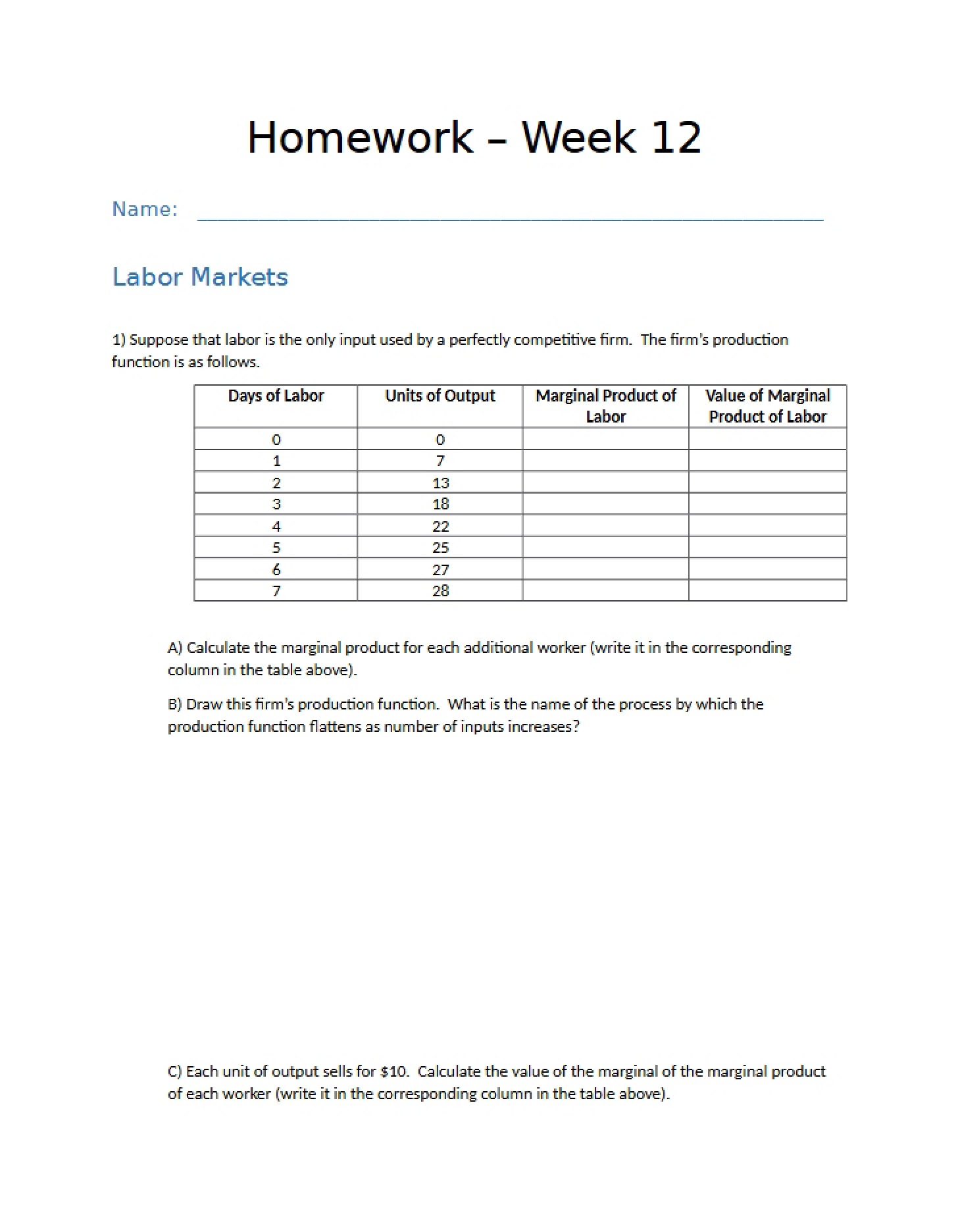
* Exercises focused on determining marginal product based on production schedules.
* Scenarios exploring the relationship between costs, wages, and marginal cost curves.
* Multiple-choice questions testing understanding of marginal cost, average total cost, and average variable cost.
* Application of cost analysis to a firm operating in a competitive market (potato farming example).
* Opportunities to practice determining profit-maximizing production levels.
* Analysis of how government regulations (license fees) impact cost structures.