What This Document Is
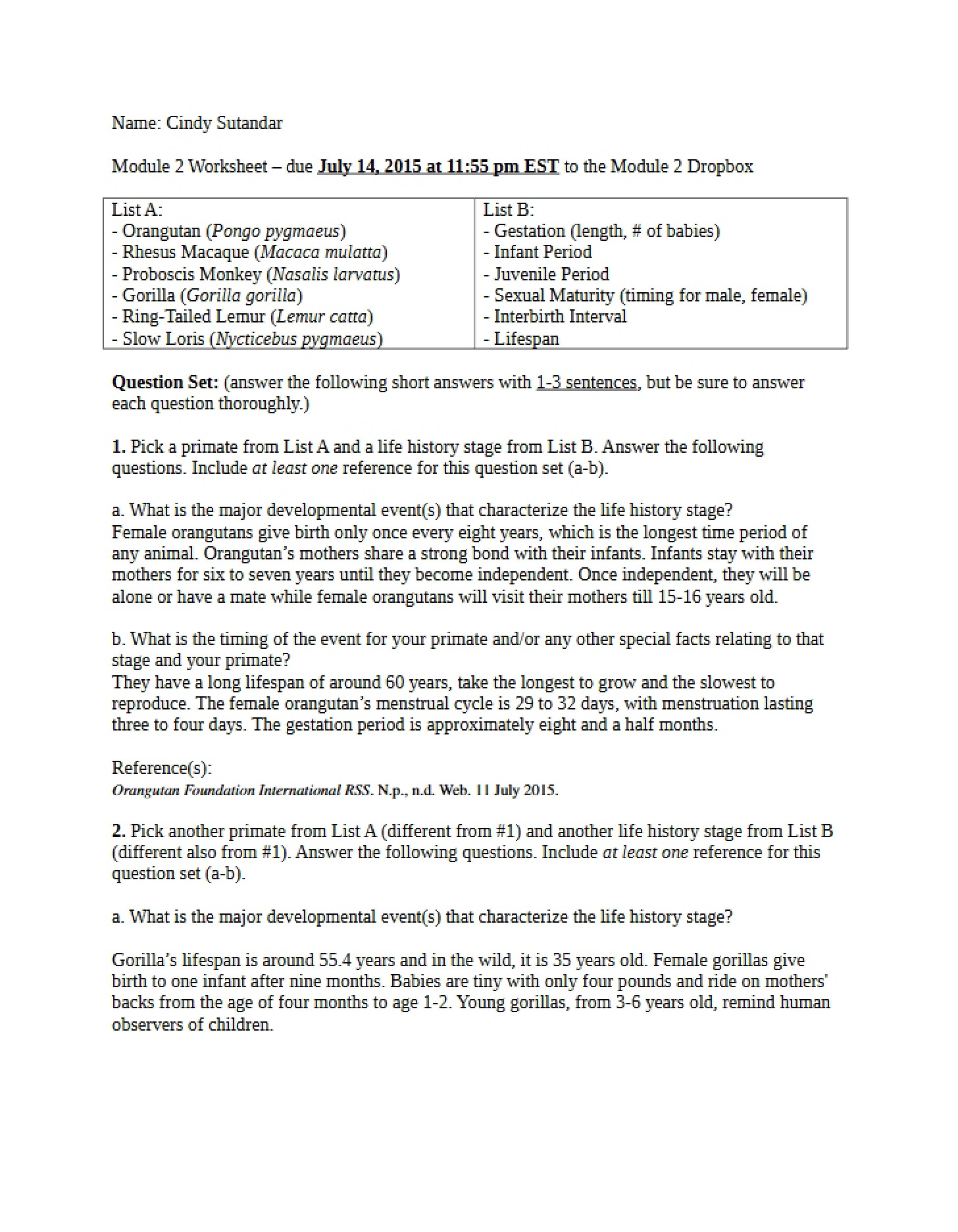
This is a worksheet designed for students enrolled in the Student Research Program (BIOENGR 99) at UCLA, specifically for Module 2 of the course. It’s a practical exercise intended to reinforce learning related to primate life history traits and ecological adaptations. The worksheet presents a structured approach to exploring the relationship between a primate’s biology and its environment, requiring students to synthesize information and demonstrate understanding of key concepts. It’s designed to be completed individually and submitted for assessment.
Why This Document Matters
This worksheet is essential for students aiming to solidify their understanding of primate biology and research methodologies. It’s particularly beneficial for those actively engaged in research projects involving primates, or those preparing for more advanced coursework in biological anthropology, zoology, or related fields. Use this resource as you complete the readings and lectures for Module 2, as it’s designed to be a direct application of the material covered. Successfully completing this assignment will demonstrate your ability to analyze and interpret scientific information.
Topics Covered
* Primate Life History Traits
* Developmental Stages (Infant, Juvenile, Sexual Maturity)
* Gestation Periods & Interbirth Intervals
* Primate Diet & Nutritional Ecology
* The Expensive Tissue Hypothesis
* Comparative Primate Biology
* Scientific Literature Review & Citation
What This Document Provides
* A curated list of primate species for focused analysis.
* A corresponding list of key life history characteristics to investigate.
* A series of targeted questions prompting in-depth exploration of primate biology.
* A framework for applying the Expensive Tissue Hypothesis to primate adaptations.
* Clear instructions for completing the assignment, including expectations for referencing sources.
* A structured format for organizing research and presenting findings.