What This Document Is
This study guide provides a comprehensive overview of zooplankton, a crucial component of marine ecosystems. It delves into the fascinating world of these often-microscopic organisms, exploring their diverse classifications, ecological roles, and the physical challenges they face in their oceanic environment. This resource is designed for students in biological oceanography and related marine science disciplines.
Why This Document Matters
This guide is invaluable for anyone seeking a deeper understanding of the base of the marine food web. It’s particularly helpful for students preparing for exams, completing assignments, or needing a solid foundation before tackling more specialized topics within biological oceanography. Understanding zooplankton is essential for comprehending broader ocean processes like nutrient cycling, energy transfer, and the impacts of environmental change. Accessing the full resource will unlock detailed insights into these complex interactions.
Topics Covered
* Zooplankton classifications based on size and life history
* The ecological roles of zooplankton as herbivores, omnivores, and carnivores
* The influence of physical oceanography, specifically viscosity, on zooplankton life
* Flow dynamics in the ocean and how they affect zooplankton movement and feeding
* Detailed looks at specific zooplankton groups (e.g., ctenophores, tunicates, larvaceans)
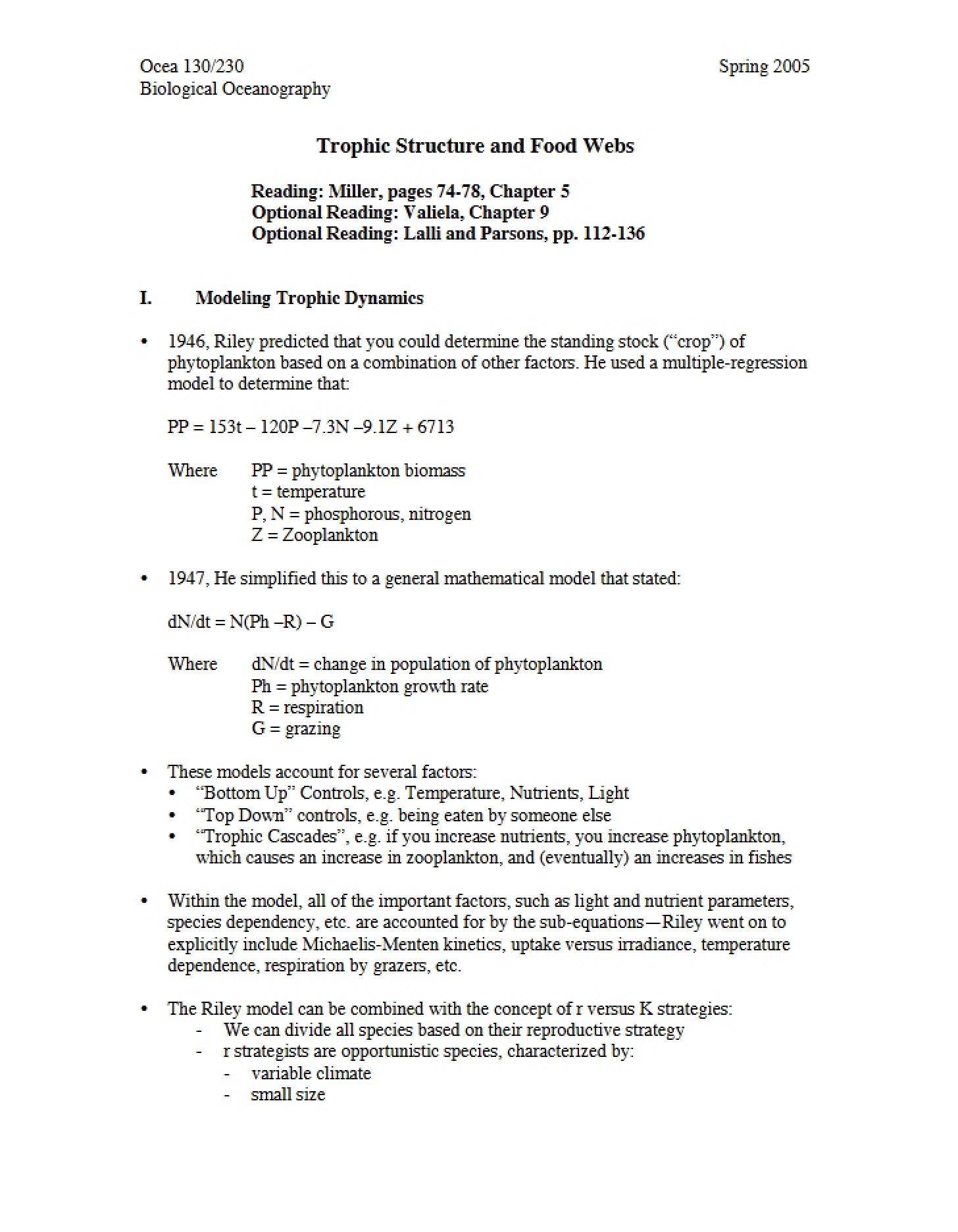
* Trophic relationships and the position of zooplankton within marine food webs
* Case studies examining zooplankton distribution and abundance in specific regions
What This Document Provides
* A structured framework for understanding zooplankton diversity.
* Explanations of key concepts related to fluid dynamics and their relevance to planktonic life.
* Illustrative examples of different zooplankton groups and their characteristics.
* Insights into the ecological significance of zooplankton in marine ecosystems.
* References to scientific literature for further exploration of specific topics.
* A foundation for understanding complex marine food web interactions.