What This Document Is
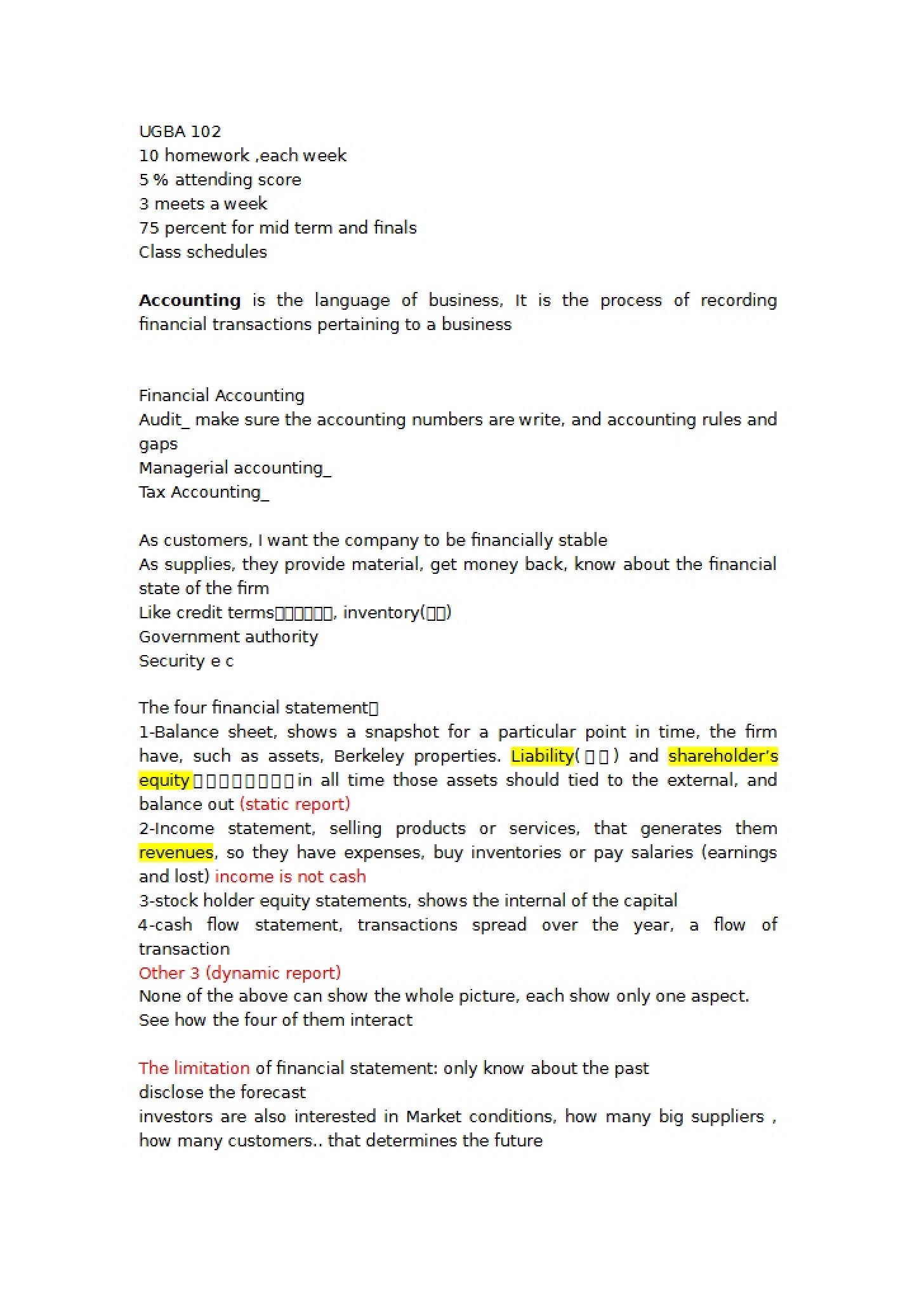
This study guide provides a comprehensive overview of key concepts in accounts receivable and revenue recognition, essential components of financial accounting. It’s designed for students learning how companies track and report financial performance related to sales and customer payments. This resource delves into the principles governing when revenue can be legitimately recorded and how businesses manage situations where customers may not fulfill their payment obligations.
Why This Document Matters
This guide is particularly helpful for students enrolled in introductory financial accounting courses, such as UGBA 102A at UC Berkeley. It’s ideal for those seeking to solidify their understanding of core accounting principles before exams, quizzes, or larger assignments. It’s also a valuable resource for anyone wanting to build a strong foundation in understanding financial statements and the stories they tell about a company’s financial health. Accessing the full guide will unlock detailed explanations and insights to boost your comprehension.
Topics Covered
* Revenue Recognition Principles
* Criteria for Earning Revenue
* Sales Terms (FOB Shipping Point vs. FOB Destination)
* Accounting for Uncollectible Accounts (Bad Debts)
* Methods for Estimating Bad Debt Expense
* Bank Reconciliation Procedures
* Real-world examples of revenue recognition policies
* Potential issues and improprieties in revenue reporting
What This Document Provides
* Exploration of the fundamental rules governing when revenue is appropriately recognized.
* Discussion of how companies account for potential losses from customers unable to pay.
* Examination of how businesses ensure the accuracy of their cash balances.
* Insights into how publicly traded companies disclose their revenue recognition policies.
* Analysis of real-world cases illustrating both proper and improper revenue recognition practices.