What This Document Is
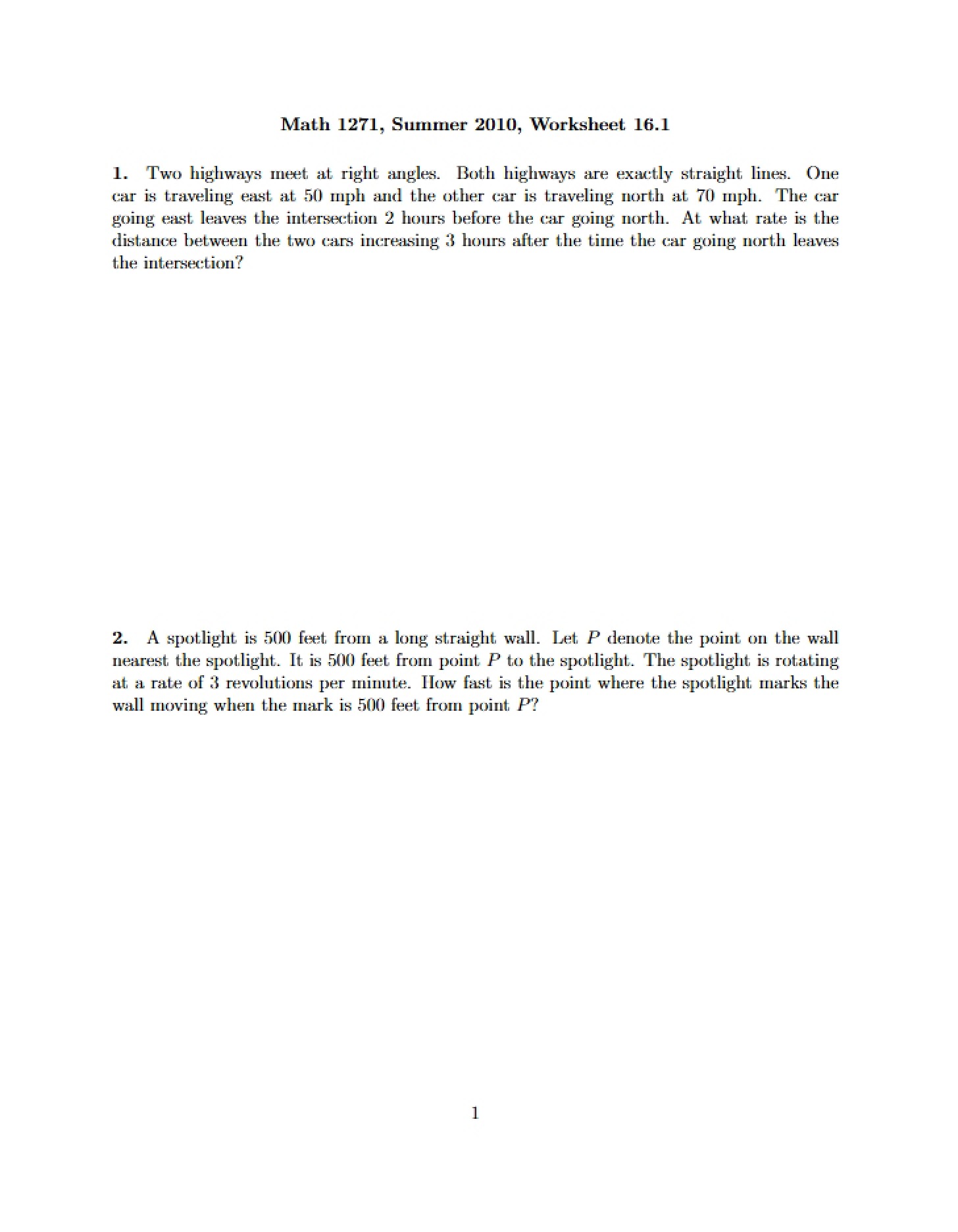
This resource is a focused set of practice problems centered around calculating volumes of solids of revolution using the cylindrical shell method within a Calculus I course. It’s designed to supplement your core course materials from the University of Minnesota Twin Cities (MATH 1271) and provides additional opportunities to hone your skills in applying this specific integration technique. The problems presented build upon the foundational understanding of volumes of revolution and require a solid grasp of integral setup and evaluation.
Why This Document Matters
This collection of problems is ideal for students who are actively learning the cylindrical shell method and want to solidify their understanding through repeated practice. It’s particularly useful when preparing for quizzes and exams where you might encounter similar volume calculation problems. If you find yourself struggling to visualize the solid formed by revolving a region around an axis, or if you’re unsure about setting up the correct integral, working through these problems will be highly beneficial. This is a great resource to use *after* reviewing lecture notes and textbook examples, as it’s designed to test and reinforce your existing knowledge.
Common Limitations or Challenges
This document focuses *exclusively* on the cylindrical shell method for calculating volumes. It does not cover alternative methods like the disk or washer method, nor does it provide a comprehensive review of the underlying theory of integration. It assumes you already understand how to define the limits of integration and how to perform basic integration techniques. The problems presented do not include detailed step-by-step solutions; they are intended to be worked through independently to promote active learning.
What This Document Provides
* A series of practice problems specifically designed around the cylindrical shell method.
* Problems involving regions bounded by various curves and functions.
* Opportunities to practice sketching regions to aid in visualizing the resulting solid of revolution.
* Problems that require careful consideration of the axis of revolution.
* A focused approach to mastering a key technique in applications of integration.