What This Document Is
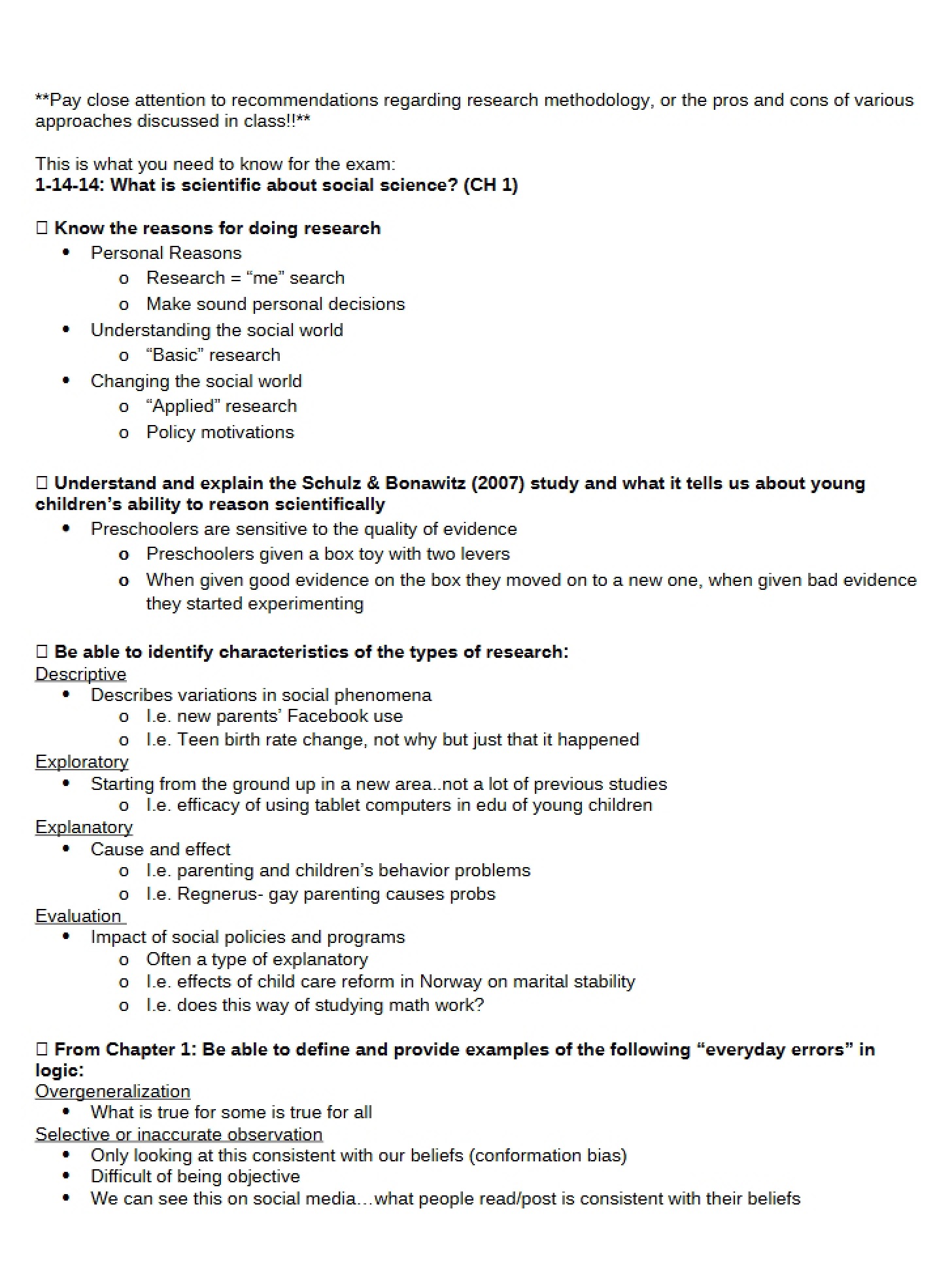
This study guide supports students enrolled in HDFS 2900: Methods in Human Ecology Research at The Ohio State University. It focuses specifically on the principles and application of quantitative data analysis, designed to help you prepare for exam-level understanding of the course material. This resource consolidates key concepts related to interpreting and understanding statistical findings.
Why This Document Matters
This guide is invaluable for students who are building a foundation in research methods and statistical thinking. It’s particularly helpful when reviewing core concepts before assessments, reinforcing lecture material, or seeking a concise overview of quantitative analysis techniques. If you’re aiming to confidently interpret research findings and understand the logic behind statistical tests, this guide will be a beneficial resource. It’s best used in conjunction with course lectures and assigned readings.
Topics Covered
* Descriptive Statistics and their application
* Measures of Central Tendency (mode, median, mean)
* Measures of Variability (range, interquartile range, variance, standard deviation)
* Interpreting different types of graphs and distributions
* Understanding the concept of skewness in data
* The characteristics and importance of the normal curve
* Foundations of inferential statistics and hypothesis testing
* The role of the null hypothesis in research
What This Document Provides
* A focused review of essential statistical concepts.
* Clarification on selecting appropriate statistical measures based on data type.
* An overview of how different statistics summarize data distributions.
* Insights into interpreting statistical results and their implications.
* A structured framework for understanding the relationship between sample data and broader population inferences.