What This Document Is
This lecture material delves into the pharmacotherapy of blood disorders, specifically focusing on anti-anemia medications. It’s part of a Principles of Pharmacotherapy II course, designed for advanced pharmacy students and related healthcare professionals. The content systematically explores the complexities of anemia, categorizing different types and their underlying causes, and then introduces the pharmacological interventions used to address these conditions. It’s a foundational resource for understanding how drugs impact hematopoiesis and red blood cell function.
Why This Document Matters
Students preparing for advanced pharmacology coursework, particularly those specializing in hematology or oncology, will find this material invaluable. It’s also beneficial for practicing pharmacists and clinicians who need a comprehensive overview of anti-anemia treatments and the physiological basis for their use. This resource is particularly helpful when needing to understand the different classifications of anemia and how treatment strategies vary based on the specific type and etiology of the condition. It provides a strong base for clinical decision-making related to anemic patients.
Common Limitations or Challenges
This material presents a detailed overview of the *principles* of anti-anemia pharmacotherapy. It does not include patient-specific case studies, dosage calculations, or detailed treatment protocols. It also focuses on a specific segment of blood disorder treatments – anti-anemia drugs – and doesn’t cover the full spectrum of hematological pharmacotherapy (like treatments for bleeding disorders or white blood cell deficiencies) in depth. Access to the full content is required for a complete understanding of the nuances of each medication.
What This Document Provides
* A classification of different anemia types (myelotoxic, aplastic, etc.) based on their underlying mechanisms.
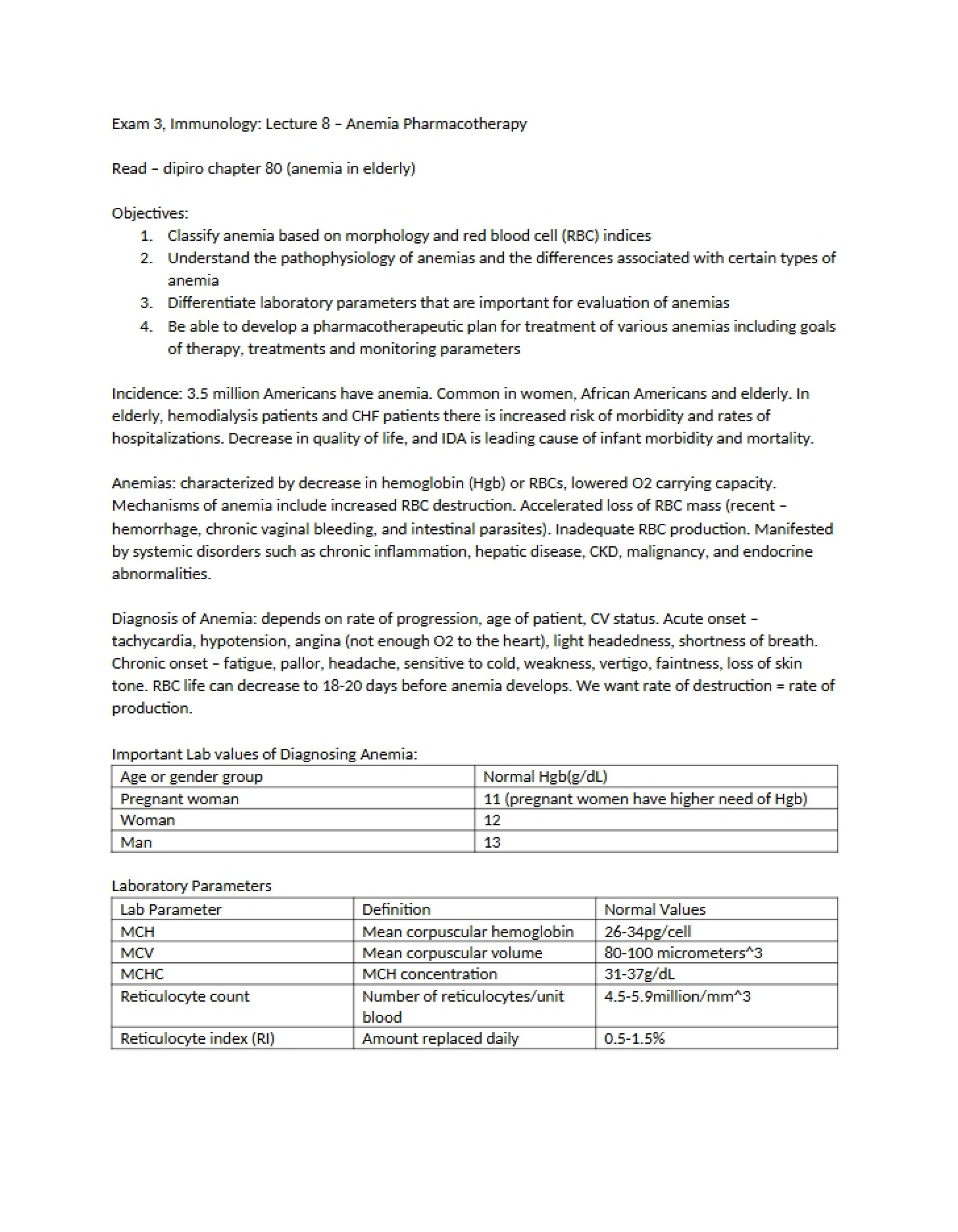
* A breakdown of anemia causes categorized by RBC production, destruction, or a combination of both.
* An overview of hypoproliferative and hyperproliferative anemias, including specific subtypes.
* An introduction to hematopoietic growth factors and their roles in stimulating blood cell production.
* Detailed information on specific agents like Sargramostim (GM-CSF) and Filgrastim (G-CSF), including their mechanisms of action and potential applications.
* Discussion of physiological processes involved in erythropoietin production and its impact on red blood cell development.