What This Document Is
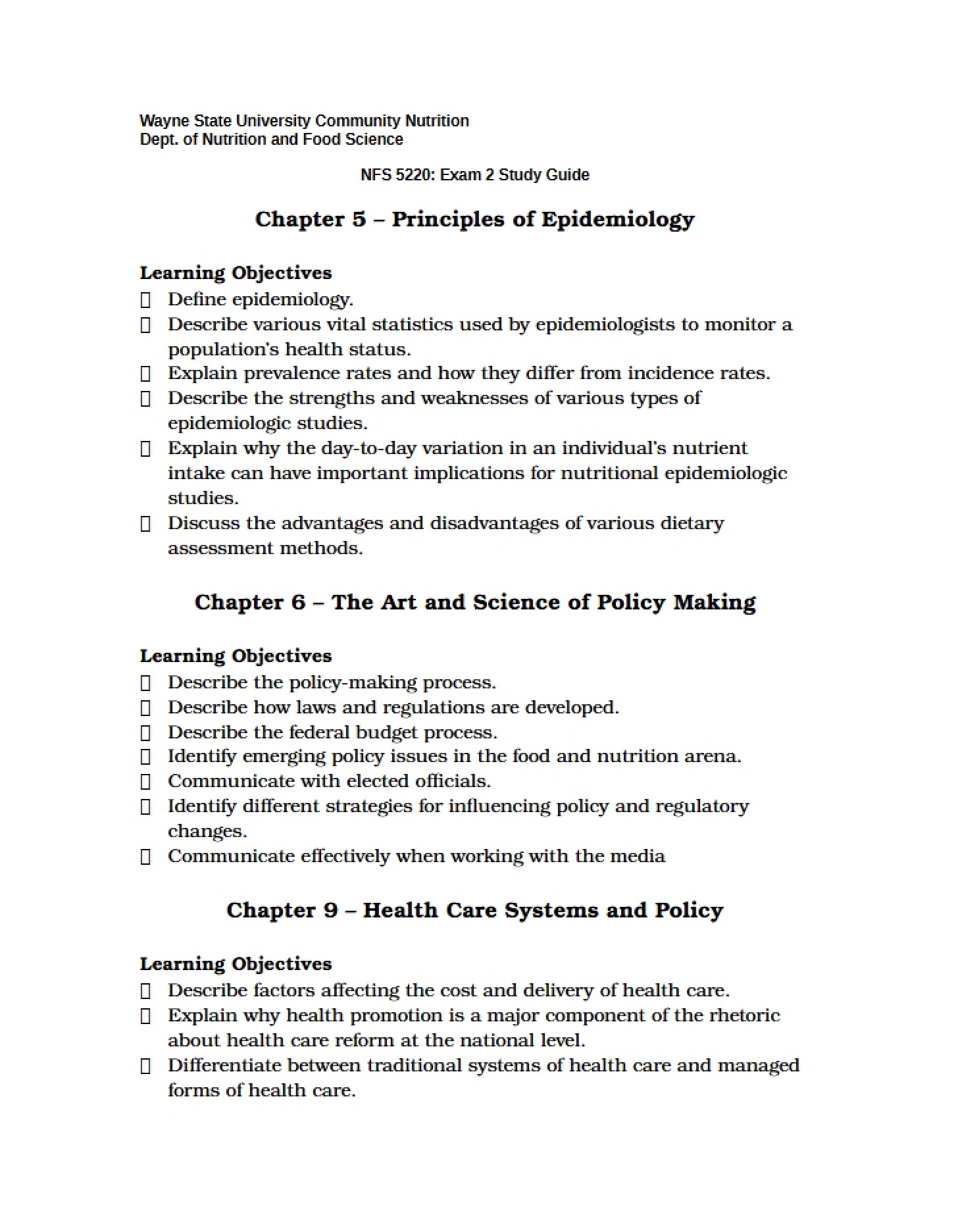
This material offers a focused exploration of the multifaceted world of policy creation, specifically within the context of community nutrition and public health. It delves into the theoretical underpinnings and practical stages involved in transforming societal needs into actionable plans and regulations. This chapter, originating from a comprehensive course on Community Nutrition at Wayne State University, provides a foundational understanding of how policies are conceived, developed, and implemented. It’s designed to equip students with a framework for analyzing existing policies and contributing to the development of new ones.
Why This Document Matters
This resource is invaluable for students pursuing degrees in public health, nutrition, political science, and related fields. It’s particularly relevant for those interested in understanding the systemic factors that influence community health outcomes. Professionals working in advocacy, program management, or government roles will also find this material beneficial. Use this as a core study aid when examining the legislative processes impacting nutritional well-being, or when preparing to engage in policy-related initiatives. It’s ideal for building a strong conceptual base before tackling more specialized policy areas.
Common Limitations or Challenges
While this material provides a robust overview of the policy-making process, it does not offer detailed case studies of specific nutritional policies. It focuses on the general framework and principles, rather than providing prescriptive solutions to current policy challenges. Furthermore, it does not include current legislative updates or detailed legal analyses. Access to the full content is required for a complete understanding of the nuances and complexities of each stage.
What This Document Provides
* An overview of the core definition of “policy” and its relationship to identifying and addressing societal problems.
* A breakdown of the sequential stages involved in the policy-making lifecycle.
* Identification of the various actors and stakeholders who participate in the policy process.
* Discussion of the importance of legitimacy in policy implementation.
* An explanation of the distinction between laws and the regulations that interpret them.
* A general outline of how an idea progresses through the legislative system.